


Antique Hall Coat Bench
These antique hall coat bench designs combine seating, storage and hanging space for the home.
Antique Hall Coat Bench
When you search for an antique hall coat bench, you are looking at substantial hallway furniture designed to organise outerwear and provide a seat upon entering the house. The pieces on this page span from the nineteenth century into the twentieth century, taking forms such as hall stands, hall seats, settlers and multi-functional combination units.
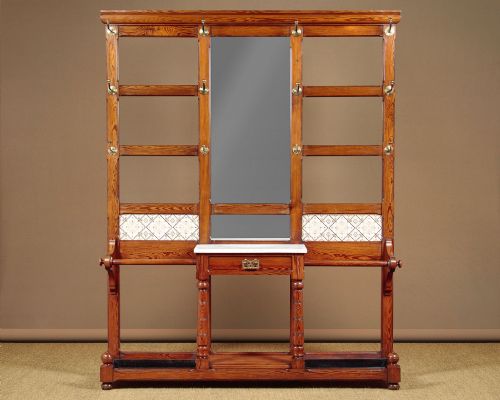
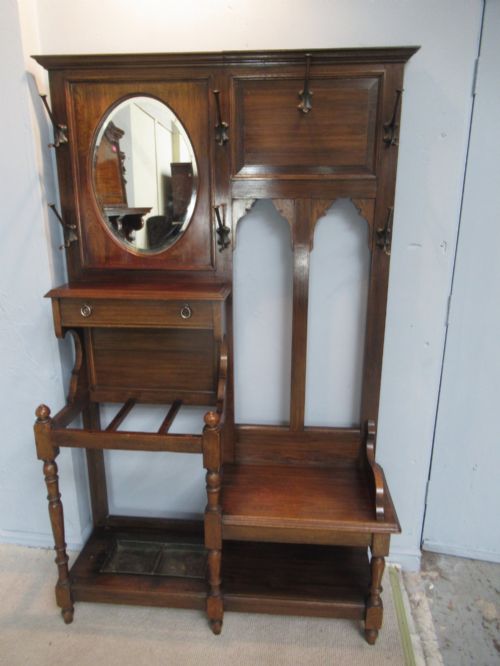
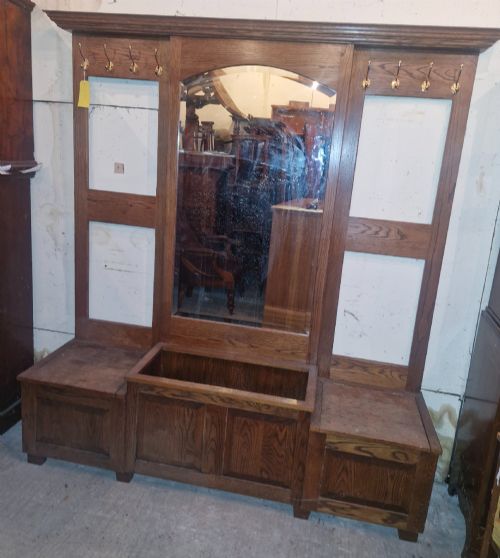
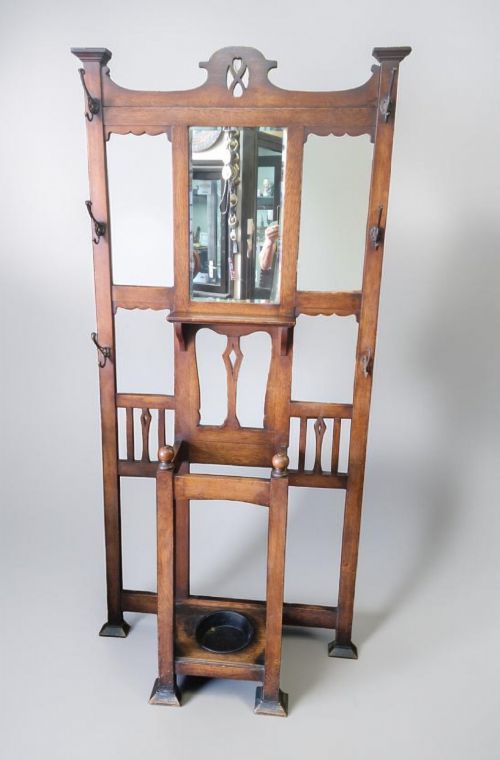
You are most likely to meet oak and pine examples representing Victorian, Edwardian and Arts and Crafts styles. These items often integrate mirrors, coat hooks, umbrella wells and storage compartments beneath the seat.
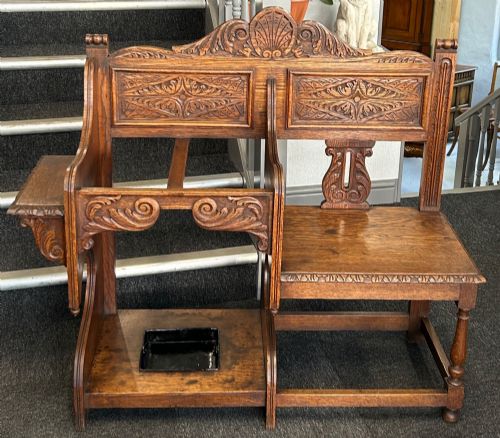
The variety ranges from carved oak architectural pieces to simpler country pine items. Each serves the traditional function of greeting visitors and holding everyday garments in a hallway or vestibule.
How they were made
Cabinet makers constructed these pieces primarily using solid oak and pine, frequently incorporating decorative carving and raised panels. Many examples feature applied brass coat hooks and integrated drip pans for wet umbrellas.
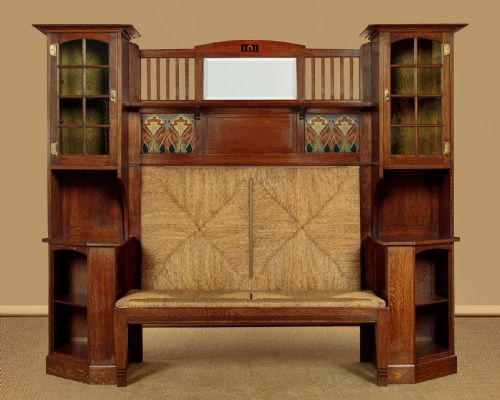
Higher specification pieces integrate bevelled glass mirrors and glazed ceramic tiles, such as the Minton tiles found in period examples. Secondary materials include mahogany, marble, metal and glass, assembled with traditional joinery methods suited to heavy daily use.
Listings feature items spanning from the nineteenth century through the 1960s, constructed predominantly in oak and pine with styles ranging from Victorian Gothic to Art Nouveau.
What varies in quality
Scale and proportion also define the range, with larger architectural stands offering greater visual presence than simpler utility benches. The original hardware, including brass hooks and umbrella rails, contributes significantly to the integrity of the piece.
Ellen E Houghton of Minton
The Antique Hall Coat Bench Glossary
- Hallstand
- A piece of hallway furniture combining a mirror, coat hooks, umbrella storage and often a bench seat. These items formed the central functional hub of a Victorian or Edwardian entrance hall.
- Settle
- A wooden bench with high backs and arms, often featuring a box seat for storage beneath the hinged lid. They provide draught-proof seating in traditional interiors.
- Arts and Crafts
- A design movement prioritising simple forms, traditional craftsmanship and visible construction methods. Pieces from this style often feature honest oak joinery without excessive ornamentation.
- Monks bench
- A convertible piece of furniture functioning as a seat with a backrest that tilts forward to form a table top. They are typically rendered in solid oak.
Antique Hall Coat Bench: Frequently Asked Questions
What is an antique hall coat bench used for?
These pieces served as the primary storage station in traditional entrance halls for hats, coats, sticks and umbrellas. The integrated seat provided a convenient place to put on or remove footwear.
Today, they perform the exact same practical function in domestic hallways while adding period character and architectural presence to an interior space.
How do I date an antique hall stand?
Dating relies on identifying the prevailing stylistic movements, such as Victorian Gothic, Art Nouveau or Arts and Crafts, combined with timber choices like oak or pine. The presence of specific hardware, bevelled mirrors and decorative ceramic tiles also helps narrow the production era.
Construction techniques, such as hand-cut joinery versus machine-made components, offer further clues to whether a piece originates from the nineteenth or early twentieth century.
Are hall benches suitable for small hallways?
Many surviving examples are quite large and deep, designed specifically for spacious Victorian and Edwardian entrance halls. However, simpler bench or settle forms occupy a smaller footprint than full-scale hall stands with attached mirrors and umbrella racks.
Careful measurement of both depth and height is essential before placing one of these substantial pieces into a narrow or compact corridor.
What materials are common in these pieces?
Solid oak and pine form the vast majority of the woodwork seen across these listings, occasionally supplemented by mahogany. Decorative elements frequently include brass coat hooks, inset ceramic tiles, marble inserts and glass mirrors.
Metal drip pans are also standard components in the base of umbrella and stick stands to protect the wooden floor from moisture.