




Continental Wooden Religious Statue
A continental wooden religious statue brings centuries of devotion and craftsmanship into a room through carved timber, gilt, and pigment.
Continental Wooden Religious Statue
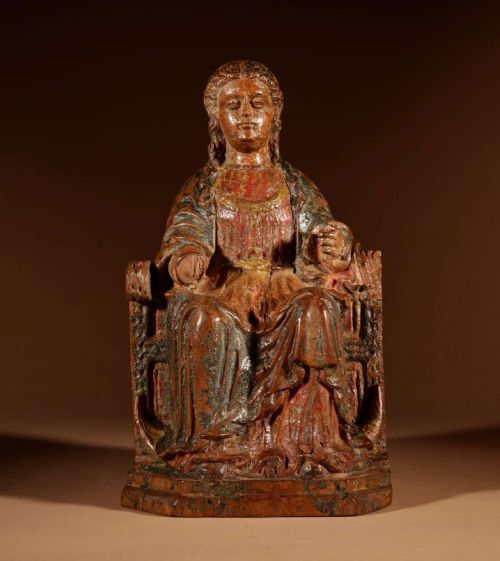
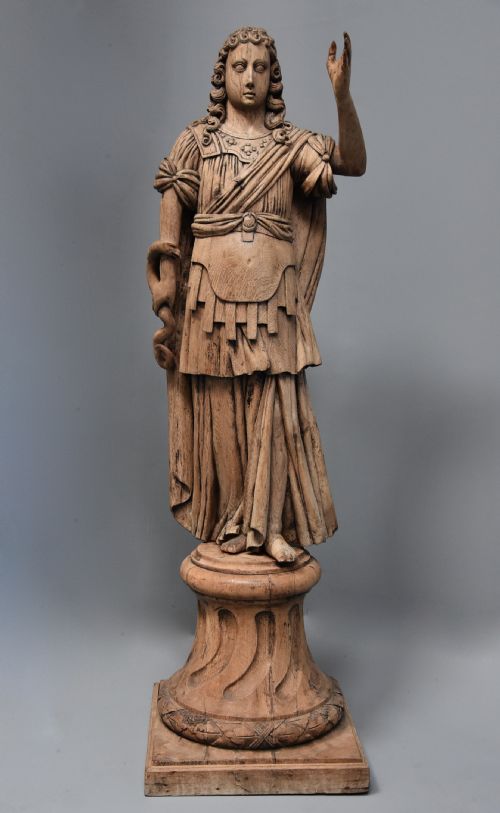
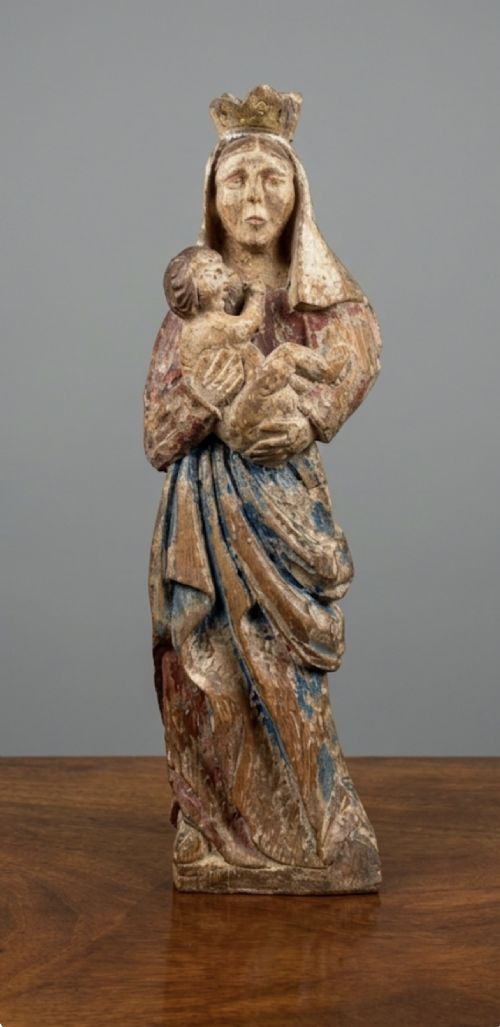
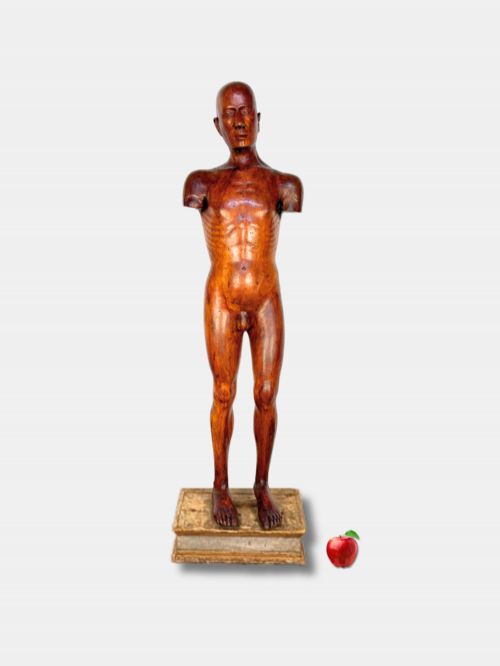
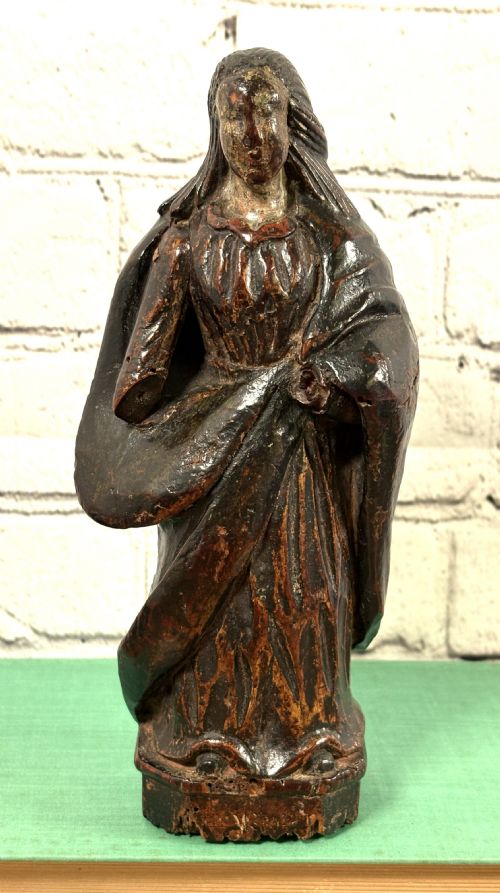
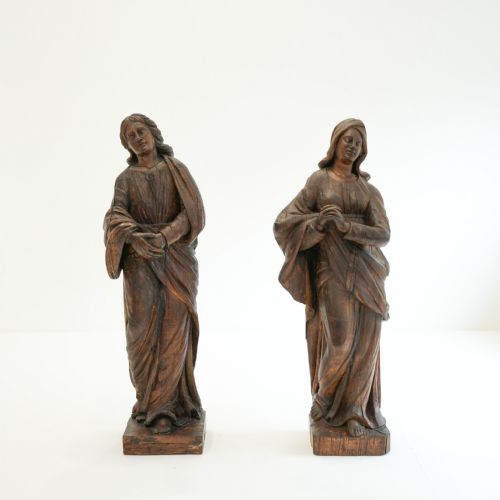
When a buyer searches for a continental wooden religious statue, they encounter carved figures originating from European workshops spanning multiple centuries. These sculptures depict saints, madonnas, angels, and figures of Christ, reflecting the rich devotional traditions of regions such as Italy, Germany, and Croatia. Pieces from the sixteenth, seventeenth, and eighteenth centuries dominate the selection, alongside select nineteenth-century examples and earlier medieval works.
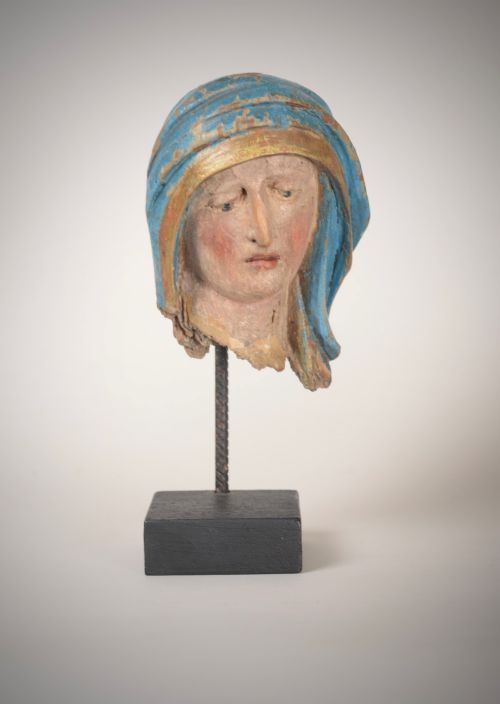
The forms vary widely, ranging from monumental life-size oak figures to intimate limewood and walnut carvings. Buyers frequently find depictions of Mary and Jesus, Saint Jerome, Saint Barbara, and various angels or cherubic figures mounted on plinths or integrated into architectural settings. Smaller fragments, such as carved wooden heads, also appear among the sculptures.
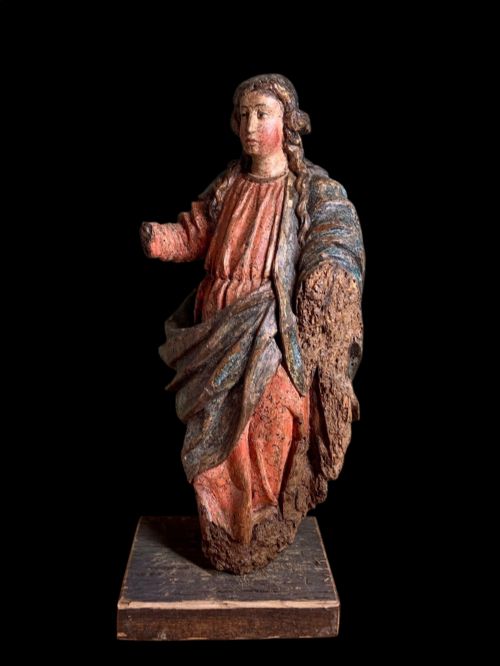
These figures embody styles from the Gothic and Renaissance periods through to the elaborate curves of the Baroque. Many retain elements of their original finishes, including polychrome paint, gesso, and gold leaf applied by historical artisans.
How they were made
Carvers selected timber according to regional availability and the desired scale of the piece, utilising hardwoods such as oak and walnut alongside softer woods like limewood, pine, applewood, and lindenwood. Timbers were seasoned and carved with chisels and gouges to shape the drapery, anatomical details, and facial expressions of the saints and figures.
Surfaces were frequently prepared with a layer of gesso, providing a smooth white ground for subsequent decoration. Artisans then applied polychrome paint in earth tones and rich pigments, often finishing details with gold leaf or silvering to catch the light in dim ecclesiastical interiors.
Listings feature continental wooden religious statues spanning from pre-sixteenth century medieval works to the nineteenth century, utilising oak, limewood, walnut, and polychrome paint.
What varies in quality
The survival of original surface treatments further defines the standing of a piece, separating works that retain their early polychrome paint and gesso from those stripped bare or heavily overpainted in later centuries.
The Continental Wooden Religious Statue Glossary
- Polychrome
- Decorated in multiple colours. This term describes statues finished with historical paints and pigments.
- Gesso
- A plaster mixture applied to wood as a base for paint or gold leaf. It creates a smooth surface for detailed decoration.
- Baroque
- An artistic style characterised by dynamic movement and dramatic theatricality. Figures from this period often display sweeping drapery and emotional intensity.
- Limewood
- A fine-grained timber favoured by European carvers. It allows for intricate, sharp detail without splitting.
- Acolyte
- An assistant or follower supporting a religious figure. Candlestick figures often depict these attendants.
Continental Wooden Religious Statue: Frequently Asked Questions
How old are these wooden religious statues?
The pieces span from the late medieval period and the sixteenth century through the seventeenth and eighteenth centuries, with some nineteenth-century examples.
Dates are determined by stylistic markers, carving techniques, and the type of wood employed by the historical workshop.
What wood was used for these carvings?
Carvers utilised a variety of timbers depending on the region and the scale of the intended sculpture.
Common materials include oak, walnut, limewood, pine, applewood, and lindenwood, often sourced locally by the makers.
Did these figures retain their original paint?
Many statues retain traces or substantial layers of their original gesso, polychrome paint, and gold leaf finishes.
Over the centuries, some pieces were stripped of their pigment to expose the bare wood, while others underwent later repainting.
Where were these statues originally displayed?
These sculptures stood in churches, private chapels, and domestic shrines across continental Europe.
They served as focal points for prayer, procession, and religious contemplation in ecclesiastical and domestic settings.