


Continental Religious Art
Continental religious art brings devotional depth to a room through centuries-old wooden carvings and oil paintings.
Continental Religious Art
Continental religious art encompasses historical devotional objects originating from European workshops, spanning multiple centuries of craftsmanship. Buyers encounter carved wooden figures of saints, oil paintings on canvas, and porcelain plaques reflecting distinct liturgical traditions.
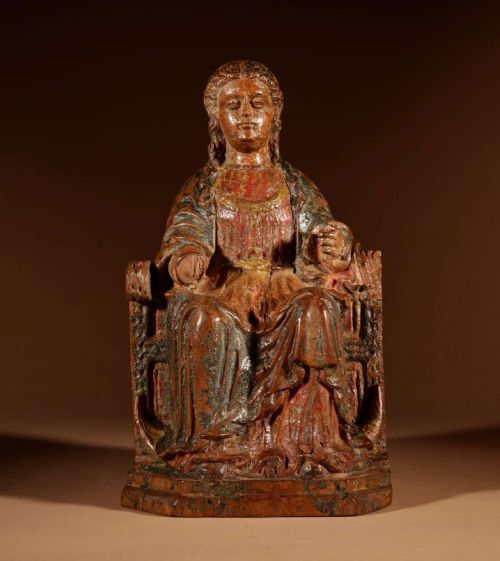
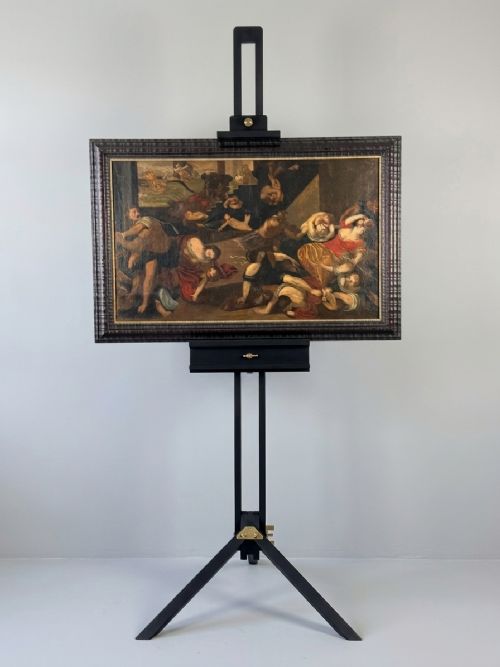
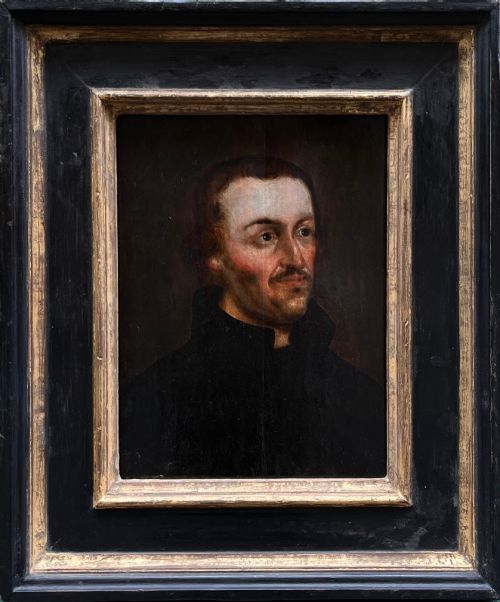
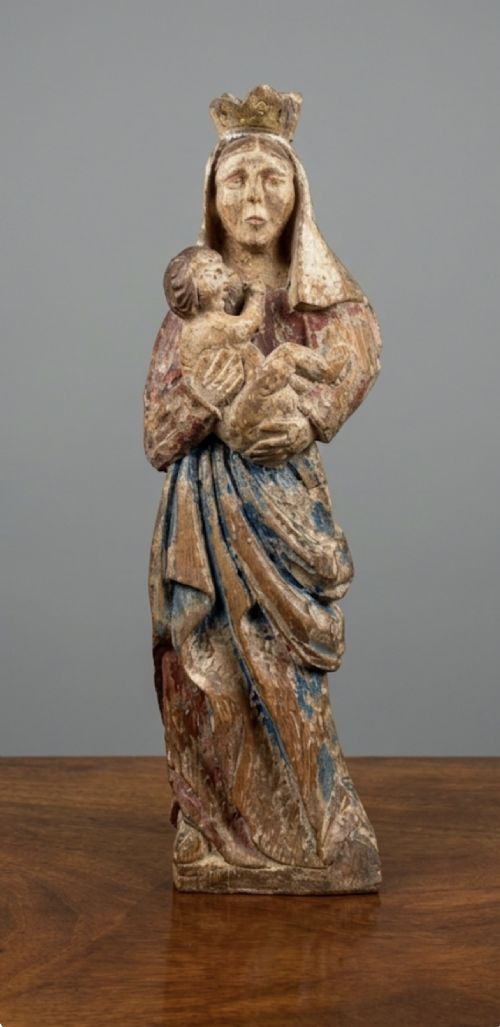
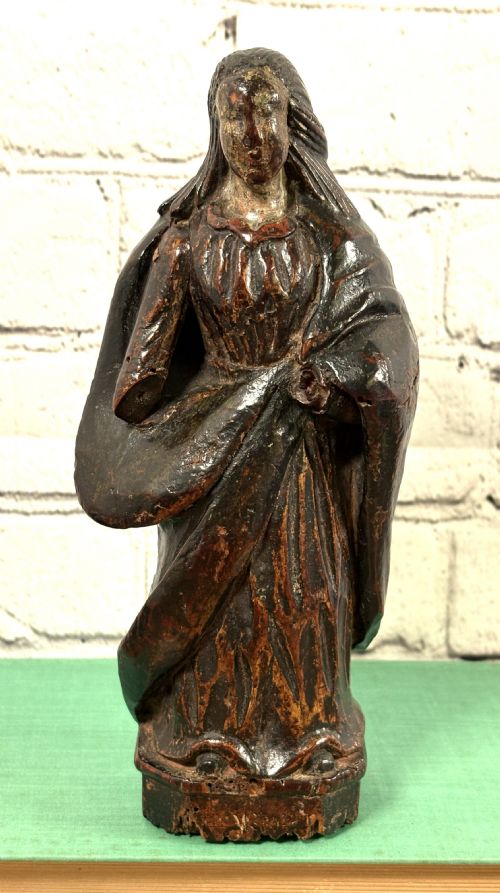
The selection on this page centres on carved figures and paintings from the fifteenth through to the nineteenth century. Walnut, limewood, oak, and fruitwood sculptures appear alongside oil paintings depicting biblical figures and saints.
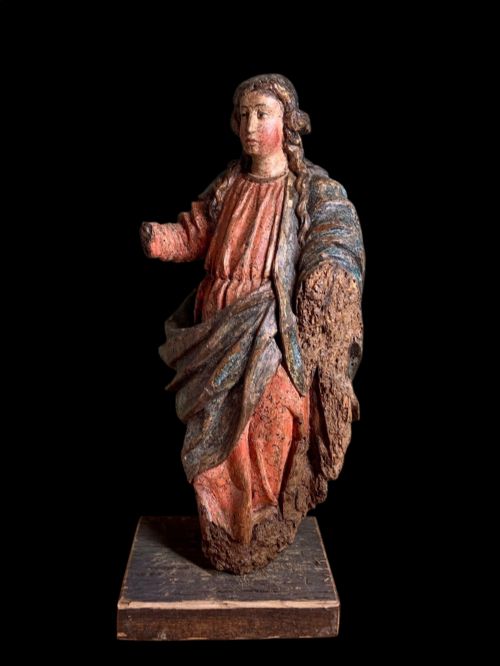
Common forms include statues of the Virgin Mary, depictions of specific saints such as Saint Jerome and Saint Francis, and framed oil works. These pieces carry the patina of age, often retaining traces of original polychrome paint and gold leaf.
How they were made
Many wooden figures received a preparatory layer of gesso before painters applied polychrome pigments and gold leaf. Oil paintings utilised canvas supports primed for traditional pigment application by European schools.
Saint Roche often appears accompanied by a faithful dog carrying bread in its mouth.
What varies in quality
Quality rests in the precision of the carving and the expressiveness achieved in the faces and hands of figures. Master carvers managed volume and proportion effectively, whereas lesser pieces display stiff postures and hurried execution.
The survival of original surface treatments, including polychrome paint and gilding, alters the desirability of a piece. Works retaining authentic historical finishes demonstrate superior preservation compared to those subjected to heavy later repainting.
The Continental Religious Art Glossary
- Polychrome
- Painted in several colours. This term describes wooden sculptures decorated with pigments to enhance realism.
- Gesso
- A plaster mix applied as a surface preparation. Artisans used it on wood before applying paint or gold leaf.
- Corpus Christi
- The body of Christ on the cross. These figures focus on devotional representation.
- Ex-voto
- A votive offering placed in a sacred place for vows or thanksgiving. These collections often comprise small metal or painted plaques.
- Baroque
- An artistic style prevalent in the seventeenth and eighteenth centuries. It is characterised by dramatic movement and rich detail.
Continental Religious Art: Frequently Asked Questions
How old are these religious pieces?
The items span from the fifteenth century through to the early twentieth century.
Most examples date from the seventeenth and eighteenth centuries, reflecting Baroque and Renaissance influences.
What materials were used?
Carvings utilise woods such as walnut, limewood, oak, and fruitwood.
Surfaces often feature gesso, polychrome paint, and gold leaf alongside oil on canvas for paintings.
How should I display them?
Sculptures require stable placement away from direct heat sources and strong sunlight.
Framed oil paintings and plaques suit wall hanging in controlled indoor environments.
Are the paints original?
Many wooden figures retain traces of early or original polychrome surface decoration.
Some pieces show evidence of historical conservation and refreshing of the paint layers over time.