


Christian Oil Canvas Art
Christian oil canvas art brings centuries of devotional portraiture and narrative scenes into a room through historic pigments applied to woven fabric.
Christian Oil Canvas Art
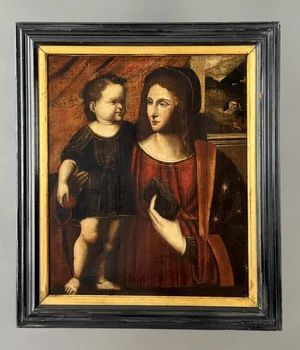
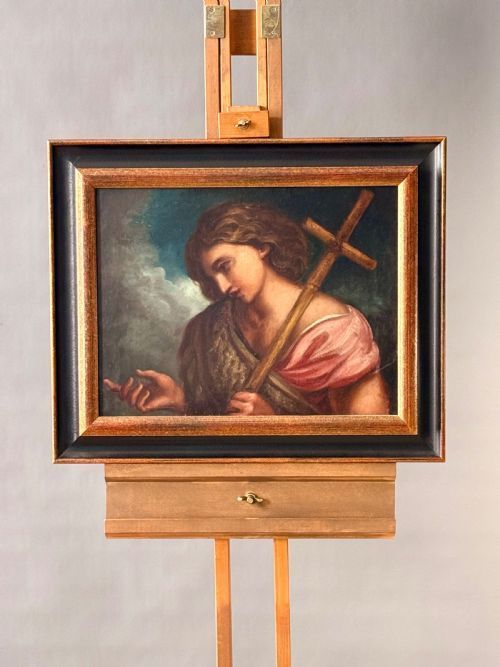
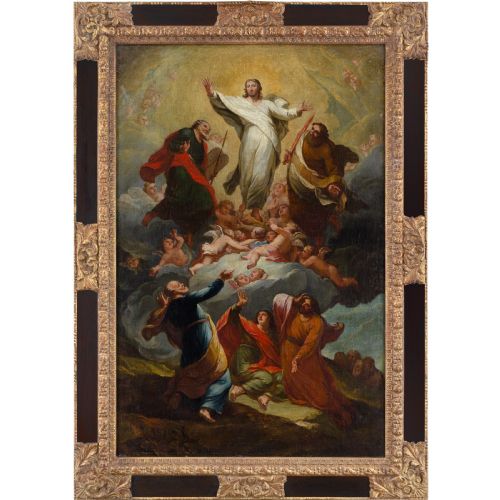
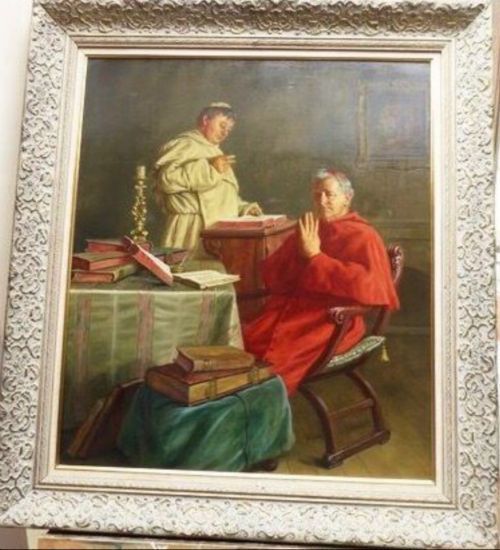
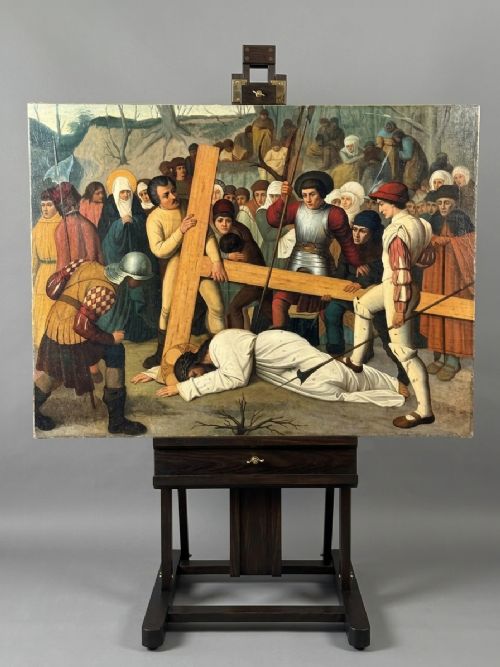
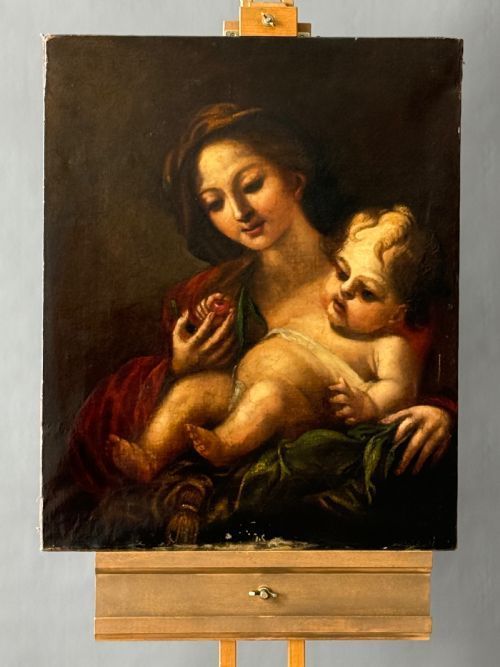
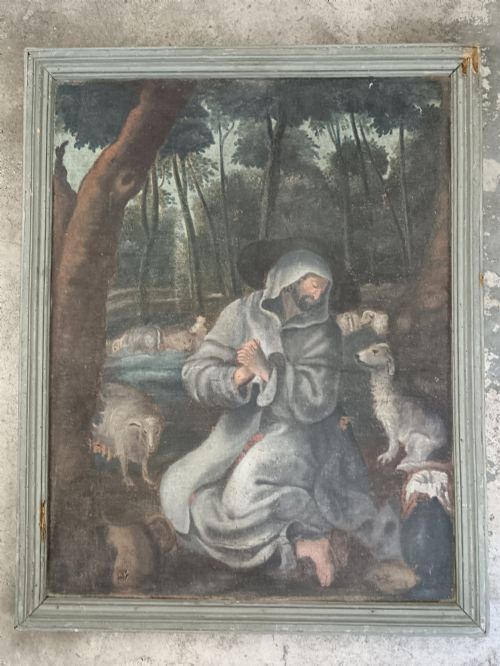
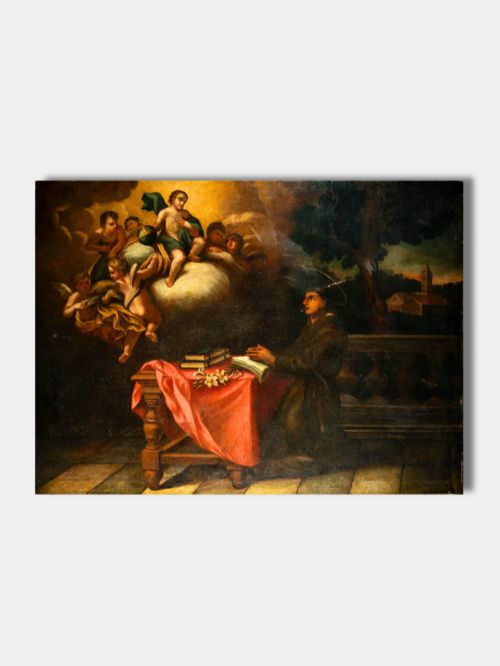
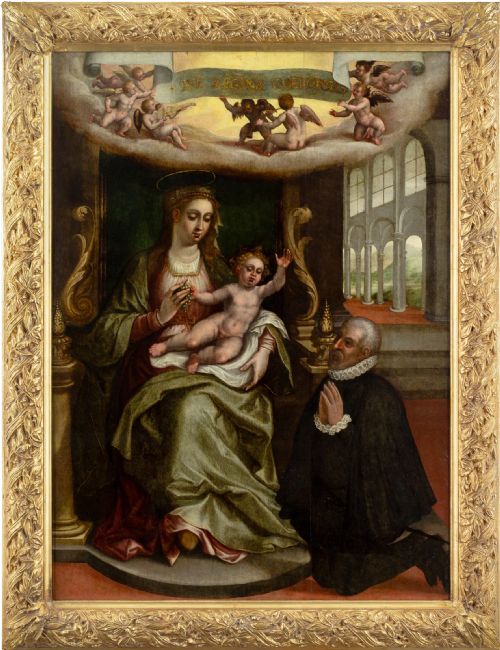
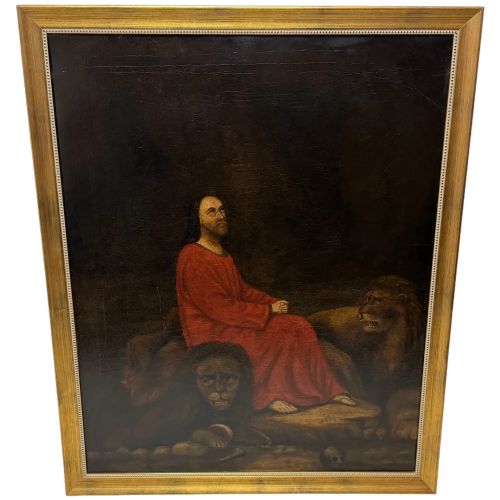
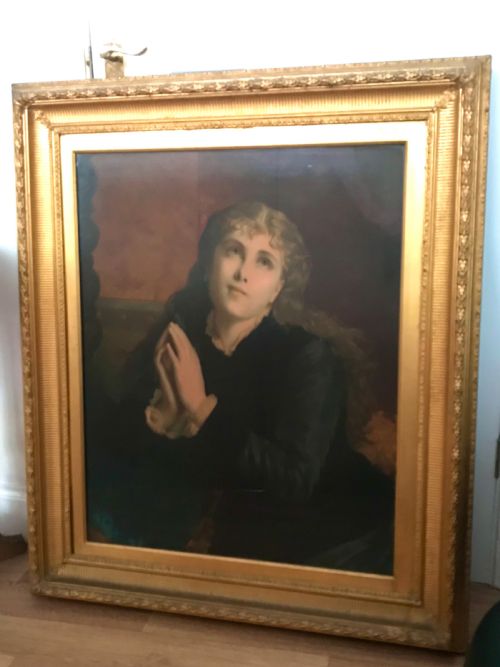
When buyers search for christian oil canvas art, they encounter historic works depicting biblical narratives, holy families, and revered saints from European traditions. The pieces span centuries of religious painting, ranging from devotional panels in domestic settings to grand Italian school compositions.
Most examples on this page date from the seventeenth, eighteenth, and nineteenth centuries, often rendered in the manner of Renaissance masters or Baroque workshops. Subjects such as the Madonna and Child, Saint Francis, and biblical tableaus dominate the selection.
Makers include regional European circles, followers of canonical painters, and named artists working within established religious iconography. These canvases capture devotional practice and classical technique across various periods of European art history.
Materials and Technique
The primary technique involves oil paint applied to stretched canvas, allowing artists to build rich layers of colour and deep shadow. Painters utilised ground pigments mixed with oils to achieve luminous skin tones and complex drapery in religious subjects.
Many works retain their original character through the use of traditional wood stretcher frames and heavy linen or canvas grounds. Giltwood and gilded wood frames frequently enclose these paintings, enhancing the visual weight of the sacred imagery.
Listings feature works spanning from the sixteenth century to the mid-twentieth century, utilising oil on canvas and gilded wood frames.
Distinctions in Quality
Quality in these historical paintings rests upon the confidence of the brushwork and the expressive depth of the figures. Strong compositions display a mastery of light and shadow, particularly in the rendering of faces and hands.
The relationship between a piece and its attributed master school influences its standing. Works originating directly from documented workshops or skilled followers demonstrate a superior command of proportion and narrative tension compared to simpler naive interpretations.
Miguel Barroso·Francesco Solimena·Cornelis Christian Dommersen·Christian Lindner·Frederick Christian Lund·Christian Caillard
The Christian Oil Canvas Art Glossary
- Oil on Canvas
- A painting medium where pigment suspended in drying oils is applied to a woven canvas support. This combination allows for smooth blending and rich tonal gradations.
- Baroque
- An artistic style originating around sixteen hundred, characterised by dramatic movement, deep shadow, and intense emotional expression. Works in this style often use strong contrasts of light.
- Pentimento
- A visible trace of an earlier painting beneath the layers of paint, showing where the artist changed their mind. This phenomenon often confirms the age and authenticity of an antique canvas.
- Old Master
- A term for a European painter of skill who worked before about eighteen hundred. These artists formed the foundation of classical painting traditions.
Christian Oil Canvas Art: Frequently Asked Questions
What periods do these paintings come from?
The works span several centuries, beginning with seventeenth and eighteenth-century devotional pieces and extending into nineteenth-century interpretations. Many pieces reflect earlier Renaissance and Baroque traditions.
Artists from these periods worked within established religious themes, often following the styles of major historical schools across Europe.
How were these religious canvases used?
Historic religious paintings served as focal points for private devotion in homes as well as aids for contemplation in smaller ecclesiastical settings. Wealthy patrons commissioned sacred portraits to display piety and support local workshops.
Over time, these artworks transitioned into private collections where their artistic merit and historical narrative became the primary focus.
How do I live with an antique canvas?
Displaying an oil painting requires stable indoor conditions away from direct sunlight and excessive humidity. Proper placement protects the canvas tension and the integrity of the historic paint layers.
Pairing the canvas with an appropriate period frame allows the piece to integrate naturally into contemporary or traditional interiors.
How are different schools distinguished?
Attributions rely on stylistic markers such as brush technique, handling of light, and compositional structure. Italian school works often emphasise sculptural form and dramatic narrative, while other regional styles focus on intimate domestic devotion.
Examining the canvas preparation and framing details helps specialists place a work within its historical context.