
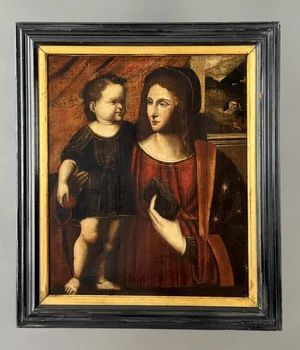
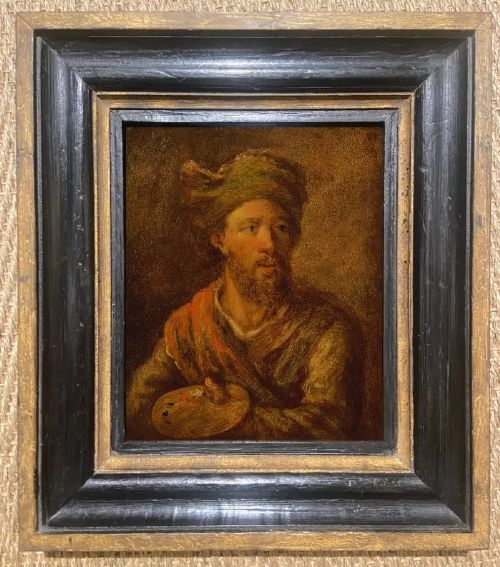
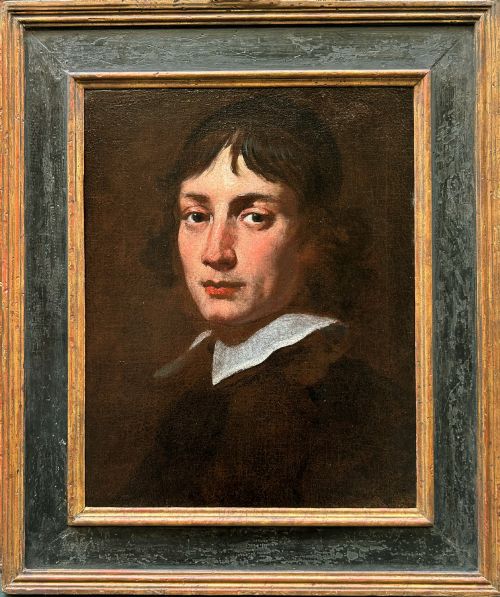
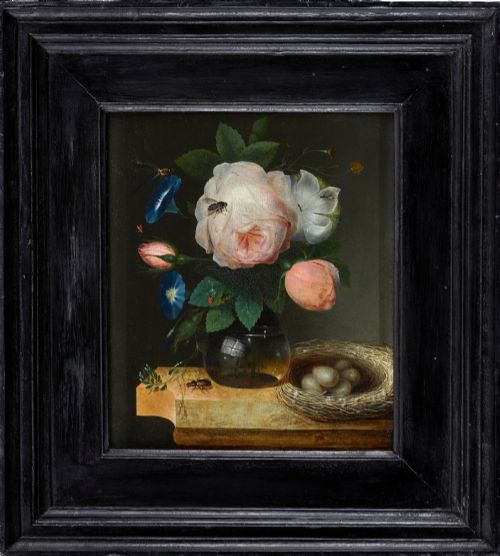
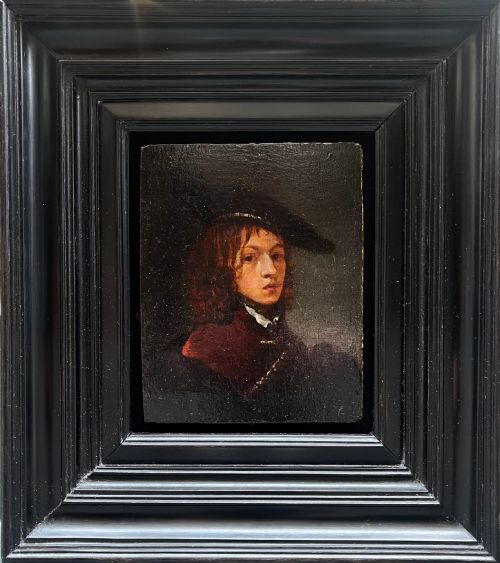
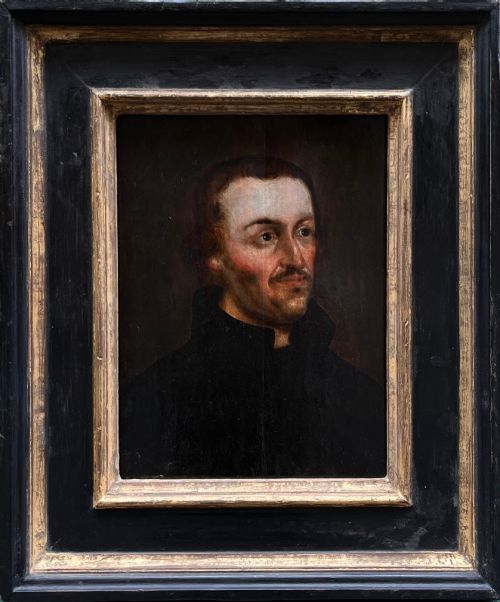
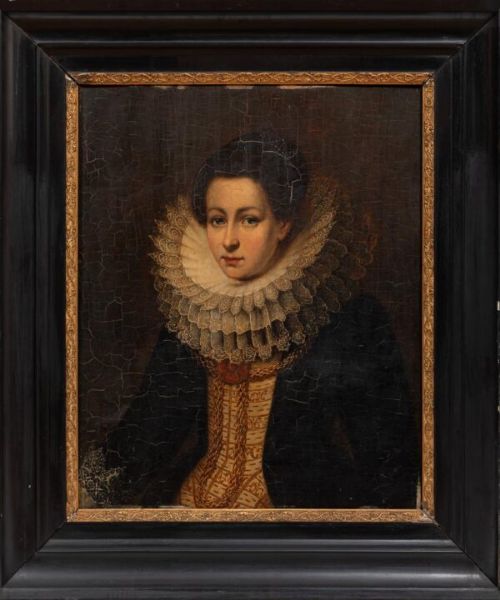
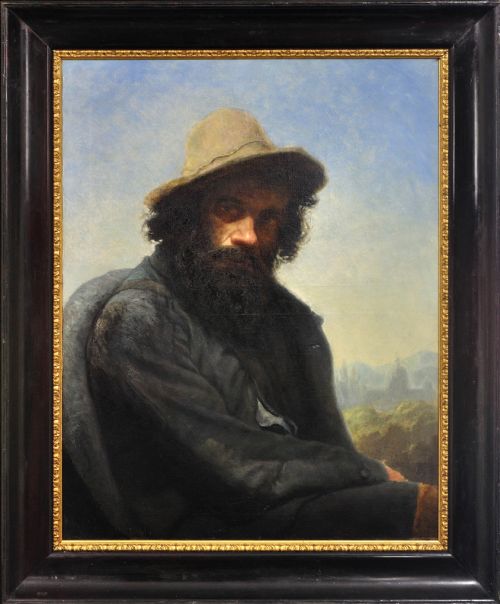


Dark Ebonised Framed Art
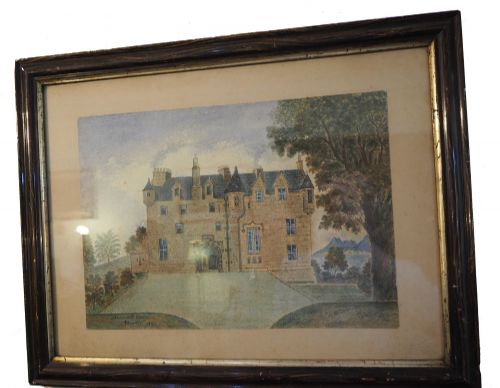
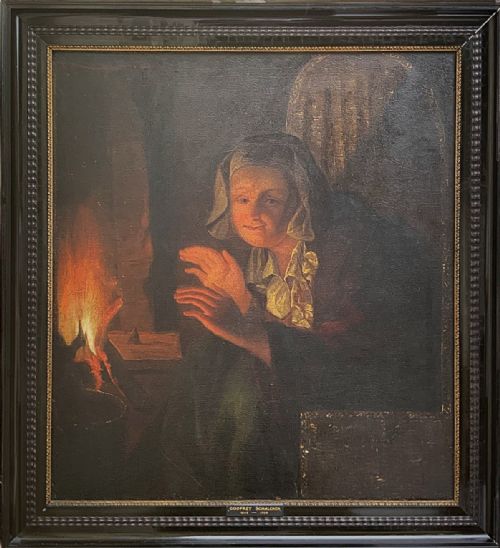
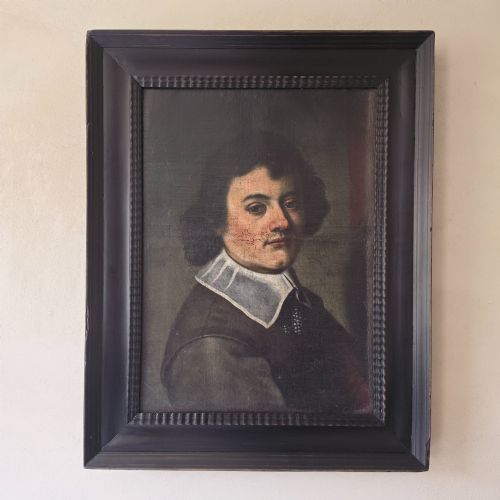
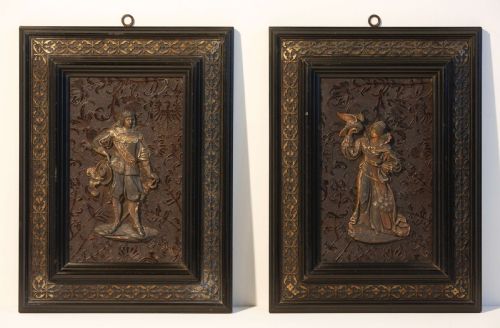
Dark ebonised framed art brings together historic portraits, still lifes and religious scenes bound in sombre wooden mouldings.
Dark Ebonised Framed Art
Dark ebonised framed art encompasses oil paintings, reverse glass prints, watercolours and metal relief plaques housed within deep, blackened wooden surrounds. When searching for dark ebonised framed art, buyers encounter works spanning from the seventeenth century through to the nineteenth century, with strong representation from Dutch Golden Age, Flemish Baroque, Georgian and Victorian periods.
The objects themselves take several distinct forms, most commonly oil paintings on canvas, panel or wood, alongside delicate miniature paintings and wall plaques. Portraiture dominates the selection, featuring subjects ranging from nobility and gentlemen to servants and children, often accompanied by still life studies and narrative scenes.
Originating across Britain, the Netherlands, Italy and broader Europe, these pieces carry the aesthetic weight of historical workshops. The heavy dark frames serve to isolate and intensify the pigments within the canvas, paper or glass, pulling the eye directly into the subject matter.
Materials and construction methods
The physical construction relies heavily on native and exotic hardwoods shaped into robust moulding profiles, treated with dark finishes or ebonisation agents to simulate costly ebony. Canvases, wooden panels and copper or bronze plates provide the substrate for oil paints, while specialised techniques such as reverse glass painting utilise glass sheets and applied metal leaf or pigments viewed from the polished front face.
Framing techniques of these earlier centuries involved pegged wooden joints, gesso preparations, and hand-applied gilding or bronze highlights that contrast sharply against the blackened wood. Pigments were ground by hand from natural minerals and oils, lending the surviving surfaces a depth and stability unique to pre-industrial production.
Listings feature oil paintings, reverse glass prints, and metal relief plaques spanning from the sixteenth century to the Victorian era.
Determinants of quality
Quality within these historic works is dictated by the dexterity of the brushwork, the preservation of the original ground layer, and the harmonious relationship between the artwork and its period housing. Masterful handling of light and shadow, particularly in seventeenth-century Dutch and Flemish pieces, separates ambitious studio output from simpler regional production.
The integrity of the ebonised frame matters immensely, as period mouldings with original surfaces command greater appreciation than later replacements. The clarity of detail in reverse glass prints or metal relief plaques similarly distinguishes superior examples from more routine decorative output.
Guillaume Courtois·Gaspar Peeter Verbruggen·Albin Mattenheimer·Godfried Schalcken·W Bishop·Quirijn Van Brekelenkamp·Pieter Claesz·John Boydell·Gian Federigo Bonzagna·Nicolaes Maes
The Dark Ebonised Framed Art Glossary
- Ebonised
- Wood treated with stains, dyes or finishes to imitate genuine ebony, achieving a dense black appearance that accentuates lighter gilding or interior pigments. This technique gained widespread favour during the seventeenth and nineteenth centuries.
- Reverse glass painting
- An artistic technique where the image is painted directly onto the rear side of a glass sheet, so that the finished piece is viewed through the transparent front. It requires the artist to paint background details before foreground elements.
- Mezzotint
- A printmaking process of the intaglio family where the plate is roughened evenly and then smoothed in areas to develop tones and subtle gradations of light. It allows for rich, velvety dark areas.
- Relief plaque
- A wall hanging or decorative panel where the sculpted figures project from a flat background rather than standing freely in the round. These are frequently cast in bronze, white metal or other alloy combinations.
- Panel painting
- An artwork executed on a flat piece of wood rather than stretched canvas, often utilising oak, poplar or exotic timber. This sturdy support was standard practice prior to the widespread adoption of canvas in the sixteenth century.
Dark Ebonised Framed Art: Frequently Asked Questions
How do I clean an antique ebonised frame?
Dust the moulding gently with a soft, dry brush to remove particulate matter without disturbing any fragile surface patination. Avoid applying liquid cleaners or modern household polishes directly to the blackened wood.
If grime persists, consult a professional conservator rather than attempting aggressive solvent cleaning yourself. Moisture can easily penetrate older wood joints and compromise the integrity of the finish.
How can I tell a seventeenth-century frame from a later copy?
Original early frames often display hand-cut joinery, pegged corners, and subtle irregularities in the moulding profile that reveal manual production. The timber underneath should show appropriate age-related shrinkage and oxidation.
Later Victorian or modern reproductions tend to use uniform machine-cut timber and standardised corner mitres lacking the organic variance of older workshops. Examining the backboards and fixings provides further clues regarding age.
Where should I hang dark ebonised art?
These works thrive in rooms with controlled, indirect lighting where the deep tones of the ebonised wood can absorb and frame the subject. Avoid positioning them in direct sunlight, which causes fading in older oil pigments and watercolours.
Pairing them against neutral or softly textured walls allows the dark frames to provide a striking visual anchor. Maintain stable humidity levels to protect both the wooden supports and the canvas or panel within.