
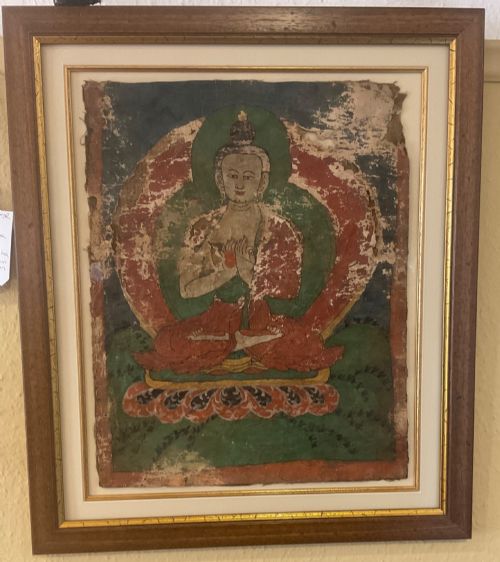


Antique Sacred Art Painting
These antique sacred art painting examples bring centuries of devotion, master workshops, and spiritual iconography into contemporary rooms.
Antique Sacred Art Painting
An antique sacred art painting represents centuries of religious devotion, originating from diverse European and regional schools across the sixteenth, seventeenth, eighteenth, and nineteenth centuries. These works include devotional panels, canvas portraits of saints, and traditional religious icons produced by monastic or secular workshops.
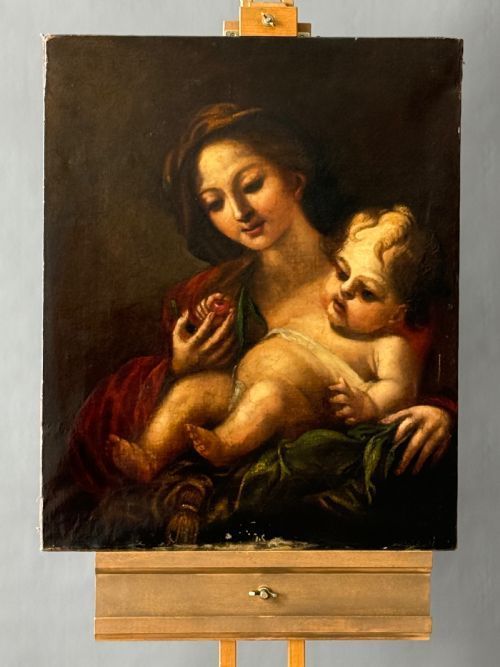
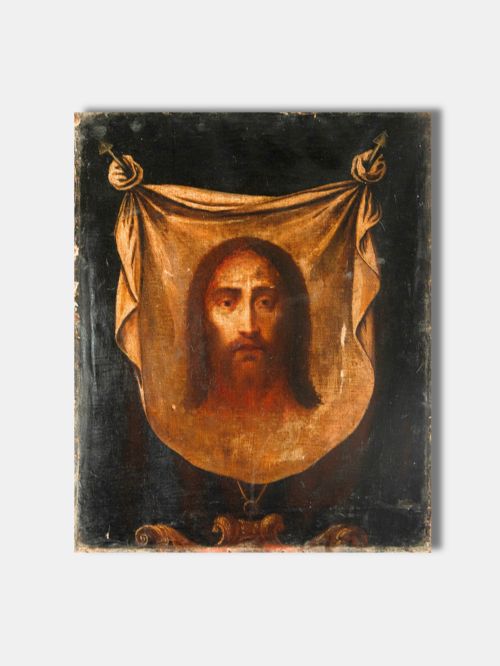
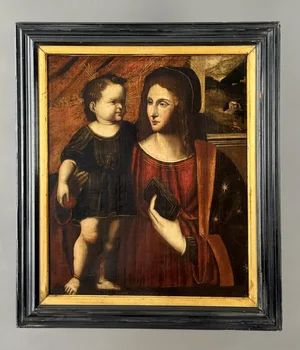
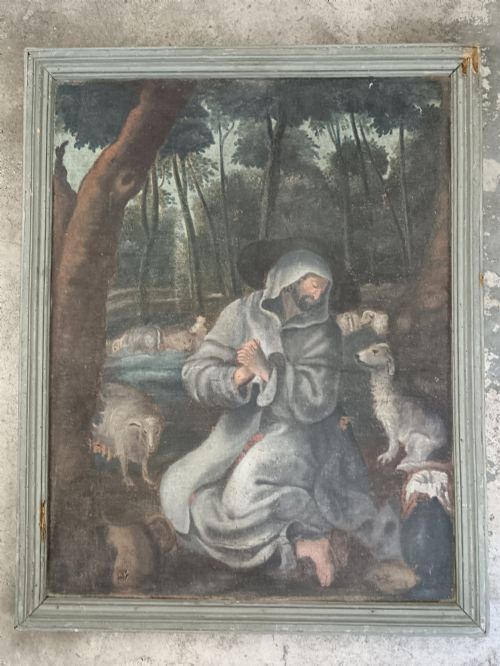
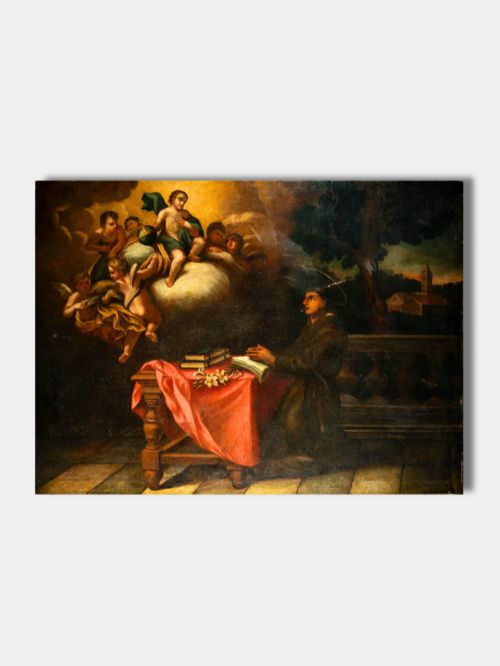
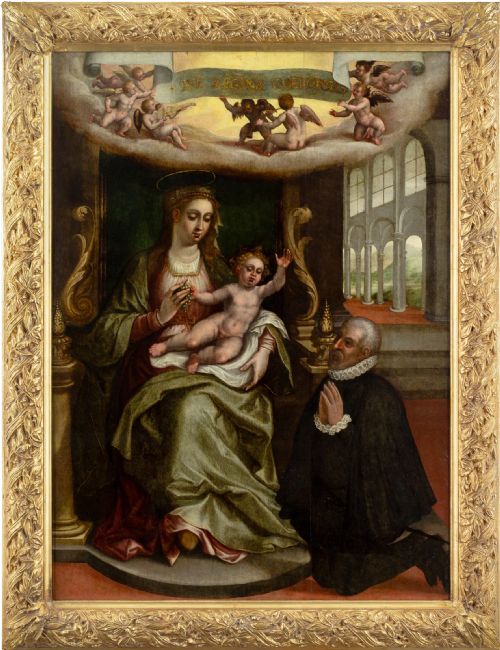
Buyers encounter oil paintings on canvas or panel most frequently on this page, alongside tempera on wood and gold leaf works. Subjects span from the Virgin and Child and the Holy Family to narrative scenes like the Crucifixion and depictions of figures such as Saint Francis of Assisi.
How They Were Made
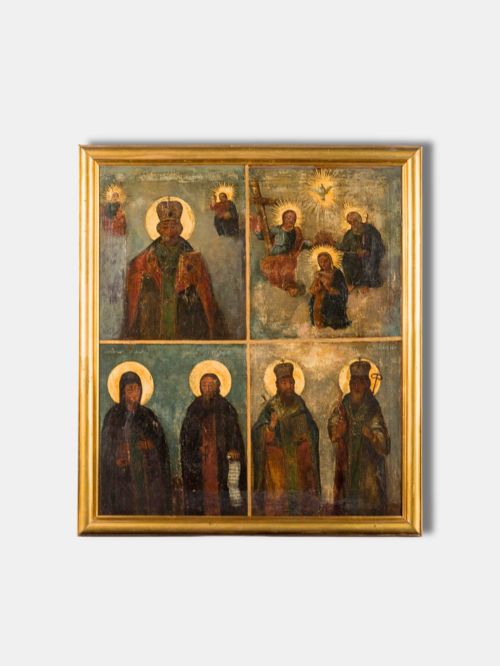
Artists painted primarily with oil or tempera upon prepared canvas, wood panels, or copper supports. Grounds of gesso provided a smooth base, while gold leaf frequently illuminated backgrounds and halos in Russian icons and Italian altarpieces.
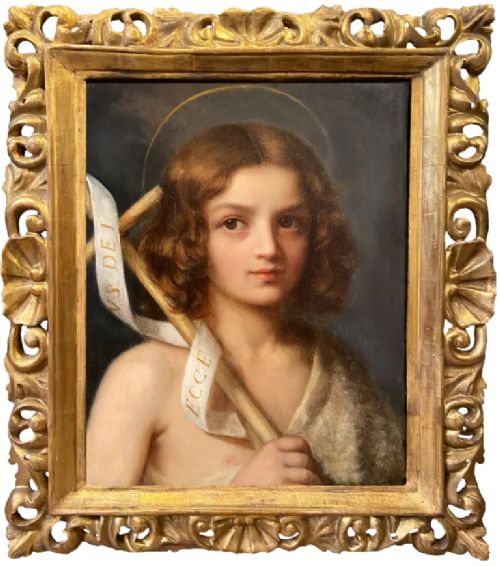
Workshops utilised natural pigments bound in oil or egg tempera, applied in layered glazes to achieve depth and luminosity. Gilt wood frames often completed these devotional pieces, employing carved and gilded ornamentation characteristic of Baroque and Renaissance styles.
Regional origins represented include Italian, Spanish, Russian, Hessian, and Central European schools of religious art.
What Varies in Quality
Hand execution and anatomical precision distinguish works by master circles from provincial copies. Superior canvases display confident brushwork, subtle facial modelling, and sophisticated handling of light and shadow.
The integrity of the original support surface and the retention of primary paint layers affect overall execution quality. Works maintaining original gilt wood frames and undisturbed panel constructions command greater appreciation among collectors.
Miguel Barroso·Francesco Solimena·Juan Ruiz Soriano·Guido Reni·Bernardino Luini
The Antique Sacred Art Painting Glossary
- Tempera
- A permanent, fast-drying painting medium consisting of coloured pigments mixed with a water-soluble binder material, usually egg yolk.
- Pentimento
- An alteration in a painting, evidenced by traces of previous work, showing that the artist changed their mind during the composition.
- Gilt wood
- Wood that has been treated with a thin layer of gold leaf or gold paint applied to its decorative carved surfaces.
- Icon
- A devotional painting of a holy person or object, traditionally executed on wood panels within Eastern Orthodox traditions.
- Old Master
- An artist of skill and heritage producing European art before about eighteen hundred.
Antique Sacred Art Painting: Frequently Asked Questions
How do I date an old religious painting?
Dating relies upon examining the canvas weave, stretcher construction, nail types, and the preparation grounds beneath the paint layer. Stylistic markers of the period, such as seventeenth-century Baroque drapery or eighteenth-century palette choices, also guide evaluation.
Secondary clues include historical inscriptions on the reverse, framing techniques, and the chemical composition of the pigments utilised by the workshop.
What is the difference between an icon and a painting?
Icons follow strict theological canons and traditional iconographic formulas, typically painted using tempera and gold leaf on prepared wood panels within Eastern Christian traditions. They serve as liturgical objects for prayer.
Standard oil paintings offer greater secular artistic freedom in composition, perspective, and individual expression, even when depicting sacred religious narratives.
Where should I hang a religious painting at home?
These works suit spaces with controlled lighting away from direct sunlight, which can damage aged oil paint and delicate gold leaf surfaces. Placing them on neutral walls allows the rich tones of canvas and gilt wood to stand out.
Stable room humidity protects wooden panels and canvases from warping or cracking over extended periods.
How do I care for antique canvas art?
Maintenance involves keeping the artwork away from extreme temperature fluctuations and excessive moisture that might affect the canvas tension or wood support. Dusting should occur gently with a soft, dry, non-abrasive brush.
Professional conservators should handle any structural repairs, cleaning, or varnish removal to preserve the integrity of the original paint layers.