


Baroque Christian Oil Painting
A baroque christian oil painting brings devotional gravity and dramatic chiaroscuro into a room, offering centuries of sacred narrative.
Baroque Christian Oil Painting
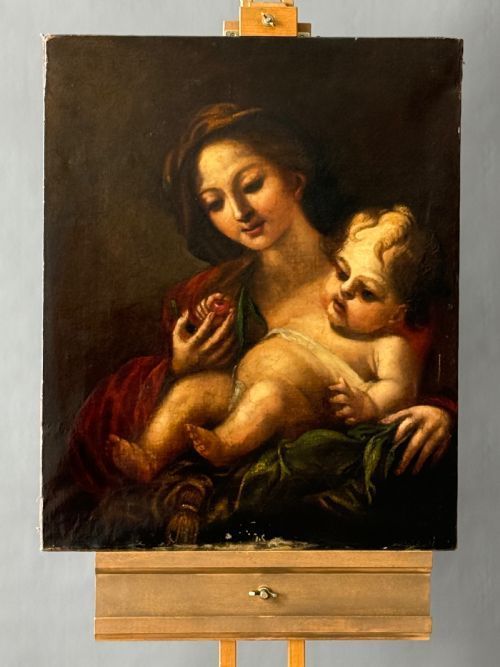
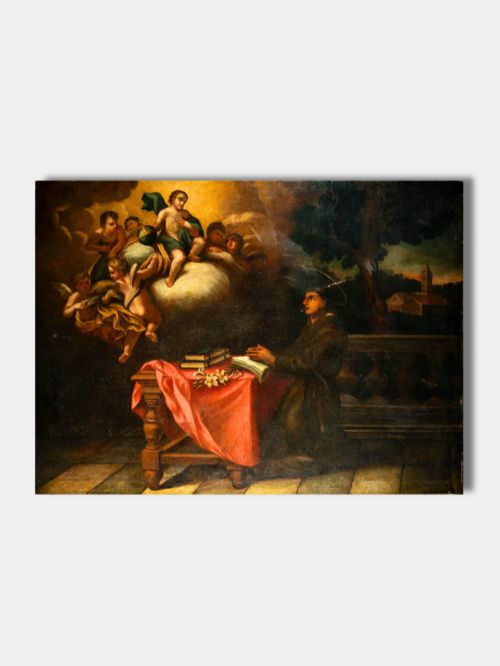
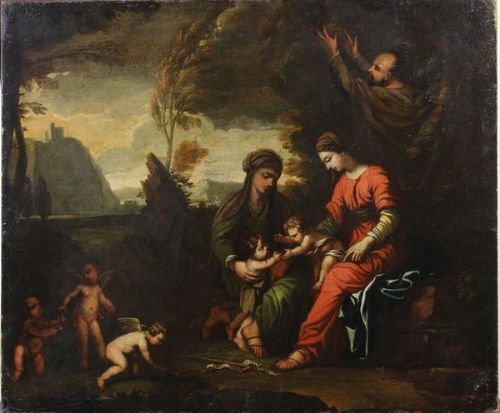
A baroque christian oil painting centres on sacred subjects such as the Madonna and Child, the Holy Family, or the lives of saints. These devotional works emerge predominantly from the seventeenth and eighteenth centuries, reflecting the fervent religious art of Italian, Spanish, Hessian, and Veronese schools.
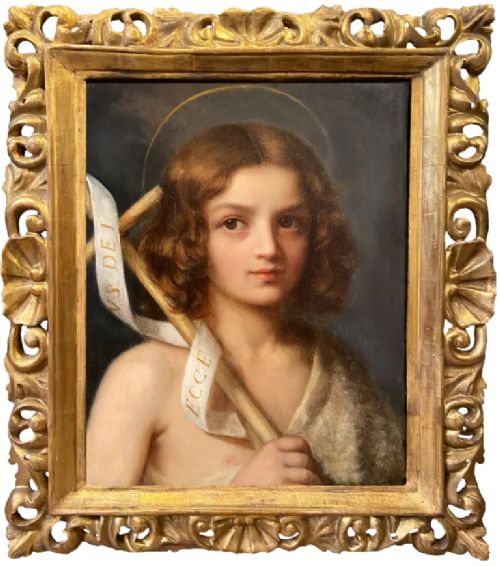
Buyers frequently encounter canvases depicting Saint John the Baptist, the Crucifixion, or the Lamentation of Christ. These pieces range from monumental altar works to smaller domestic devotional canvases executed on wood or canvas supports.
Regional variations appear across the selection, encompassing Spanish colonial influences, Italian old master traditions, and nineteenth century revivals. Each iteration employs characteristic dramatic lighting and emotive figurative grouping native to the baroque movement.
Materials and construction
Painters of this era applied oil paint onto stretched canvas or wooden panels, building rich layers of pigment to achieve deep shadow and luminous highlights. These supports frequently retain their original stretchers or structural wooden frames.
Many surviving canvases are housed in period giltwood or gilded wood frames that complement the intense theatricality of the painted composition. The combination of oil medium and gold leaf enhances the devotional focus of each sacred narrative.
Listings span the seventeenth, eighteenth, and nineteenth centuries, featuring oil on canvas, wood supports, and giltwood frames.
Judging execution and preservation
The integrity of the original paint surface and the stability of the canvas or wood support dictate the standing of an individual work. Period framing also plays a role in the overall integrity of the piece.
Francesco Solimena Workshop·Orsola Maddalena Caccia·Reynard Le Vieux
The Baroque Christian Oil Painting Glossary
- Baroque
- A style spanning the seventeenth and eighteenth centuries characterised by dynamic movement, deep shadow, and intense emotional expression. This aesthetic dominated European religious art and informed subsequent revival periods.
- Chiaroscuro
- An artistic technique employing strong contrasts between light and dark to give subjects volume and dramatic emotional weight. Painters utilised this method to draw the eye toward sacred figures.
- Old Master
- A term denoting a highly skilled European artist working before the nineteenth century, or a painting executed by such a hand. These works often carry school attributions when the specific master remains unconfirmed.
- Giltwood
- Wood carved and treated with a thin layer of gold leaf, commonly utilised for ornate period framing. Such frames protect the canvas edges while amplifying the visual impact of the artwork.
Baroque Christian Oil Painting: Frequently Asked Questions
How do I date a religious oil painting?
Dating relies upon stylistic markers, costume details, pigment analysis, and the physical characteristics of the canvas or wood support. Seventeenth and eighteenth-century works exhibit distinct handling of drapery and emotional intensity compared to later revivals.
Examining the stretcher bars, nail types, and framing methods provides further physical evidence to narrow the creation period.
Where were these devotional paintings displayed?
Original locations ranged from grand European churches and monastic altars to private domestic chapels and personal prayer rooms. Monumental works occupied sacred architectural spaces, while smaller canvases served intimate, private devotion.
Collectors today place these pieces in living areas or studies, where their dramatic lighting and narrative depth create a focal point.
What is a school attribution?
A school attribution indicates that an anonymous artist worked within the stylistic circle, region, or teaching tradition of a master. Hessian, Veronese, and Italian designations help contextualise the geographic origin and training behind the brushwork.
This classification connects unsigned or lesser-known devotional works to the broader artistic currents of their specific century.
How should I care for an antique canvas?
Keep religious canvases away from direct sunlight, excessive moisture, and rapid temperature fluctuations that can cause the oil paint and canvas to crack. Dust gently with a soft, dry brush without applying pressure to the pigment layer.
Professional conservation should be sought if structural sagging or surface darkening obscures the details of the sacred scene.