
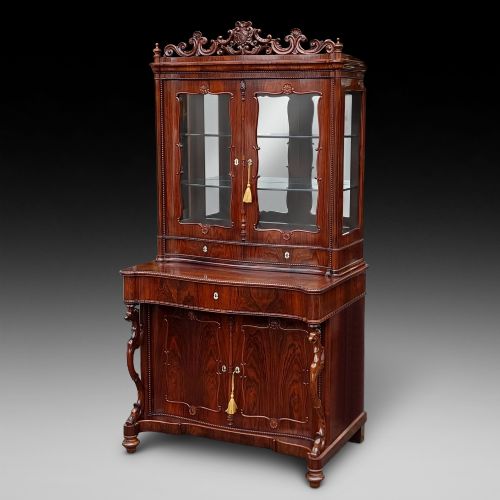
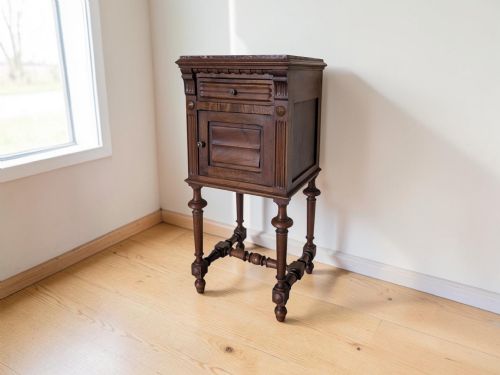
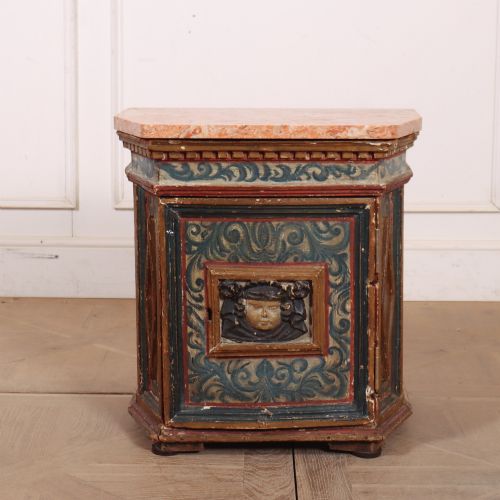
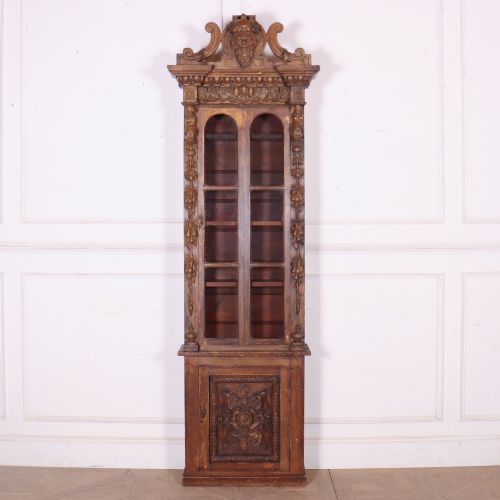
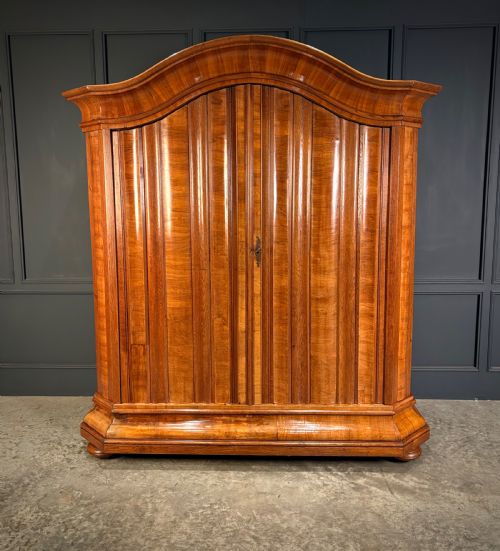
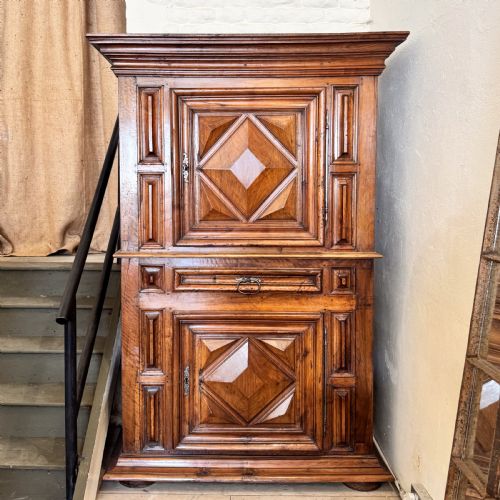
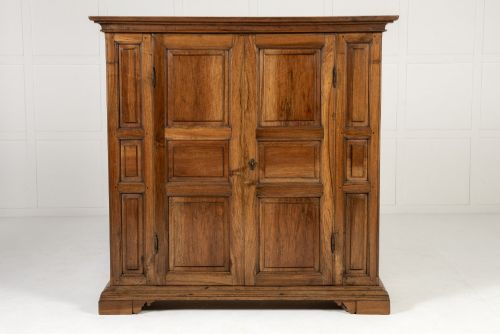
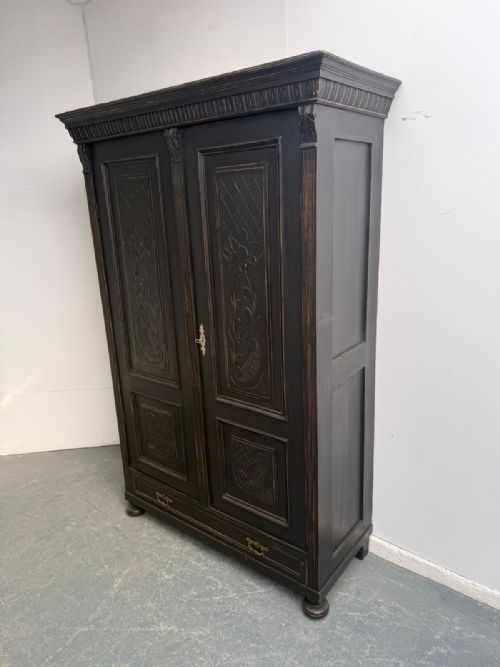
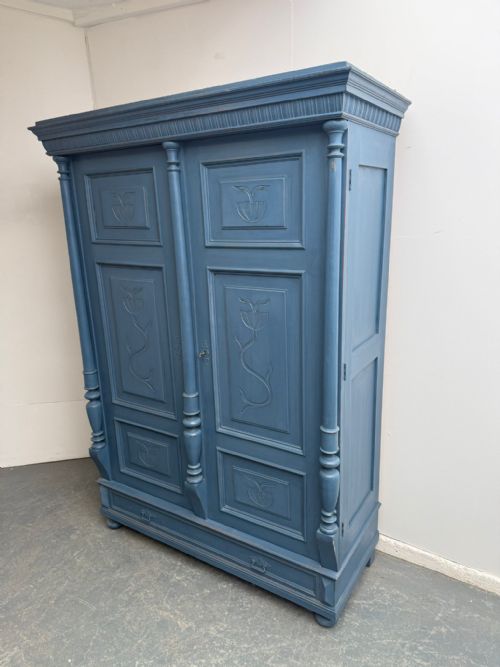

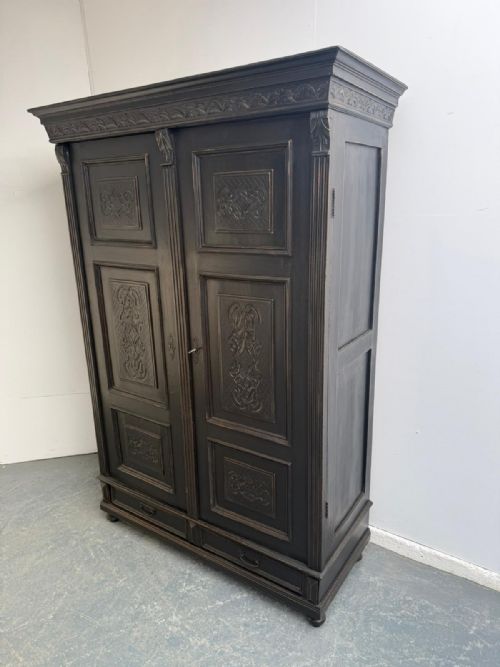

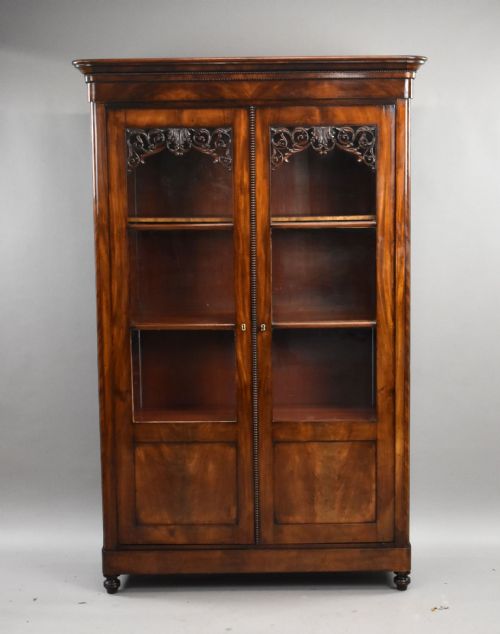


Continental Carved Cupboard
These continental carved cupboard options span centuries of workshop traditions, offering solid timber construction and rich sculptural detail for practical storage.
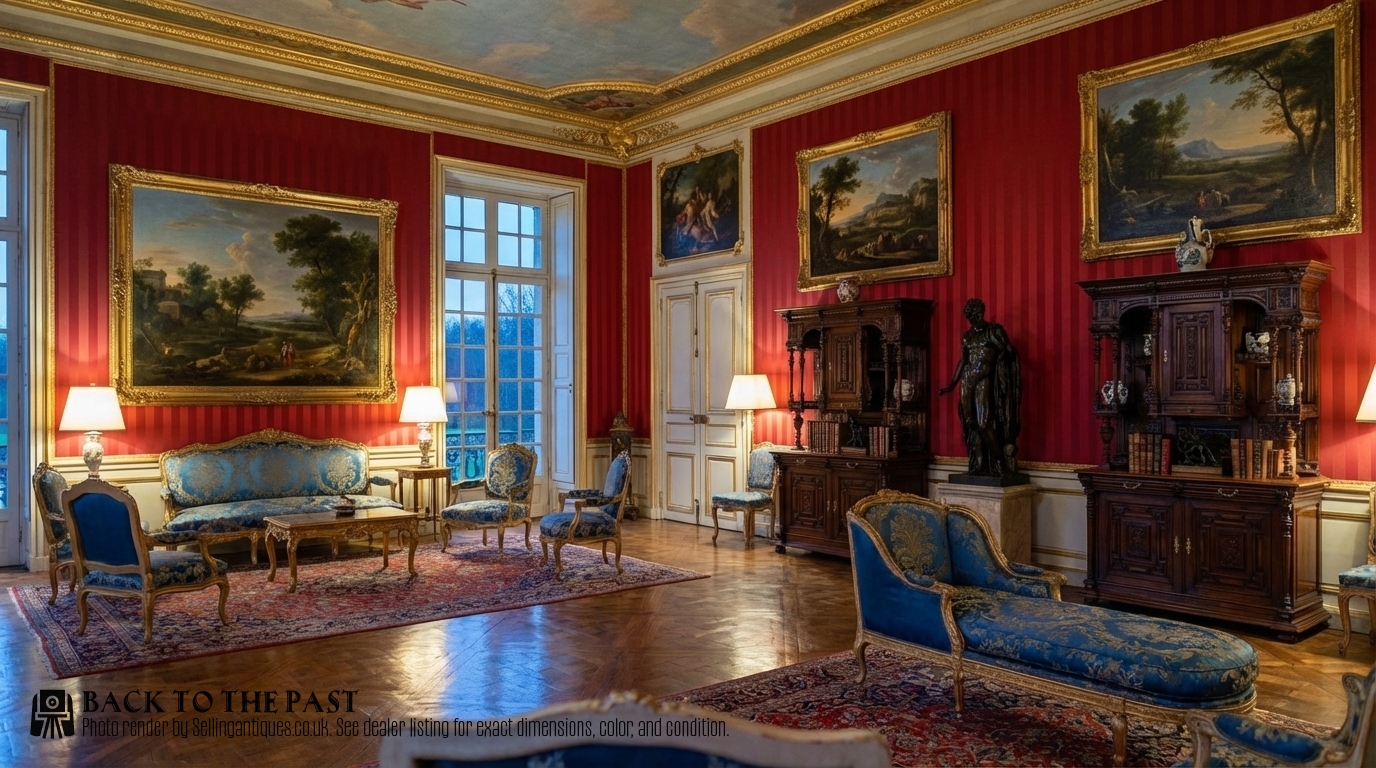
Continental Carved Cupboard
A continental carved cupboard encompasses large armoires, sideboards, bedside units and display cabinets originating from European workshops across the seventeenth, eighteenth and nineteenth centuries.
Buyers browsing this selection frequently encounter walnut, oak and pine forms influenced by Renaissance Revival, Baroque and Biedermeier styles, alongside regional pieces from Italy, Hungary and Flanders.
The objects serve as functional storage pieces, ranging from monumental credenzas and linen cupboards to compact painted hall wardrobes and bedside cabinets.
Materials and construction methods
Cabinet makers utilised dense hardwoods like walnut, oak, rosewood and mahogany, often paired with softer pine for internal structures and secondary woods.
Surface ornamentation relies on deep relief carving, marquetry inlay, gilt bronze or ormolu mounts, and hand-painted finishes applied directly to the timber.
Structural joinery combines traditional pegged mortise and tenon frames with hand-cut panels, brass hardware and iron fittings.
Current listings span the seventeenth century to 1900, incorporating walnut, oak, pine, rosewood, kingwood and limewood.
Factors determining quality
The depth, sharpness and sculptural ambition of the hand-carving distinguish standard workshop output from exceptional commissions.
The choice of primary timber, such as figured walnut, quarter-sawn oak or exotic rosewood veneer, establishes the visual weight and finish durability.
The integrity of original surfaces, whether waxed, polished or painted, preserves the historical character of the piece.
The Continental Carved Cupboard Glossary
- Armoire
- A large freestanding wardrobe or cupboard with doors, typically enclosing shelving or hanging space. These pieces often feature deep cornices and substantial panelled doors.
- Credenza
- A monumental sideboard or display cabinet originating in Italy, usually raised on legs or a plinth base. They are noted for architectural mouldings and heavy relief carving.
- Marquetry
- The art of applying decorative pieces of veneer to a structural structure to form geometric or pictorial designs. Cabinet makers use contrasting timbers to achieve tonal variation.
- Ormolu
- Gilt bronze mounts applied as decorative hardware and feet on fine cabinets. This technique adds metallic contrast to dark woods like kingwood and rosewood.
- Biedermeier
- A Central European style dating to the nineteenth century that prioritises clean lines and utilitartian comfort over excessive ornamentation. It highlights the natural grain of timbers such as cherry, birch and ash.
Continental Carved Cupboard: Frequently Asked Questions
How do I date a continental carved cupboard?
Dating relies on examining the timber species, joinery methods and decorative style. Seventeenth and eighteenth-century pieces often display hand-sawn boards and pegged frames.
Later nineteenth-century examples incorporate revival motifs like Renaissance carvings or Biedermeier veneers alongside machine-assisted secondary construction.
Where were these cupboards originally made?
Production centres span across continental Europe, with notable pieces originating from Italy, Germany, the Netherlands, Hungary and Flanders. Regional workshops adapted local timber preferences, such as oak in northern regions and walnut in Italy.
Stylistic markers often reflect the dominant artistic influences of these specific areas.
How should I care for antique timber?
Maintain stable humidity and temperature levels in your room to prevent timber from splitting or warping. Avoid placing the cupboard in direct sunlight, which can fade polished surfaces.
Apply a traditional beeswax polish sparingly to nourish the wood grain without building up heavy residue.
What is the difference between an armoire and a credenza?
An armoire functions primarily as a vertical wardrobe or linen store, featuring full-length doors and deep internal capacity. A credenza is typically lower and broader, designed originally for displaying plate or serving food.
Armoires stand tall against a wall, whereas credenzas emphasise horizontal proportions.