


Antique Flemish Sideboard
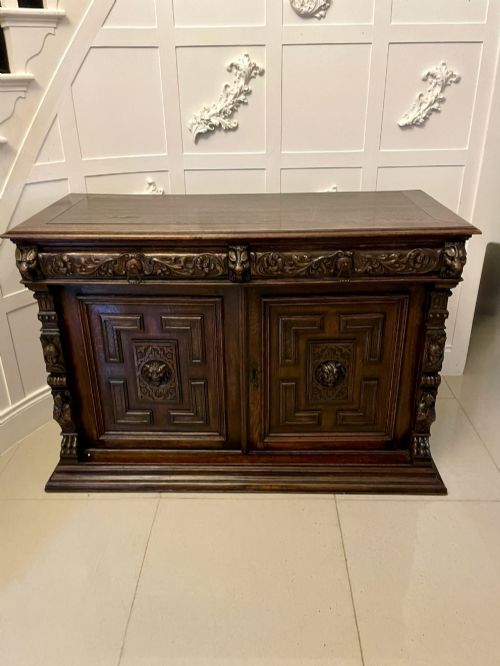
An antique flemish sideboard brings heavy carved oak, rich Renaissance revival presence, and centuries of continental craftsmanship directly into a dining space.
Antique Flemish Sideboard
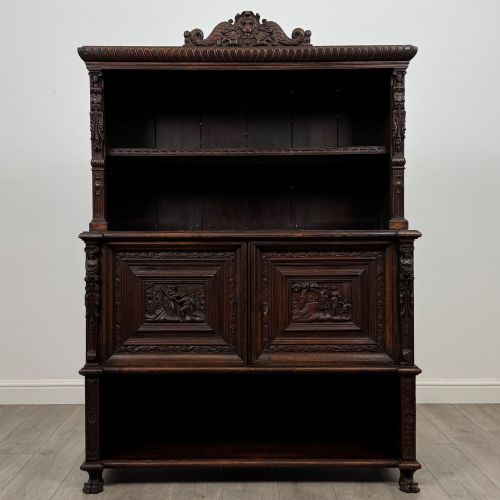
An antique flemish sideboard encompasses substantial oak storage furniture rooted in Renaissance revival, baroque, and Victorian aesthetic traditions. These pieces appear frequently as large buffets, mirror back cabinets, and hall cupboards carrying deep relief carving.
Most examples originate from the nineteenth century, drawing heavily on sixteenth and seventeenth century continental motifs such as lion masks and architectural paneling. Buyers also encounter related forms including cabinets on stand, side tables, and dining suites.
The dominant material across nearly all listings is solid oak, though walnut, ebony, and glass occasionally feature in distinct cabinet variations. Such furniture anchors a room through sheer scale and intricate surface detail.
How they were made
Craftsmen relied predominantly on solid oak, shaping heavy timbers through traditional joinery to construct monumental carcasses. Surfaces received extensive hand carving, producing deep relief panels, moulded cornices, and sculptural elements like lion masks.
Hardware played an essential structural and decorative role, incorporating brass and iron hinges, lock plates, and handles. Secondary woods such as walnut and ebony occasionally augmented the primary oak structure in specialised table cabinets.
Materials recorded across the inventory include solid oak, walnut, ebony, brass, iron, and glass.
What varies in quality
Depth and crispness of the hand carving separate standard production from exceptional artistry. Superior pieces display fluid, deeply undercut foliage, expressive figural masks, and well-proportioned architectural framing.
Integrity of timber and construction methods also define the tier of a piece. Heavier timbers, balanced proportions, and original brass or iron mounts indicate higher workshop standards during manufacture.
The Antique Flemish Sideboard Glossary
- Renaissance Revival
- A nineteenth century design movement that reinterpreted sixteenth century classical and northern European motifs. It heavily influenced the ornamentation found on these sideboards.
- Buffet
- A large piece of dining room furniture designed for serving food and storing tableware. In this category, buffets share characteristics with sideboards and hall cupboards.
- Lion Mask
- A sculptural furniture motif depicting the face of a lion, frequently carved in high relief on Flemish and Renaissance revival cabinetry.
- Cabinet on Stand
- A tall enclosed storage section elevated upon an independent supporting frame or table base. This form provides a distinct vertical profile compared to standard low sideboards.
- Baroque
- An elaborate artistic style emphasising exuberant detail, dramatic movement, and grand scale. Baroque revival examples display particularly theatrical surface ornamentation.
Antique Flemish Sideboard: Frequently Asked Questions
What is a flemish sideboard?
An antique flemish sideboard is a large storage unit, typically fashioned from oak and heavily decorated with carved panels and figurative details. These pieces trace their design lineage back to Renaissance and baroque continental traditions.
They serve as both functional dining room furniture and strong decorative focal points within traditional interiors.
How old are these sideboards?
The majority of these pieces date from the nineteenth century, reflecting periods such as the Victorian era and the broader Renaissance revival movement. Surviving examples occasionally reference sixteenth and seventeenth century design principles.
Construction dates generally span from the eighteen fifties through the Edwardian period, utilising traditional oak joinery methods.
Where should I place one?
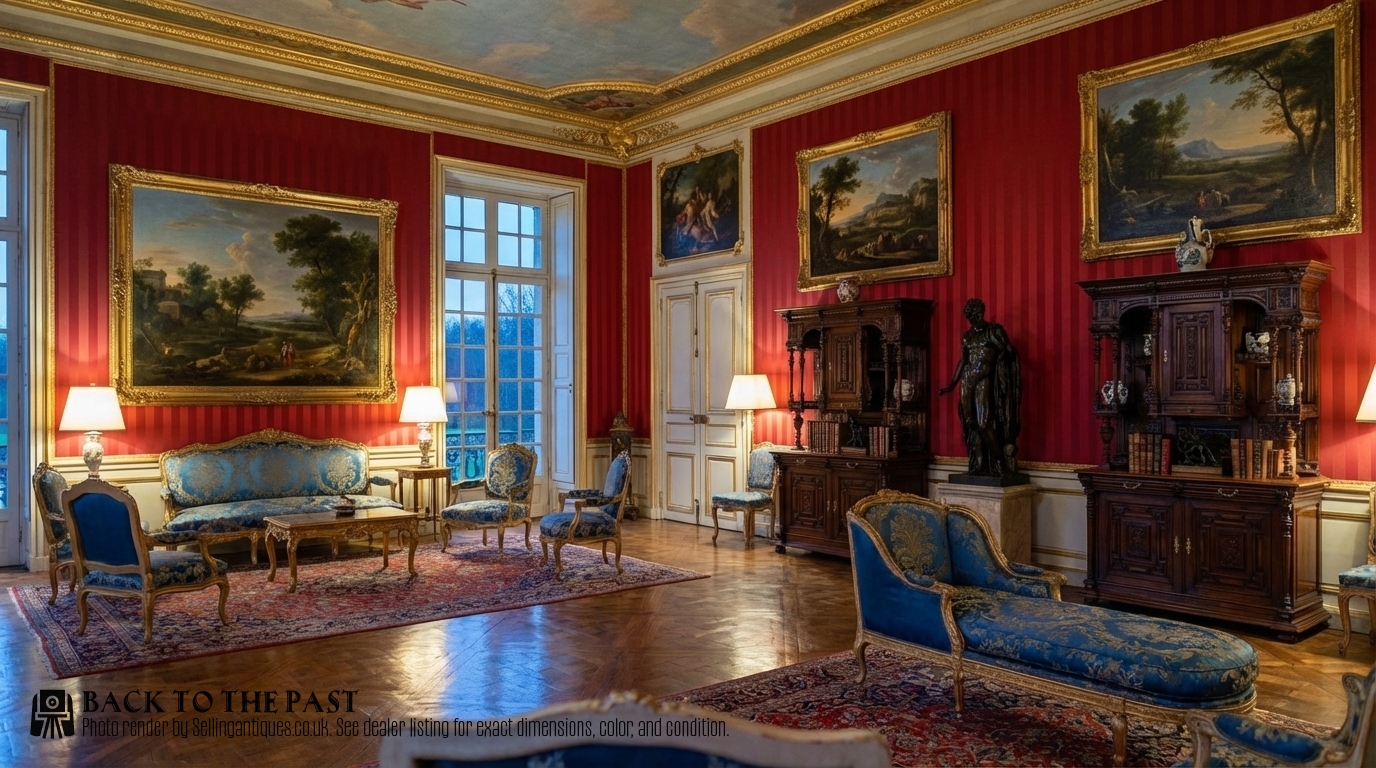
Because of their substantial size and heavy carved presence, these sideboards suit large dining rooms, spacious hallways, or reception spaces. They require adequate wall space to display their mirror backs and towering cornices properly.
Pairing them with neutral walls allows the dark oak tones and deep relief carvings to stand out visually.
Are they made of solid oak?
Solid oak forms the primary material for nearly all listings in this category, providing the structural strength needed for massive cupboards and buffets. Craftsmen utilised its grain to support intricate hand carving.
Some related cabinet variations incorporate secondary materials like walnut, ebony, brass, and iron mounts.