


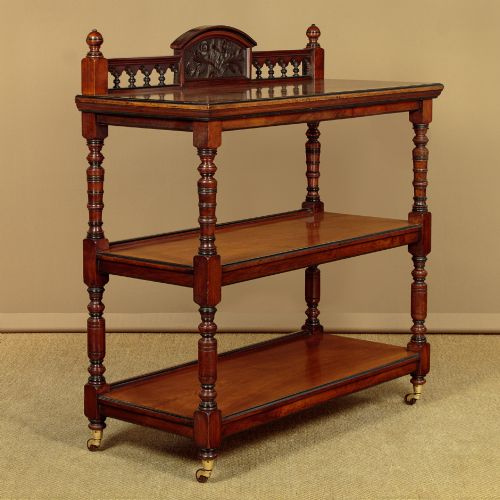
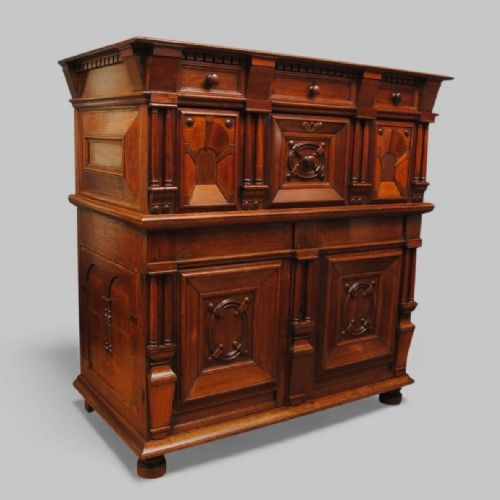


Dark Walnut Sideboard
A dark walnut sideboard brings a rich, deep timber tone and substantial storage to a dining room or hall.
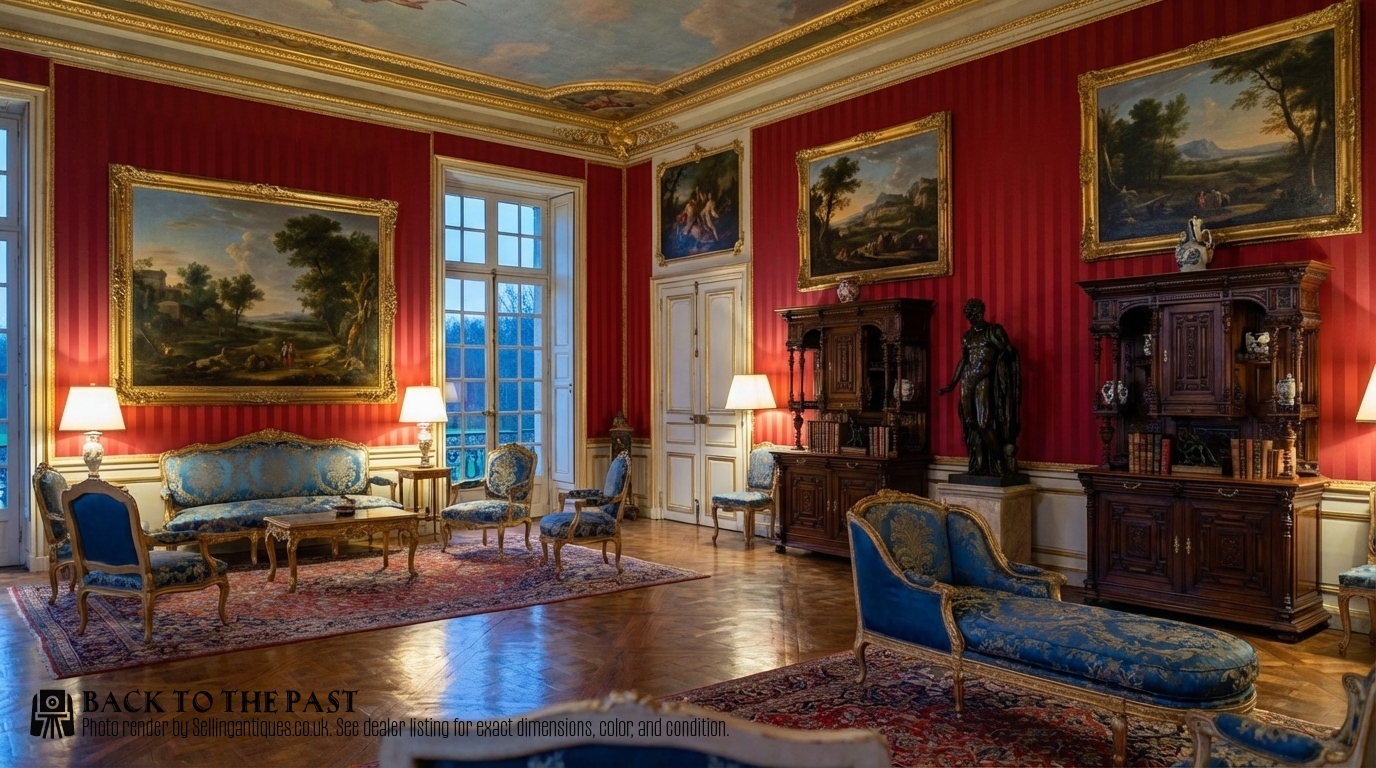
Dark Walnut Sideboard
A dark walnut sideboard encompasses a range of substantial timber serving pieces, credenzas, and buffets designed for storage and display. When searching for a dark walnut sideboard, buyers frequently encounter 19th-century Victorian examples alongside earlier continental pieces.
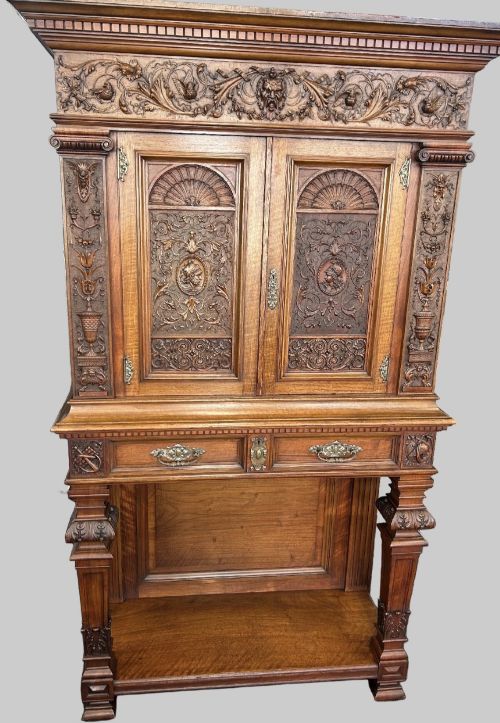
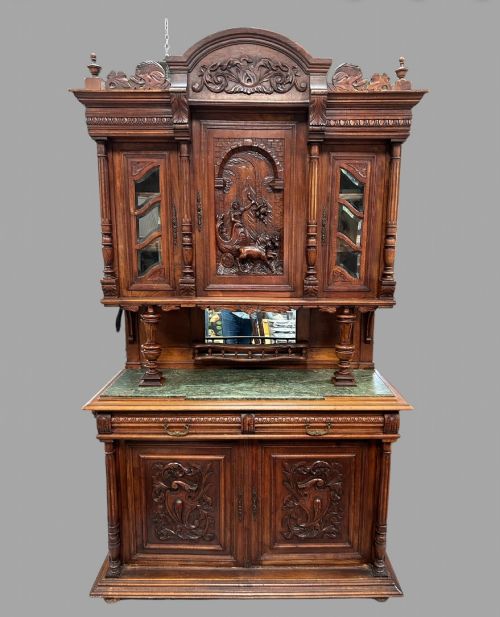
The selection ranges from heavily carved Renaissance Revival and Gothic Revival buffets to refined Aesthetic Movement and Edwardian cabinets. Forms extend from low side cabinets and credenzas to monumental Italian credenzas and French dressers in rich walnut.
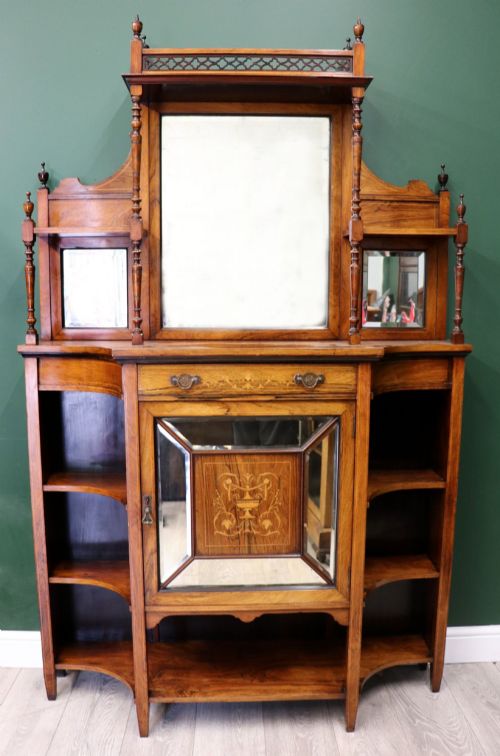
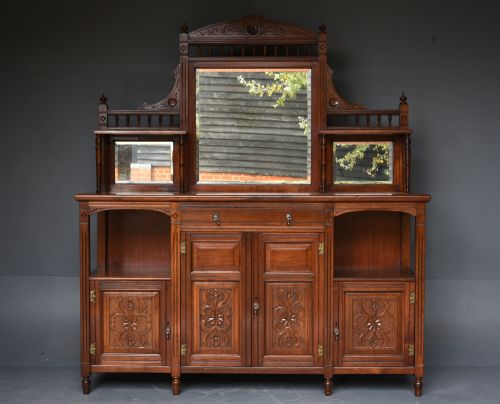
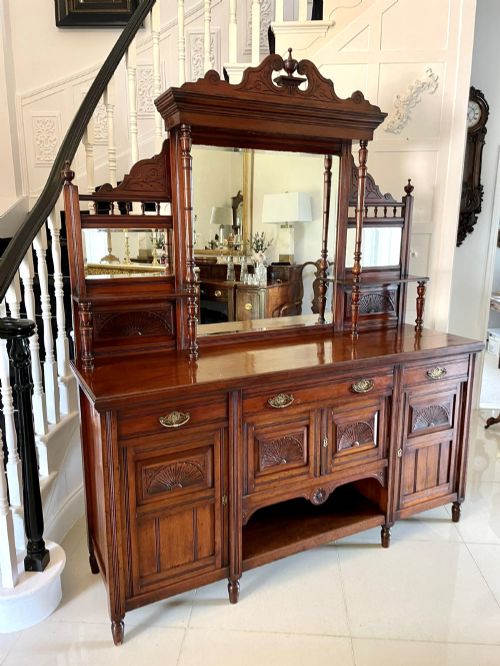
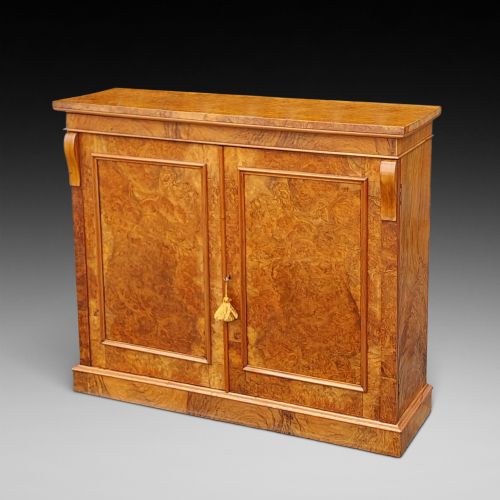
Makers and regional workshops utilised the dense grain of walnut, often enhancing the surface with burr veneers, marquetry inlay, and mirror backs. These pieces function as both practical dining room storage and prominent decorative focal points.
Materials and construction
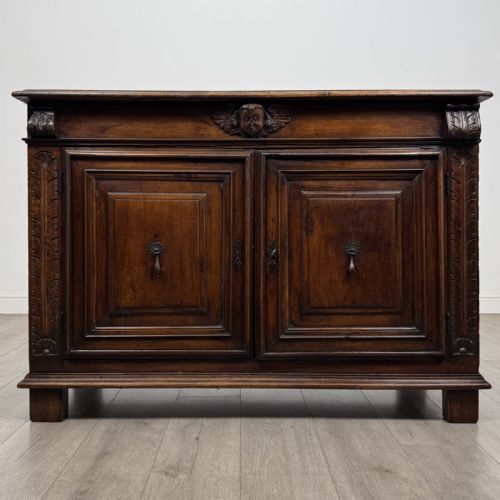
Cabinetmakers built these pieces primarily using solid walnut and burr walnut veneers, sometimes augmented with secondary woods such as oak and fruitwood. The deep natural colour of the timber formed the base for elaborate carved detailing, panelled doors, and architectural cornices.
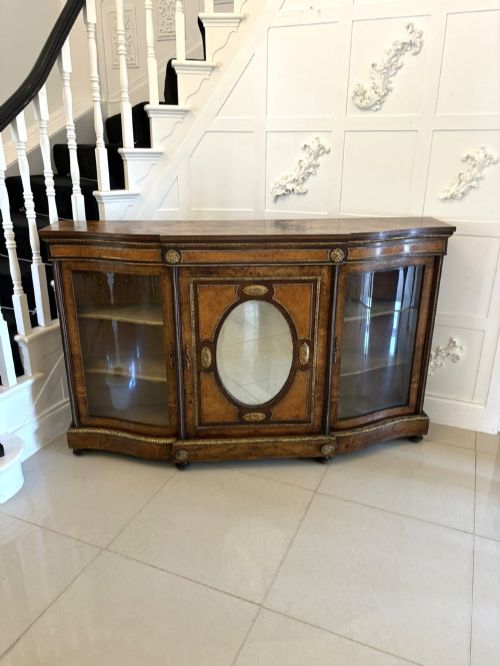
Construction techniques combined robust joinery with decorative elements including brass mounts, ormolu, inset glass panels, and mother-of-pearl inlay. Surfaces were often finished with hand-carved motifs reflecting styles from French Provincial to Gothic Revival.
Dark Walnut Sideboard Retail Price Guide 2026
Typical asking prices for dark walnut sideboard among the pieces listed under this phrase on Sellingantiques today, from the lower quarter to the upper quarter. They describe what is for sale here now, not the wider market.
One listed piece is specifically built to hold cutlery, proving that past generations took their knives very seriously indeed.
What determines quality
Quality rests heavily on the selection of the timber, particularly the depth of figuring in burr walnut veneers and the crispness of hand carving. Superior examples display balanced proportions, integrated decorative mounts in brass or ormolu, and well-executed marquetry inlay rather than superficial surface ornament.
The integrity of the construction, from the fit of the cabinet doors to the condition of original mirror backs and marble tops, separates standard production pieces from finer workshop creations.
Étienne Kohlmann·Gordovil Spain·Whytock & Reid·Gabriel Viardot
The Dark Walnut Sideboard Glossary
- Burr walnut
- A veneer taken from the warted growths of a walnut tree, prized for its swirling, highly figured grain patterns. It adds significant decorative movement to door panels and drawer fronts.
- Credenza
- A low dining room cabinet or sideboard, frequently featuring glass doors or central cupboards flanked by side compartments. Many Victorian examples include delicate ormolu mounts and mirror backs.
- Ormolu
- Gilded bronze ornamentation applied to furniture corners, feet, and friezes. It provides a bright metallic contrast to dark walnut timber.
- Marquetry
- The art of applying pieces of veneer to a structure to form decorative patterns and pictures. It appears on high-grade Victorian and Edwardian cabinets.
- Aesthetic Movement
- A late nineteenth-century design style focusing on art for art's sake, often incorporating simpler lines, ebonised details, and Japanese-inspired motifs.
Dark Walnut Sideboard: Frequently Asked Questions
Where should I place a dark walnut sideboard?
These substantial timber pieces suit dining rooms, large hallways, or spacious living areas where their deep tones and decorative carvings can anchor the room. Ensure the floor space allows the cabinet doors and drawers to open fully without obstruction.
Keep the piece away from direct sunlight and strong heat sources to prevent the walnut timber and burr veneers from drying out or splitting over time.
How do I care for walnut wood?
Dust the surface regularly with a soft, dry cloth to prevent dirt accumulation in the carved recesses and grain. Occasional application of a quality beeswax helps nourish the timber and maintain its natural lustre without building up heavy residues.
Avoid using silicone-based polishes or damp cloths, as excessive moisture can damage antique French polish and veneer surfaces.
How do I distinguish Victorian from earlier styles?
Victorian sideboards often feature heavy carved ornamentation, mirror backs, and ornate ormolu mounts reflecting Revival styles such as Gothic or Renaissance. They generally date from the mid to late nineteenth century and utilise machine-assisted elements alongside hand carving.
Eighteenth-century and earlier continental pieces typically display simpler architectural lines, heavy panelled doors, and solid walnut construction without the mirror backs common to later Victorian designs.
What is the difference between a buffet and a credenza?
A buffet is traditionally a taller dining room piece designed for serving food and storing tableware, often featuring upper tiers, dressers, or plate racks. They tend to have a more utilitarian yet decorative presence.
A credenza is a lower, more formal cabinet historically used for displaying valuables, frequently featuring glass-fronted side cupboards and decorative marquetry or ormolu mounts.