




18th Century French Buffet
An 18th century french buffet provides generous storage and a distinct regional presence, combining robust provincial construction with refined period lines.
18th Century French Buffet
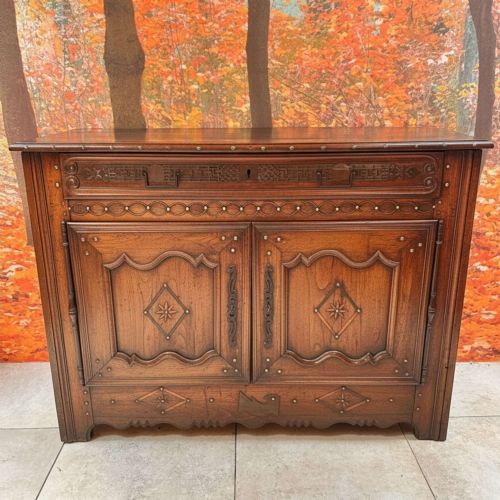
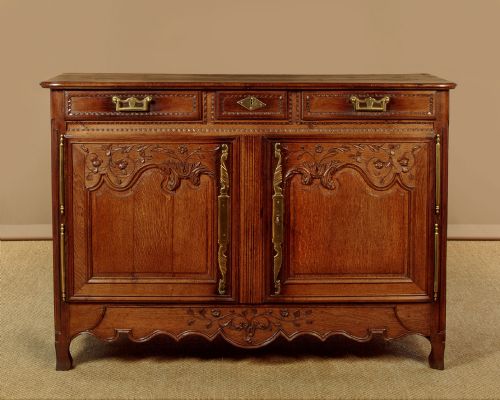
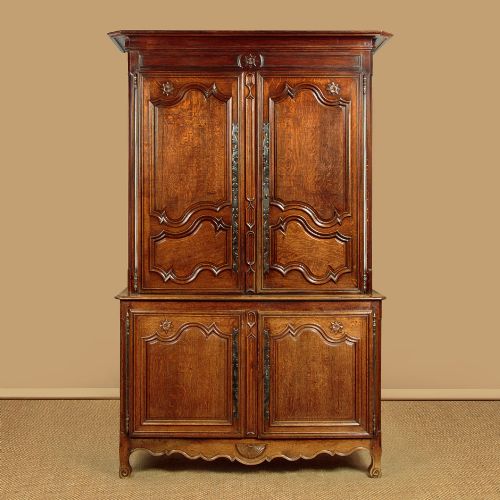
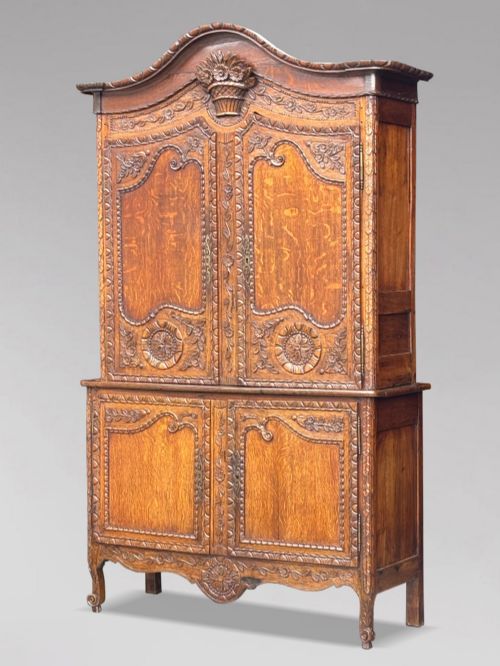
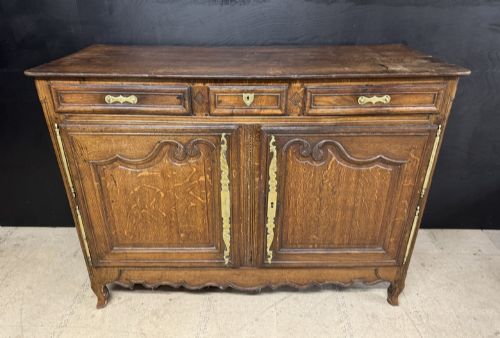
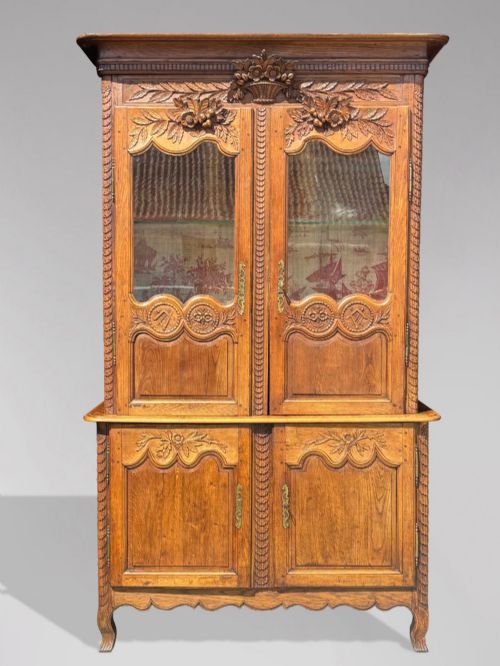
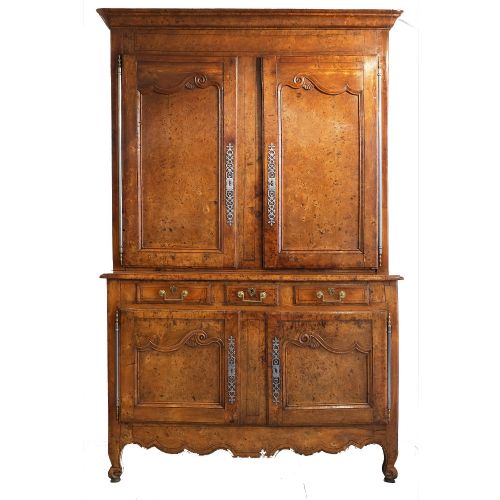
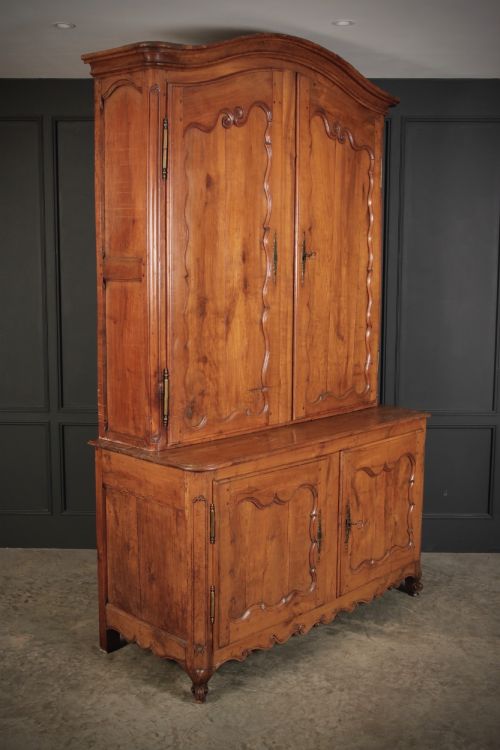
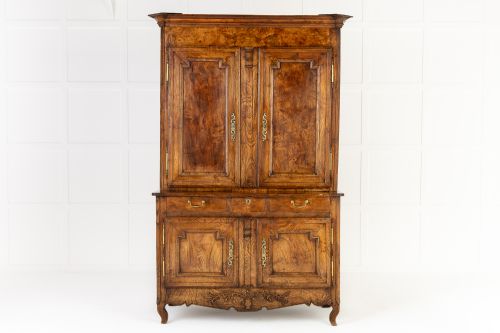
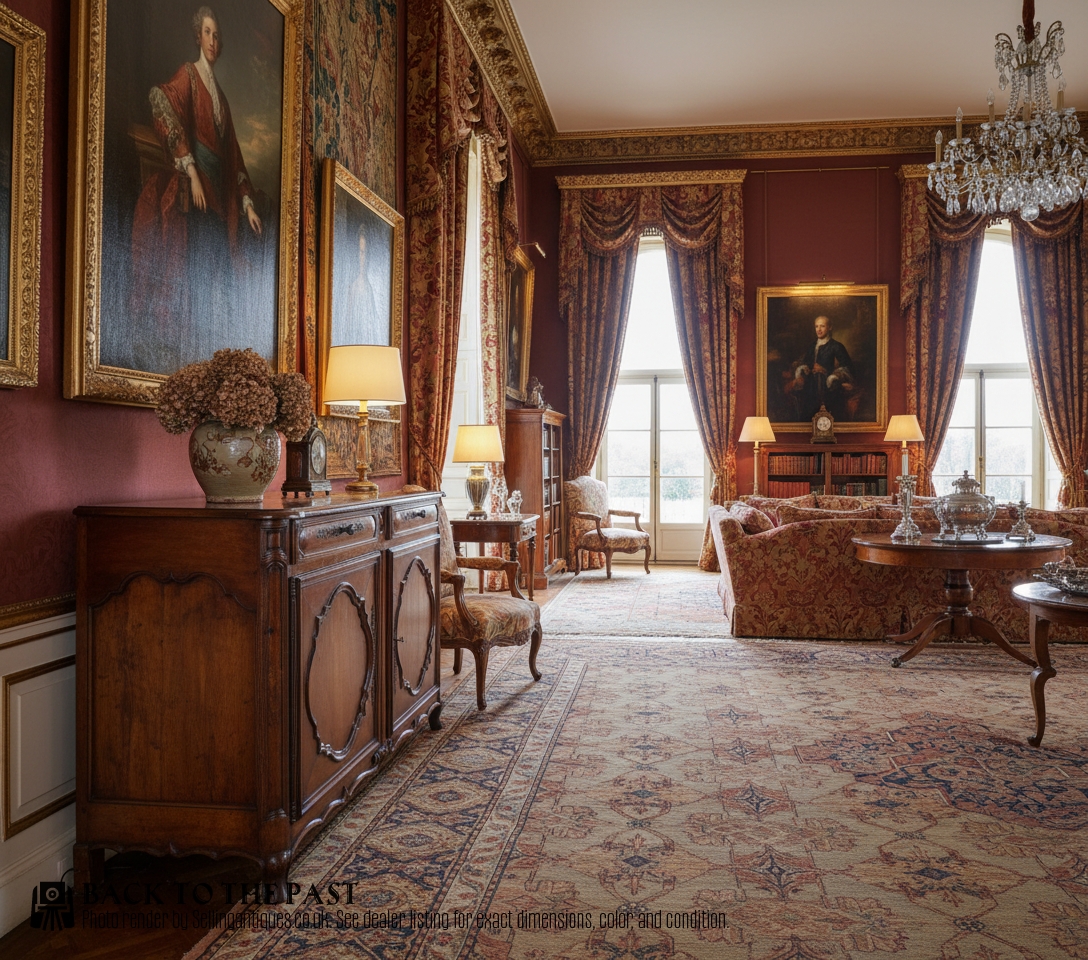
An 18th century french buffet encompasses low serving pieces, tall two-tier cupboards known as deux corps, and long low enfilades designed for dining rooms and hallways. The pieces appearing most frequently across these records are heavy oak and walnut cupboards built in regional provincial workshops.
Makers in provincial regions produced these storage items using local hardwoods to suit specific domestic tasks, resulting in variations from simple low cabinets to elaborate carved vaisseliers and tall housekeepers' cupboards. Buyers encounter structural formats ranging from single-body servers to towering upper and lower section combinations.
Materials and Technique
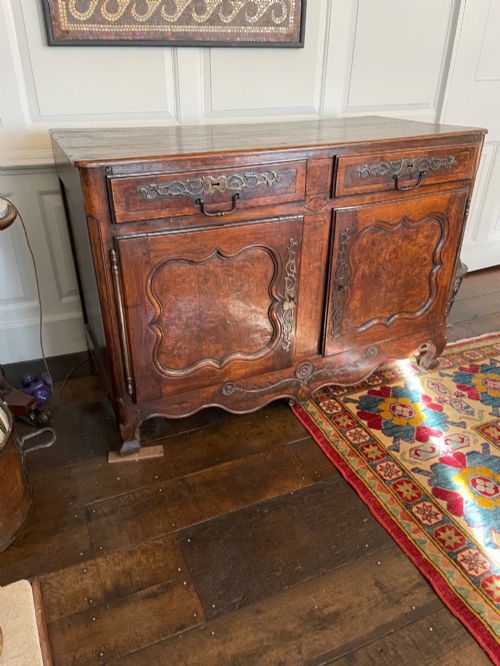
Cabinet makers built these pieces primarily using solid oak, walnut, cherry wood, ash, and chestnut, often incorporating burr elm or fruitwood for decorative impact on doors and drawer fronts. Iron and brass hardware, including wrought hinges and escutcheons, secured heavy timber panels joined with traditional pegged construction.
Surfaces display hand-carved panels, moulded framing, and occasionally original painted finishes or bleached treatments applied to the native timber. The structural joinery relies on pegged mortise and tenon joints designed to bear the weight of heavy domestic storage.
18th Century French Buffet Retail Price Guide 2026
Typical asking prices for 18th century french buffet among the pieces listed under this phrase on Sellingantiques today, from the lower quarter to the upper quarter. They describe what is for sale here now, not the wider market.
Several pieces were designed specifically to hold confit jars, proving that past generations took their duck preservation very seriously indeed.
Judging Quality
Quality rests in the selection of native timber, the crispness of hand-carved mouldings, and the survival of original hardware and surface patination. Pieces retaining their original timber tone or authentic early paint finish hold greater integrity than those altered by later stripping or heavy restoration.
Proportion and balance distinguish finer provincial examples, where panel thickness, drawer construction, and the alignment of two-body sections demonstrate the skill of the original maker. The integration of burr veneers or select fruitwoods elevates the visual weight of the cabinetry.
The 18th Century French Buffet Glossary
- Buffet deux corps
- A large two-part cupboard featuring a lower cabinet surmounted by a matching upper section, frequently used for displaying and storing tableware.
- Enfilade
- A long sideboard featuring multiple doors and drawers in a continuous line, originally designed for serving meals in large provincial dining spaces.
- Vaisselier
- A traditional storage cabinet or dresser base combined with open upper shelving designed specifically to hold plates and dishes.
- Confiturier
- A smaller single-door cupboard originally made to store jars of preserves or confit in French provincial households.
- Patina
- The surface sheen and colour developed by aged timber and metal hardware through decades of handling and cleaning.
18th Century French Buffet: Frequently Asked Questions
Where were these buffets used in the home?
These pieces served primarily in kitchens, dining rooms, and hallways as functional storage for household provisions, linens, and tableware.
Lower serving units functioned as preparation surfaces, while taller cupboards and deux corps held pantry items and ceramics.
How do I identify a regional style?
Regional identity appears in the choice of native wood, such as walnut in southern areas or oak and ash in northern districts.
Carving styles and proportions also reflect local provincial traditions rather than uniform Parisian standards.
Are these pieces made from solid wood?
Provincial workshops constructed these items using solid native timbers like oak, cherry, chestnut, and walnut for frames, panels, and internal shelving.
Decorative variations sometimes incorporate burl veneers on primary surfaces while maintaining solid framing.
How should I care for an antique wooden buffet?
Protect the aged surface by avoiding direct sunlight and maintaining stable room humidity to prevent timber movement.
Apply occasional gentle wax to nourish the grain without building up heavy chemical layers.