



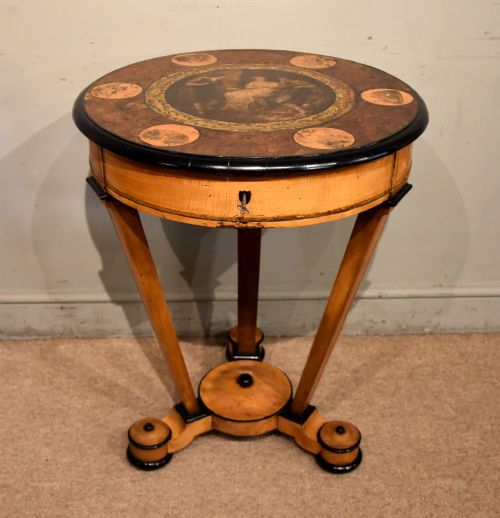
Continental Table
A continental antique table brings European craftsmanship and varied timber into a room, offering functional surface space rooted in centuries past.
Continental Table
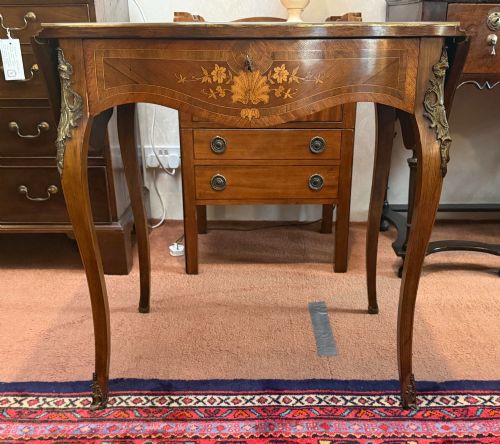
A continental antique table encompasses various forms designed across European workshops, spanning side tables, centre tables, console tables, and writing desks. These pieces originate from periods ranging from the seventeenth century through to the early twentieth century.
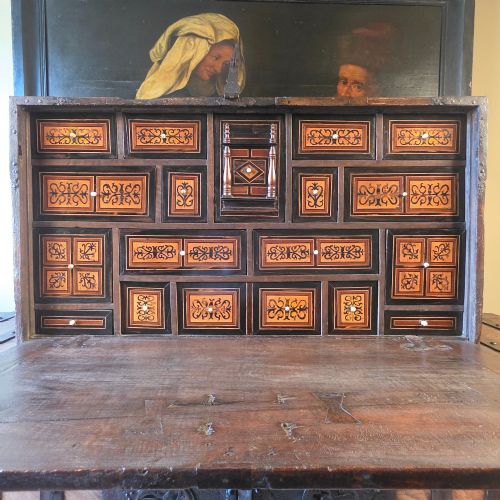
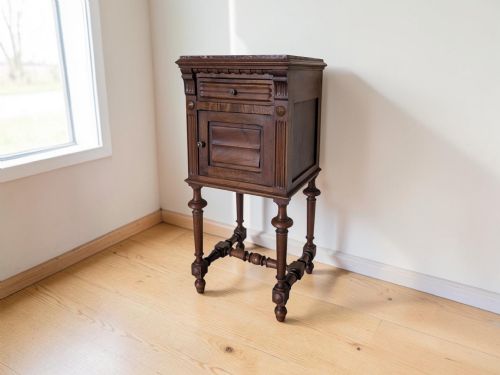
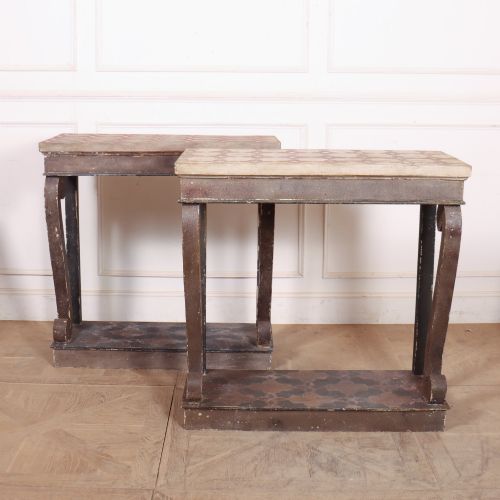
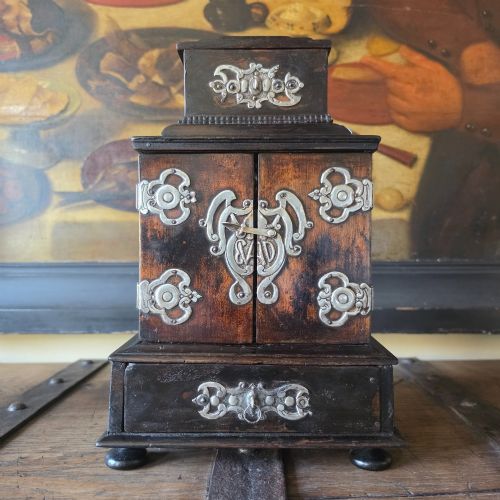
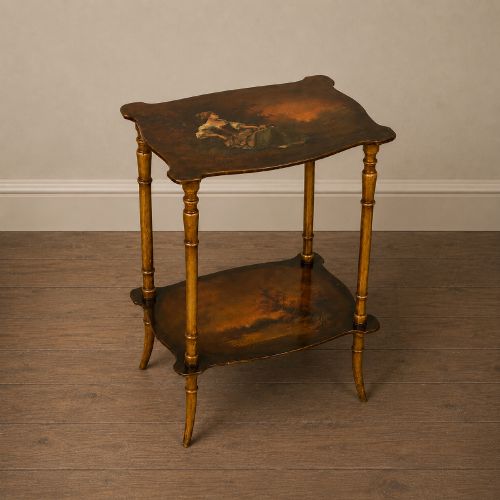
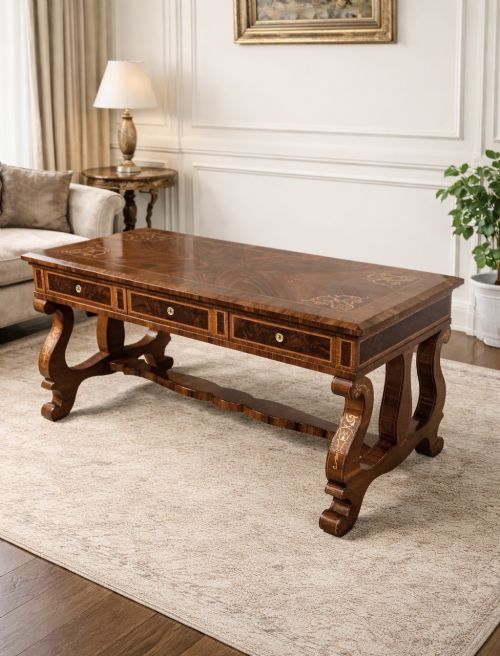
Buyers meet examples shaped by distinct regional aesthetics, including Spanish painted surfaces, Dutch marquetry, Biedermeier dressing tables, and walnut writing desks. Side tables and bedside cabinets also appear frequently alongside larger dining and serving formats.
The construction employs traditional European timber species and decorative techniques, providing functional surfaces that reflect the stylistic shifts of Baroque, Rococo, and Neoclassical design traditions.
How they were made
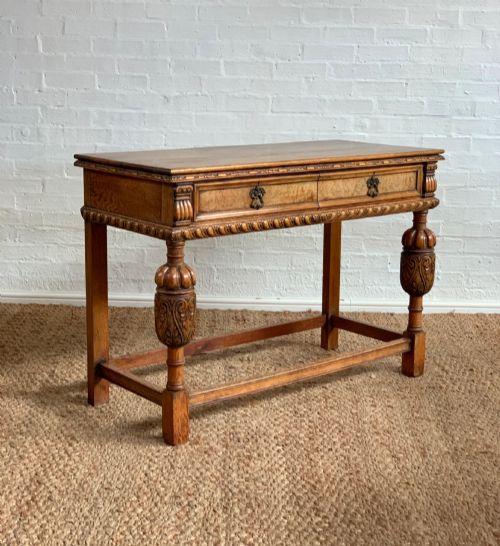
Carpenters utilised solid woods and decorative veneers, incorporating walnut, fruitwood, burr wood, oak, and pine across the framing and surfaces. Inlaid marquetry and giltwood finishes also appear on select continental tables.
Joinery methods relied on traditional hand-cut joints and framing techniques suited to each regional workshop, while painted finishes were applied directly to pine, oak, and fruitwood surfaces.
Among the historical items recorded, a lone 18th-century horn cheroot box preserves the carved image of a rider and horse.
What varies in quality
The standard of a continental antique table rests on the selection and matching of timber veneers, such as burr wood and walnut, alongside the crispness of carved details or painted decoration. Tables exhibiting precise marquetry work and intact original structural joins demonstrate superior craftsmanship.
Proportion and the retention of original surface finishes distinguish finer examples from altered pieces, while the complexity of forms like Biedermeier centre tables or Spanish console tables influences overall execution.
The Continental Table Glossary
- Marquetry
- Decorative patterns formed by fitting small pieces of veneer into a structured wooden surface. This technique creates detailed pictorial or geometric designs on table tops.
- Biedermeier
- A Central European style spanning the nineteenth century characterised by clean lines and utilitarian focus. It prioritised clean wood grains over heavy ornamentation.
- Console table
- A table designed to be fixed against a wall, frequently supported by front legs or brackets. These pieces often feature painted or carved wooden decoration.
- Centre table
- A freestanding table intended to be viewed from all sides within the middle of a room. These formats often served functional roles in dressing or writing.
Continental Table: Frequently Asked Questions
How do I date a continental antique table?
Dating relies on identifying the underlying timber, construction methods, and stylistic markers such as Baroque carving or Biedermeier minimalism. Comparing the secondary woods and joinery helps determine the period of origin.
Regional characteristics also guide the dating process, as specific painting techniques and veneer choices were prevalent during distinct centuries across European workshops.
Where should I place a side table?
Side tables and small console formats fit well in hallways, beside seating areas, or against empty wall spaces. Their compact dimensions allow them to function as display surfaces for lamps or decorative objects.
Placing them away from direct heat sources helps protect older timbers and delicate veneers from drying out over time.
How do I clean wooden surfaces?
Maintenance involves dusting with a soft, dry cloth to remove particles without abrasion. Avoiding chemical polishes preserves the original patina and finish of the wood.
Applying a traditional beeswax occasionally helps nourish older timber surfaces without building up excess residue.
What is the difference between a side table and a centre table?
Side tables are generally designed to sit against a wall or beside furniture, featuring finished details primarily on the visible sides. Centre tables are freestanding pieces finished uniformly on all sides for placement in open spaces.
Centre tables often served specific functions such as writing or dressing, whereas side tables offered general surface utility.