

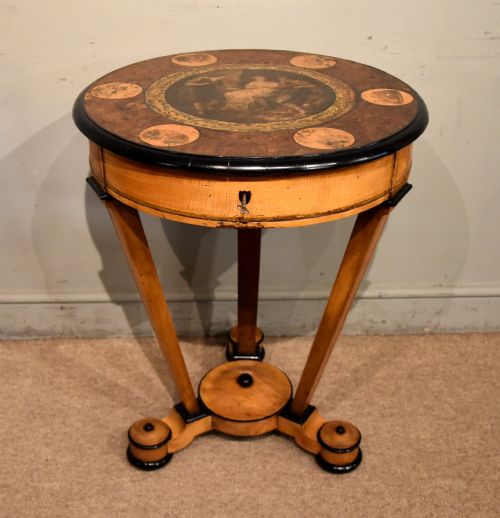


Ebonised Biedermeier Table
An ebonised biedermeier table brings restrained nineteenth-century geometry and dark, dramatic timber into a room.
Ebonised Biedermeier Table
An ebonised biedermeier table represents the refined domestic furniture of nineteenth-century Germanic and Scandinavian design. Buyers seeking this phrase encounter side tables, console tables, centre tables, sofa tables, and coffee tables produced across the period.
The selection here draws heavily upon nineteenth-century craftsmanship, including specific regional expressions like Swedish Biedermeier and Empire Revival forms. Alongside darker ebonised wood surfaces, the listings frequently incorporate birch, burr birch, karelian birch, and alder root.
Makers focused on clean lines and figured veneers rather than heavy carving, creating versatile occasional and centre pieces. These items suit contemporary and traditional interiors alike through their balance of structural simplicity and rich material contrast.
How they were made
Cabinetmakers constructed these tables using solid native timbers as a carcase, overlaid with thin veneers of birch, burr birch, and karelian birch to create striking grain patterns. Surfaces were often ebonised to mimic expensive exotic hardwoods, providing a deep, uniform dark finish.
Gilding, ormolu mounts, and paint details were occasionally added to accentuate structural lines and corners, drawing the eye to the geometric purity of the design. Ormolu mounts introduce gleaming brass or gilt-bronze contrast against the dark ebonised or pale birch grounds.
Ebonised Biedermeier Table Retail Price Guide 2026
Typical asking prices for ebonised biedermeier table among the pieces listed under this phrase on Sellingantiques today, from the lower quarter to the upper quarter. They describe what is for sale here now, not the wider market.
Alder root makes a surprise appearance in the timber lineup, proving nineteenth-century makers would turn anything with a burl into a table.
What varies in quality
Quality rests upon the selection and matching of the wood veneers, particularly on prominent surfaces like tabletop centres and borders. Finer examples display symmetrical, highly figured burr birch or karelian birch grain that has been carefully laid by skilled hands.
The integrity of the ebonised finish and the crispness of surviving ormolu mounts dictate the visual success of the piece. Superior construction maintains tight joints and balanced proportions across tripod, lyre-form, and console formats without relying on excessive decorative distraction.
The Ebonised Biedermeier Table Glossary
- Ebonised wood
- Timber stained or painted to resemble ebony. This dark finish creates a stark, formal surface popular in nineteenth-century furniture design.
- Biedermeier
- A style of Central European furniture from the mid-nineteenth century. It prioritises utilitarian comfort and clean lines over ornate historical revivalism.
- Burr birch
- Birch timber featuring distorted knot growths that produce intricate, swirling grain patterns. Cabinetmakers sliced this wood into veneers for decorative table tops.
- Ormolu
- Gilt-bronze mounts applied to furniture for decorative accent. This technique adds metallic highlights to wood pieces.
- Karelian birch
- A pale Northern European birch variety known for its distinctive dark flecks and luminous golden figuring. It was heavily utilised in high-status Scandinavian pieces.
Ebonised Biedermeier Table: Frequently Asked Questions
What is a biedermeier table?
A biedermeier table is a nineteenth-century domestic form known for clean architectural lines and figured wood veneers. These pieces range from small coffee and side tables to large centre and console formats.
Originating in Germanic and Scandinavian regions, the style strips away heavy historical ornament in favour of polished timber surfaces and geometric clarity.
How do I style an ebonised table?
An ebonised table anchors a room with its dark, light-absorbing finish and contrasting grain details. Pair it with lighter neutral walls or textured fabrics to let the silhouette stand out.
These pieces function effectively as centre tables in hallways or as occasional sofa tables in living spaces, mixing easily with modern or antique furnishings.
What is burr birch veneer?
Burr birch veneer is a thin slice of timber taken from the knotted growths of a birch tree. This growth creates complex, swirling patterns prized by nineteenth-century cabinetmakers.
It was commonly applied to table tops and drawer fronts to provide visual texture and a sense of luxury without relying on heavy carving.