

Painted Top Table
When you search for a painted top table, you open a varied field of timber, marble, and iron surfaces finished with decorative pigment.
Painted Top Table
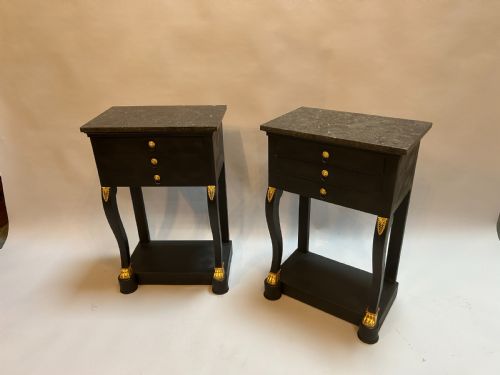
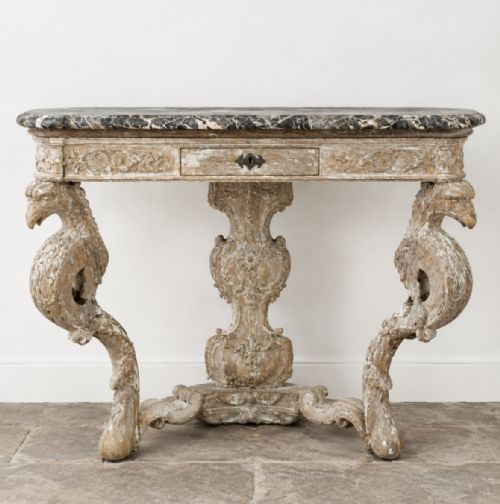
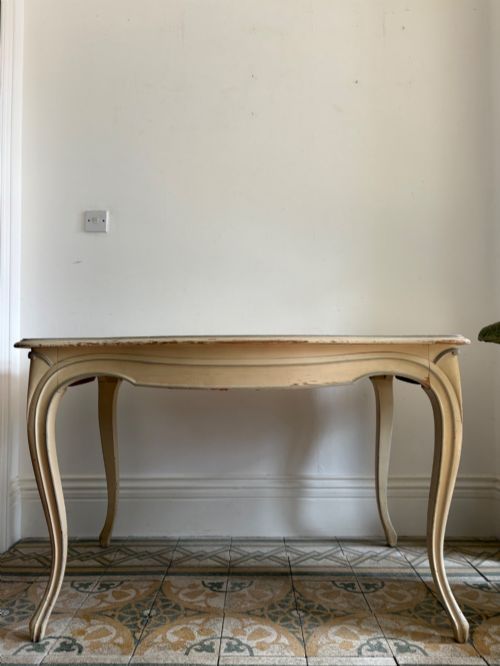
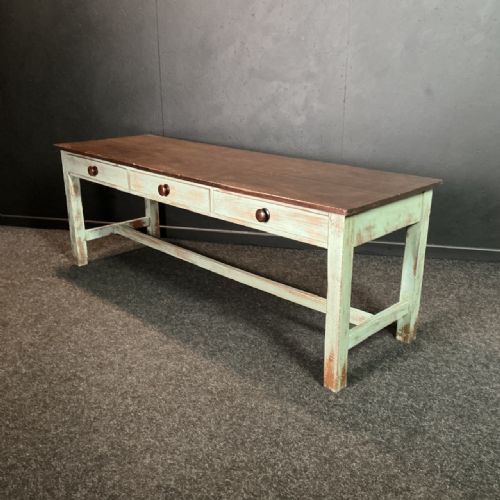
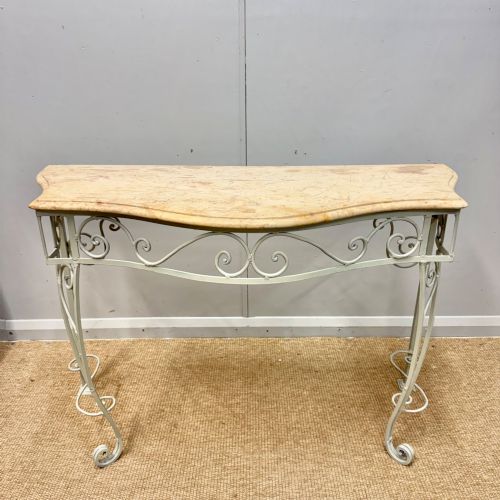
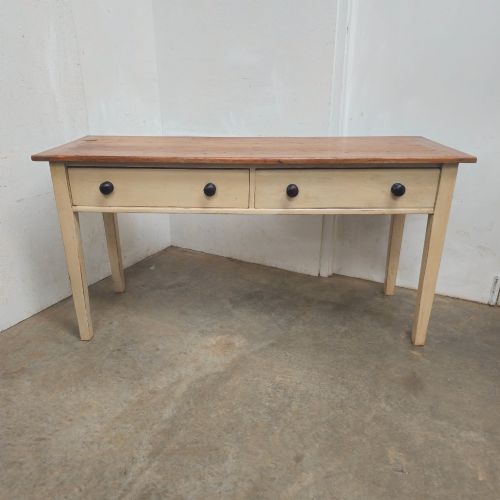
A painted top table covers a wide spectrum of functional domestic furniture, from grand French consoles and Italian centre tables to modest English pine dairy and prep tables. You will encounter occasional tables, bedside cabinets, and tilt-top breakfast pieces alongside heavy kitchen and farmhouse examples.
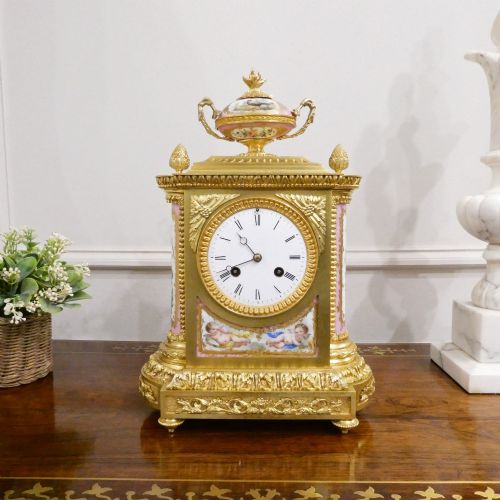
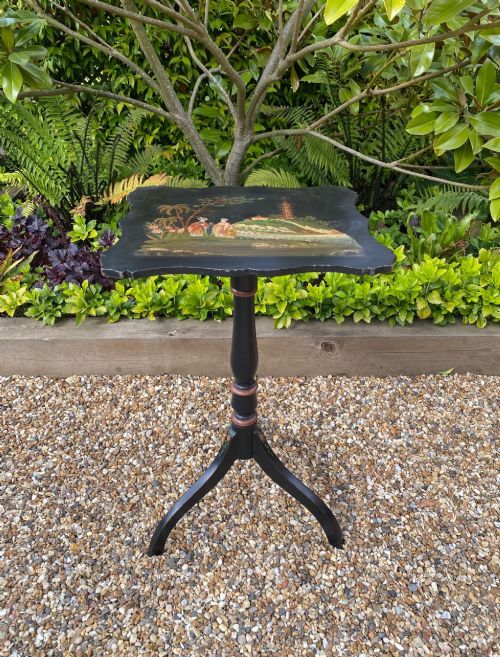
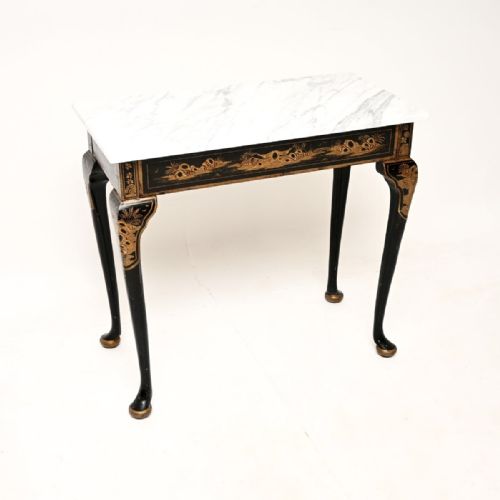
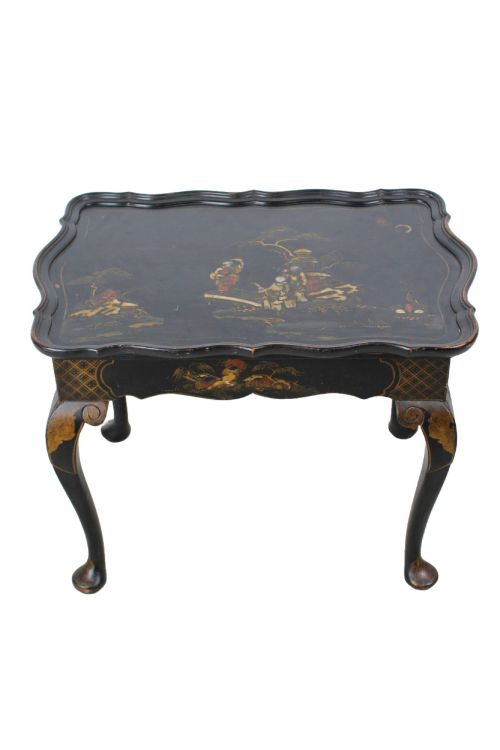
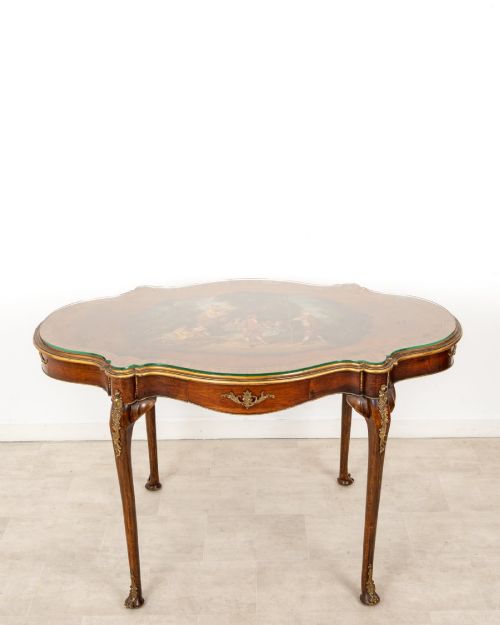
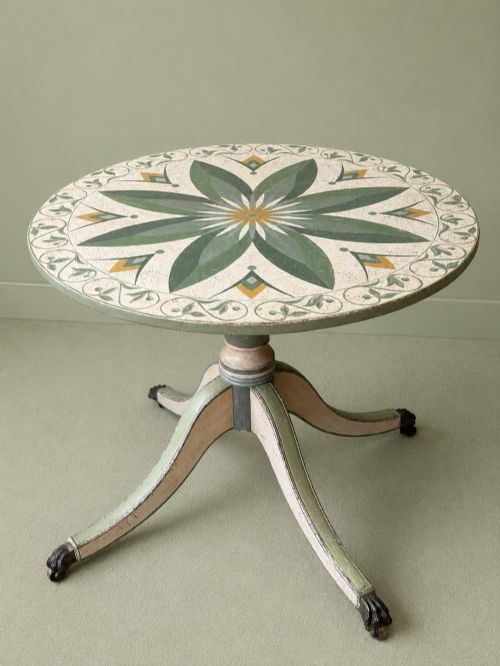
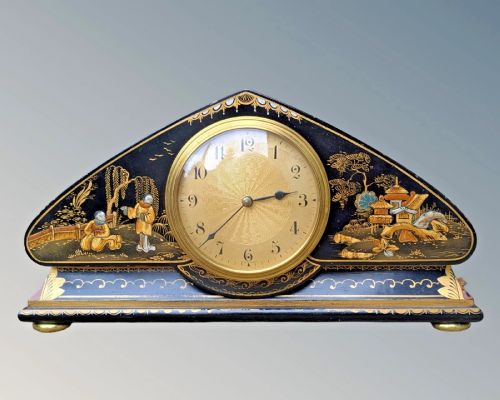
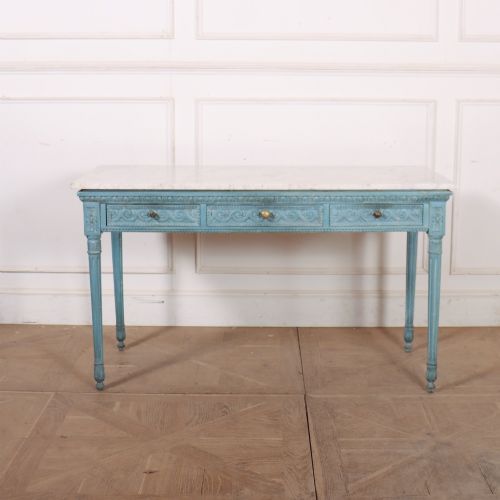
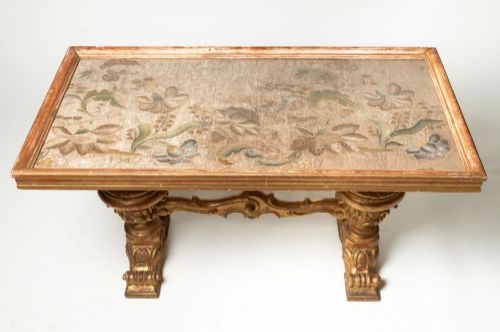
The decorative treatment ranges from period Chinoiserie and Vernis Martin motifs to later applied paint on older Georgian and Victorian structures. Many pieces combine a stone or marble insert with a decorated timber or cast iron base, bridging utility and ornament.
Originating across eighteenth, nineteenth, and early twentieth-century workshops in England, France, Sweden, and Italy, these tables serve diverse domestic functions. They appear as lamp tables, coffee tables, and side tables in domestic interiors.
How They Were Made
Makers constructed the carcases from foundational timbers such as pine, mahogany, satinwood, and kingwood, often mounting them on cast iron or wrought iron frameworks. Surfaces received layers of lead-based or oil paints, sometimes incorporating gilt bronze mounts, mother of pearl inlay, or hand-painted floral and geometric designs.
Marble and slate inserts provide durable working surfaces on many console and charcuterie tables, inset directly into wooden frames or supported by cast iron bases. Joinery methods relied on traditional pegging, dovetailing, and tripod pedestal actions, with finishes varying from original lacquer to later decorative overpainting.
Recorded styles span Victorian, Victorian Country, French Chateau, Neoclassical, French Provincial, Italian Neoclassical, English Country, and Chinoiserie.
What Varies In Quality
The distinction between tiers rests on the integrity of the original surface and the sophistication of the decorative work. Hand-executed Chinoiserie, vernis martin, and gilding demand technical mastery that elevates a piece far above simple utilitarian overpainting.
Structural execution also dictates standing, with precise joinery in tripod actions, tilt-top mechanisms, and the thickness of inset marble slabs marking out superior craftsmanship. Originality of surface finish remains paramount, as untouched period execution commands greater regard than later decorative interventions.
The Painted Top Table Glossary
- Console table
- A table designed to stand against a wall, frequently featuring an elaborate base and a marble or painted top.
- Tilt top table
- A table with a hinged top that pivots vertically when not in use, often supported on a tripod pedestal base.
- Vernis martin
- A type of simulated Japanese lacquer developed in France, known for its translucent metallic sheen and layered decorative scenes.
- Chinoiserie
- European decorative style employing imagined Chinese motifs, popular in furniture painting during the eighteenth and nineteenth centuries.
- Prep table
- A sturdy utility table used historically in domestic kitchens, dairies, and butcher shops, frequently built with scrubbed wood or slate surfaces.
Painted Top Table: Frequently Asked Questions
What is a painted top table?
A painted top table is a piece of furniture featuring a decorated, pigmented, or lacquered upper surface, spanning console, centre, and occasional forms.
These items range from formal neoclassical console tables with marble inserts to rustic country house prep tables and tilt-top breakfast furniture.
Are painted finishes original?
Some pieces retain their original period paint, lacquer, or gilt decoration applied by the workshop that built them.
Other listings record later decorative painting applied to earlier Georgian, Victorian, or pine structural carcases during subsequent decades.
How do I style a painted table?
These tables function well as central decorative accents, serving as lamp tables, bedside cabinets, or hallway console surfaces.
The contrasting textures of painted wood, marble, and gilt metal allow them to anchor both traditional period rooms and contemporary interiors.
What materials are used?
Construction materials include traditional hardwoods and softwoods such as pine, mahogany, satinwood, and kingwood, alongside cast iron and wrought iron.
Upper surfaces frequently incorporate paint, lacquer, marble, slate, or inset suede.