


Conservatory Plant Stand
These conservatory plant stand examples bring architectural form and greenery together, offering a sturdy stage for ferns and trailing leaves.
Conservatory Plant Stand
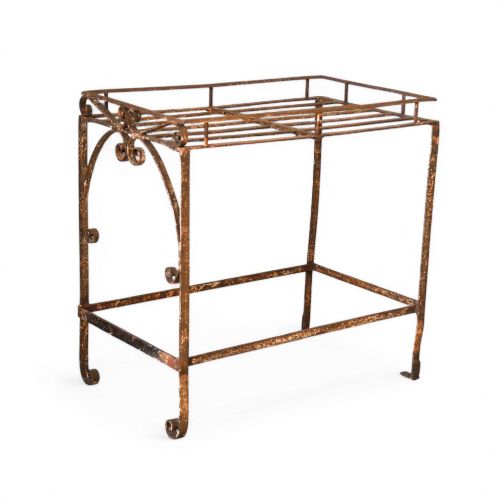
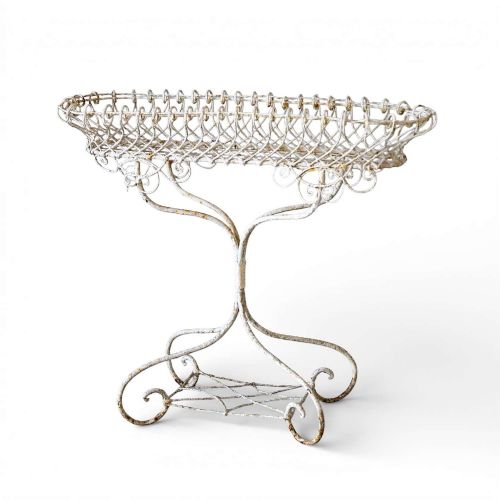
A conservatory plant stand provides tiered or raised surfaces designed to display potted plants within light-filled garden rooms and orngeries. When searching for a conservatory plant stand, buyers encounter functional ironwork frames, wirework baskets, and occasional earthenware jardinieres.
The pieces on this page span the Victorian and Edwardian eras through to the early twentieth century, featuring forms ranging from semi-circular graduated tiers to corner units. Wrought iron and wirework dominate the selection, often finished with old white paint or remaining in bare metal.
Makers from the nineteenth and early twentieth centuries produced these items primarily for practical horticulture in large country houses and estates. Surviving examples include garden tables, urns on stands, and multi-tiered racks intended to hold heavy pots.
Materials and Construction
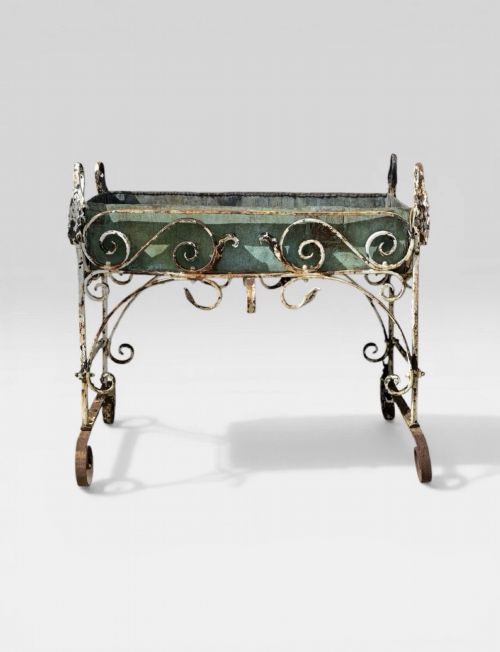
Wrought iron and wirework form the structural backbone of these pieces, shaped through blacksmithing techniques into scrolls, lattice baskets, and riveted joints. Blacksmiths utilised strap work and cast iron elements to ensure the stands could bear the weight of damp earth and heavy pots.
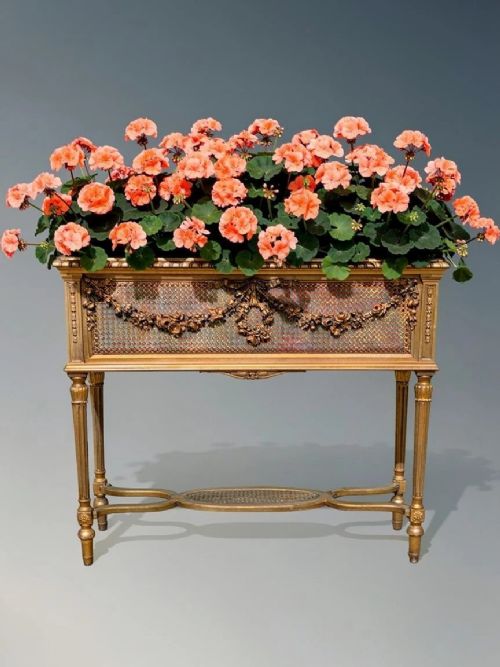
Surface treatments recorded in the evidence include lead-based white paint, zinc linings, and occasional giltwood accents on more decorative indoor jardinieres. Earthenware pots with coloured glazes often accompany the iron frames, adding a ceramic element to the metal framework.
An Art Nouveau brass hanging bird cage reminds us that nineteenth-century conservatories often housed live singers alongside the potted ferns.
Assessing Quality and Construction
Quality in these stands rests on the complexity of the ironwork and the integrity of the joints, with hand-forged scrollwork and careful riveting separating utilitarian racks from finer decorative pieces. Estate-made items show individual blacksmithing character, whereas later commercial pieces display uniform wirework.
The presence of original surfaces, such as weathered historic paint or untouched zinc trays, preserves the integrity of an antique stand. Condition depends on how well the metal has resisted rust and whether delicate wire lattices remain straight and secure.
The Conservatory Plant Stand Glossary
- Wrought iron
- Iron that has been heated and hammered by hand into shape, yielding a fibrous structure visible in older stands. This material provides the strength needed for multi-tiered plant racks.
- Wirework
- Metal strands bent and joined to form lightweight yet strong baskets and stands. It allows light to pass through the plant display.
- Jardiniere
- An ornamental pot or stand designed to hold a plant or flower arrangement. They appear in earthenware with glazes or in metal.
- Majolica
- A type of earthenware covered with an opaque tin glaze and painted with metallic colours. These vessels often sit atop dedicated ceramic or metal pedestals.
- Giltwood
- Wood that has been covered with a thin layer of gold leaf. This finish appears on more formal, indoor plant holders rather than working garden furniture.
Conservatory Plant Stand: Frequently Asked Questions
How were these stands used originally?
Conservatory plant stands held potted ferns, geraniums, and exotic plants inside glasshouses to maximise sunlight and airflow.
Owners arranged plants on graduated tiers so each pot received adequate light and created a tiered green display.
Can these stands stay outside?
Most iron and wirework stands tolerate sheltered outdoor spaces like porches or patios, provided they receive protection from heavy winter damp.
Historic pieces with original paint or delicate wirework benefit from being kept in dry conservatories to prevent further rusting.
How do I date an iron plant stand?
Nineteenth-century examples often feature hand-forged wrought iron with visible blacksmith marks, heavy riveted joints, and traditional strap work.
Twentieth-century versions tend to utilise lighter gauge wire or standardised machine-rolled components.
What is a semi-circular plant stand?
A semi-circular plant stand curves outward to fit against a conservatory wall or into a corner, maximising floor space while holding numerous pots.
Graduated tiers step up toward the back to create a steep pyramid of foliage.