




Compact Mahogany Bureau
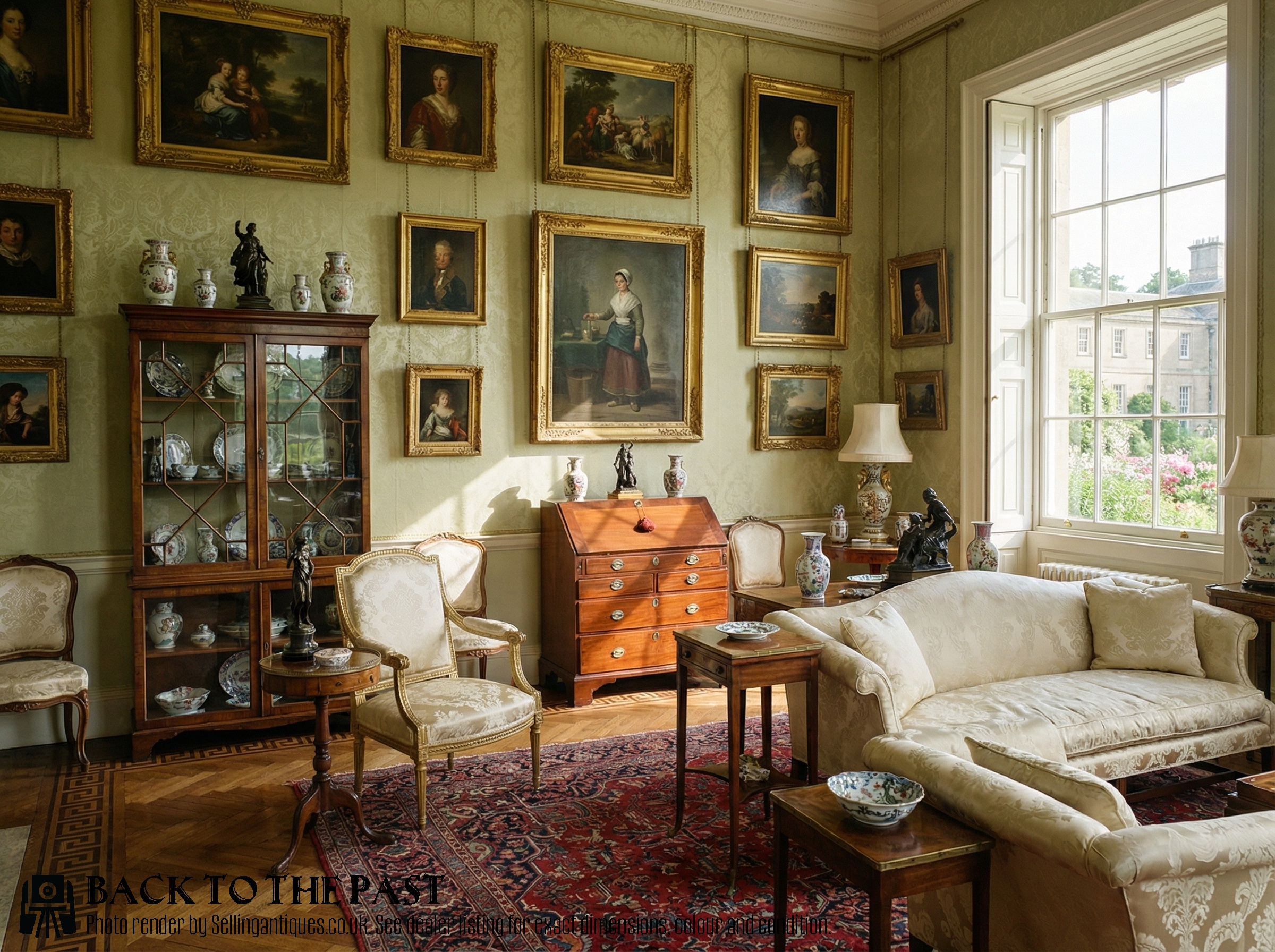
A compact mahogany bureau brings practical writing space and fitted pigeonholes into a smaller room without dominating the floor plan.
Compact Mahogany Bureau
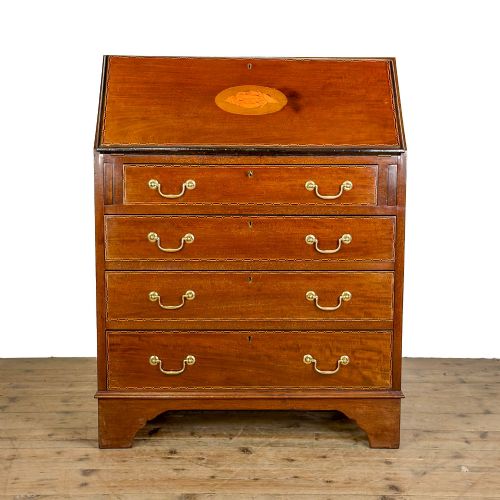
A compact mahogany bureau serves as a dedicated writing station with a sloping fall front that opens to reveal internal drawers and pigeonholes. These pieces suit rooms where floor space remains at a premium while offering private storage for correspondence.
The pieces listed on this page span several centuries, including Georgian, Regency, Victorian, and Edwardian periods. Buyers meet examples ranging from early eighteenth-century designs to later Edwardian interpretations.
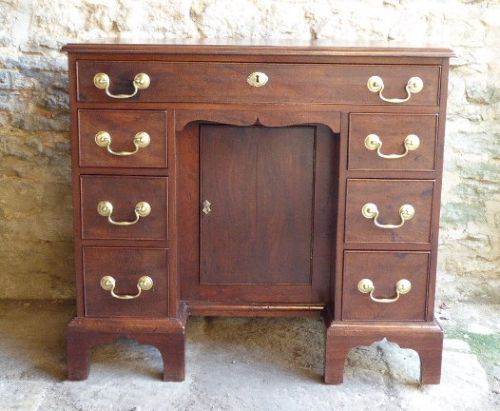
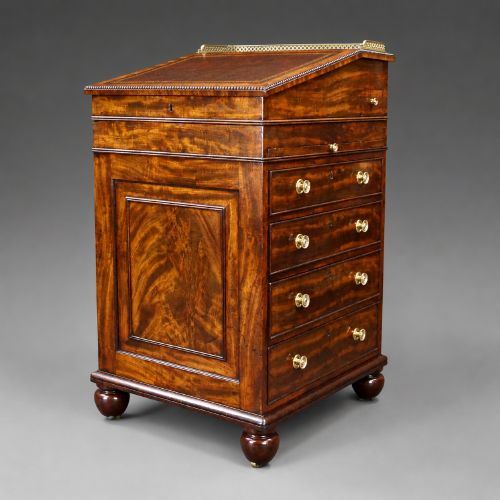
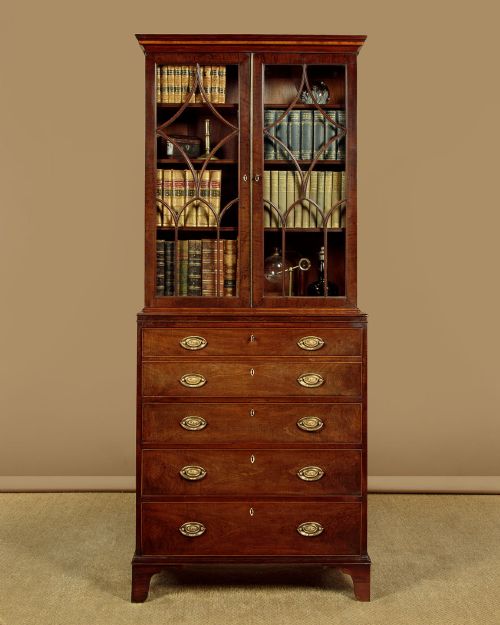
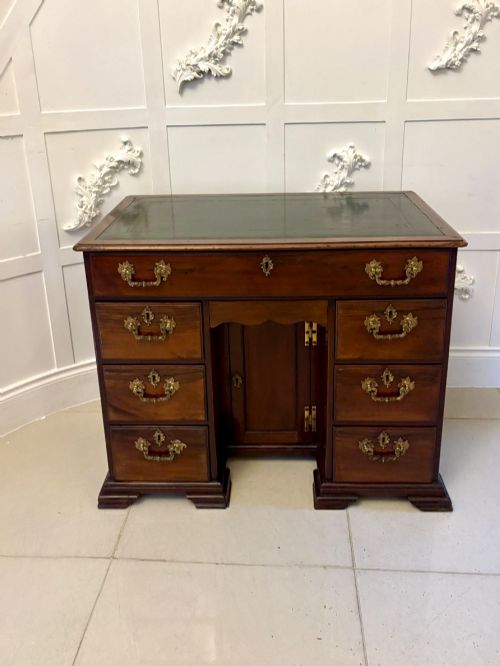
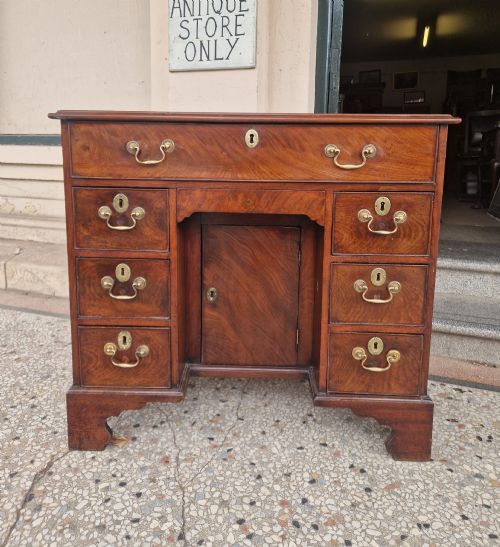
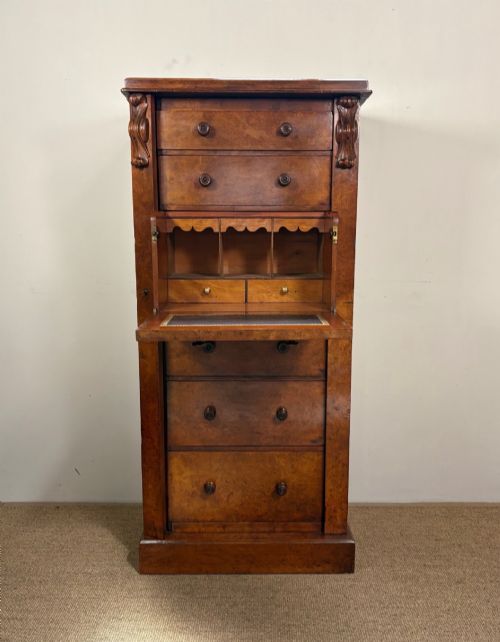
Makers often integrated these writing slopes into smaller kneehole desks, secretaire bookcases, and Davenport forms. The selection captures various practical formats built for modest domestic interiors.
What separates the best from the rest
The quality of a compact mahogany bureau rests upon the selection of the timber figures, particularly where flame mahogany veneer matches across the fall front. Superior examples display restrained inlay work, such as boxwood stringing, executed with absolute precision.
Interior secondary woods and the hand-cut dovetails inside small drawers indicate the level of workshop care. Original brass handles, operational locks with keys, and tidy internal pigeonhole arrangements elevate a piece above standard utilitarian examples.
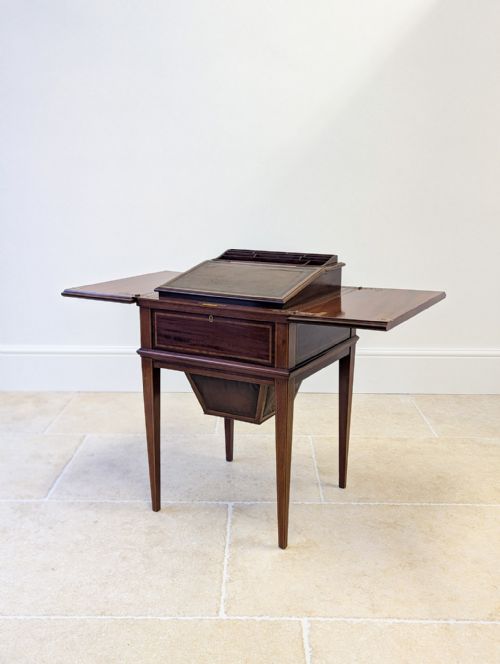
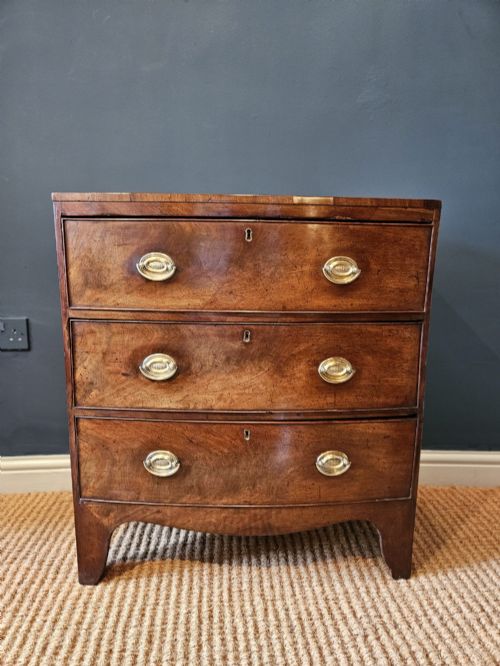
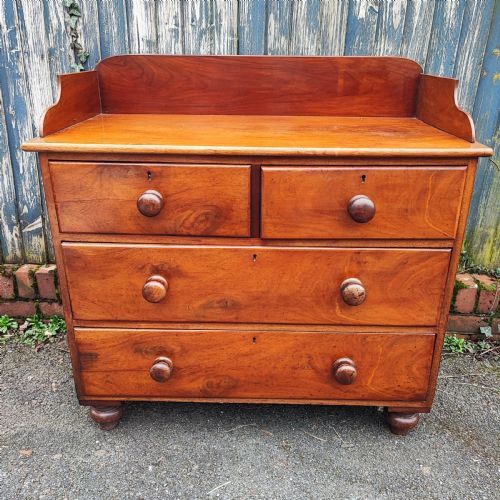
The inventory includes diverse forms such as kneehole desks, Davenport desks, Wellington chests, and bureau bookcases alongside standard writing tables.
Gillows of Lancaster·Liberty Arts Crafts
The Compact Mahogany Bureau Glossary
- Bureau
- A writing desk featuring a sloping hinged lid that drops down to form a flat writing surface above a set of drawers. Inside lie small drawers and pigeonholes for stationery.
- Davenport
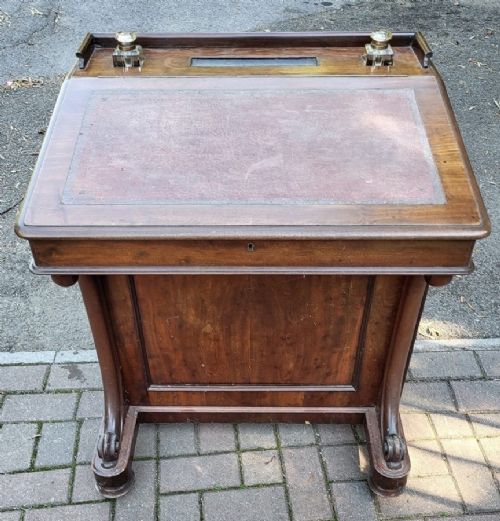
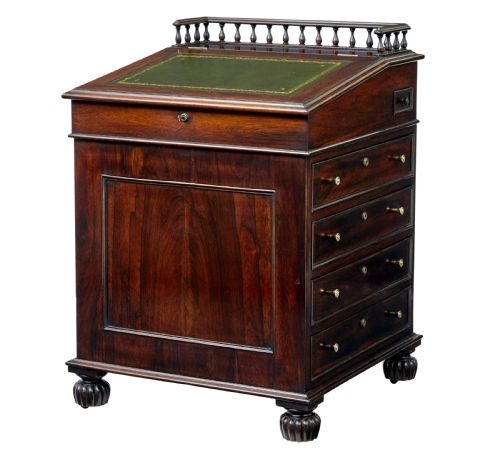
- A small compact writing desk with a sloping top and drawers opening to one side. The form emerged during the Regency period.
- Kneehole desk
- A flat-topped desk with a central recess for the user's legs, flanked by pedestals of small drawers. Georgian examples often include a central cupboard behind the kneehole.
- Secretaire
- A piece of furniture containing a drawer or compartment that pulls down to serve as a writing desk. These often combine with bookcases or chests of drawers.
- Flame mahogany
- A veneer cut from timber where the grain creates a distinctive undulating flame pattern. Cabinet makers reserved this timber for prominent surfaces like drawer fronts and writing flaps.
Compact Mahogany Bureau: Frequently Asked Questions
How do I date a mahogany bureau?
Dating relies on examining construction techniques, such as drawer dovetails and timber choice, alongside the overall proportions and hardware styling. Georgian pieces often show hand-cut dovetails and solid timber carcases, while Edwardian versions may incorporate lighter inlaid decoration.
Secondary woods inside the drawers also provide clues to the period of origin. Comparing the foot style and interior pigeonhole design against known era characteristics helps narrow down the decade of manufacture.
Where were compact bureaux placed?
These small desks found their place in private bedrooms, boudoirs, or smaller parlour rooms where a full-sized partner's desk would prove too large. Their modest footprint allowed them to sit against bedroom walls or beside windows.
Their dual function as storage chests and writing spaces made them ideal for personal correspondence and managing household accounts in domestic quarters.
How do I care for mahogany furniture?
Maintenance involves keeping the timber away from direct heat sources and strong sunlight to prevent the mahogany finish from fading or drying out. Regular dusting with a soft, dry cloth preserves the polished surface.
Occasional application of appropriate wax polish maintains the natural sheen of the wood without building up heavy residues. Leather writing inserts benefit from gentle cleaning and specific leather conditioners.
What is a Davenport desk?
A Davenport is a compact form of writing desk featuring a sloping, leather-lined writing surface that lifts to reveal storage. A pedestal of drawers typically opens to one side of the desk rather than underneath the writing flap.
Originating in the Regency period, these pieces often incorporated stationary boxes on top and subtle sliding mechanisms for maximum utility in small spaces.