
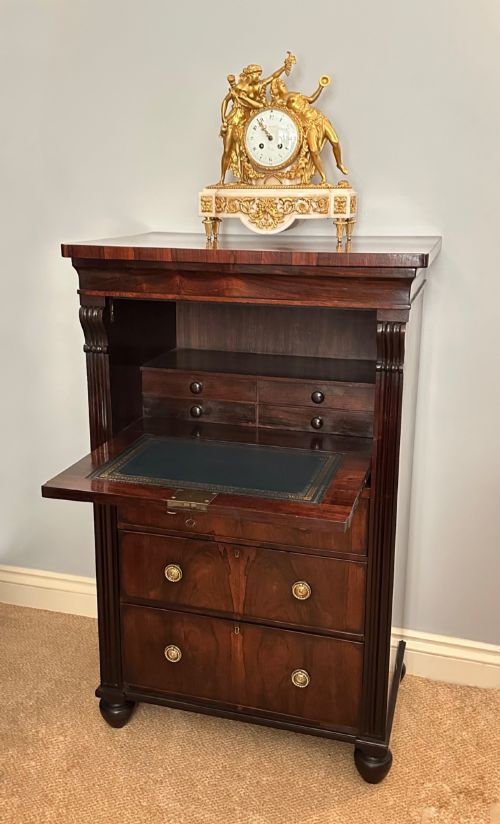


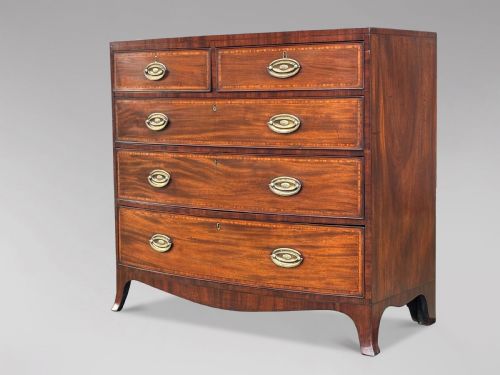

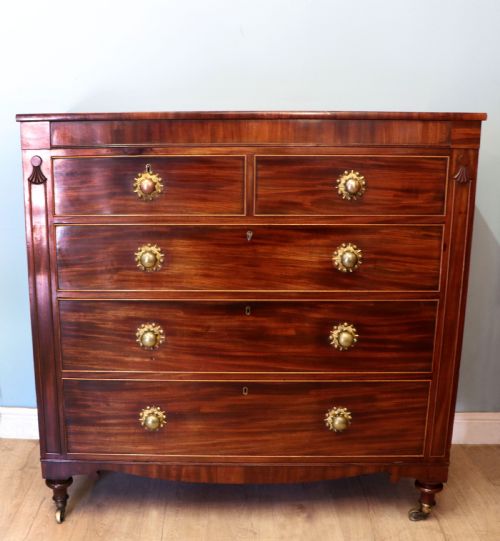
Regency Tall Chest
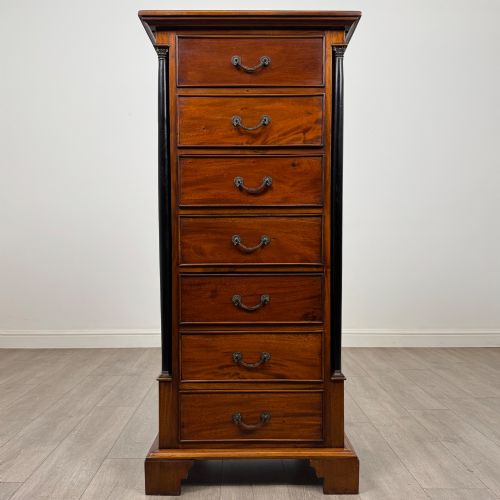
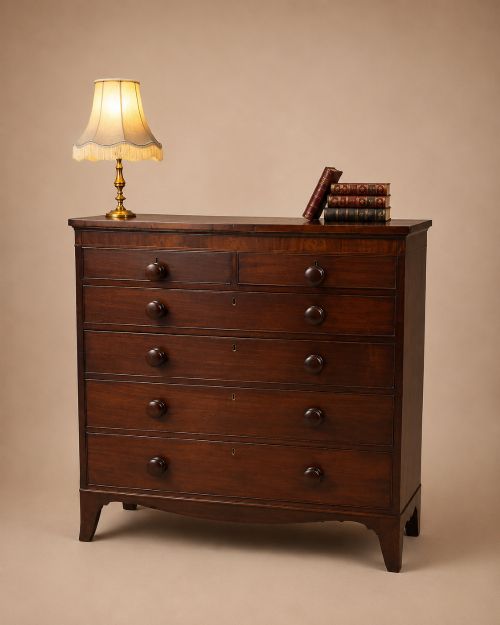
A regency tall chest offers vertical storage combined with the proportion and figured timber characteristic of the period.
Regency Tall Chest
A regency tall chest is designed to provide substantial drawer space within a narrow footprint, making it a practical addition to bedrooms and dressing rooms. Buyers searching for a regency tall chest encounter tallboys, chest on chests, and narrow multi-drawer formats originating from the 19th century and later revival periods.
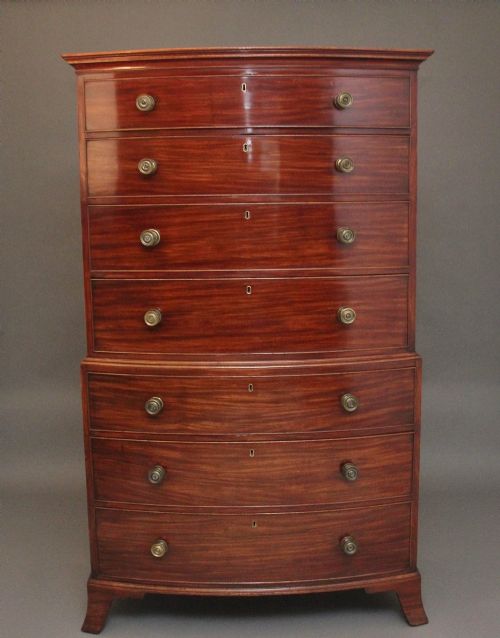
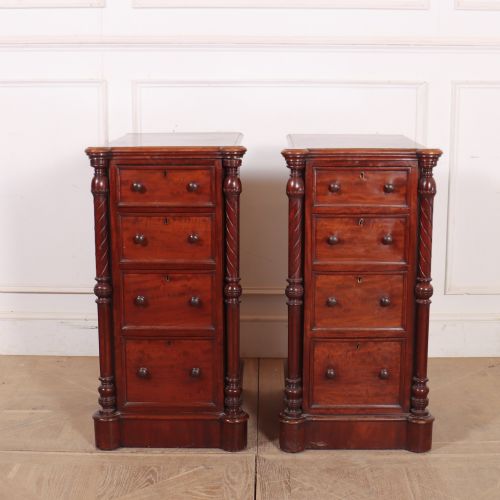
The pieces appearing in this category include bow-fronted designs, upright Wellington chests, and tall upright chests featuring multiple height configurations. Oak, pine, and mahogany serve as the primary structural woods, often paired with distinct surface veneers.
Originating predominantly from British workshops, these cabinets reflect the stylistic shifts spanning from the Georgian era through to Edwardian interpretations. The taller proportions deliver significant utility without dominating the floor area of a room.
Materials and Construction Methods
Makers utilised solid timbers such as mahogany, oak, and pine for carcases and drawer linings, ensuring structural stability across tall vertical frames. Flame mahogany veneer and rosewood supplied decorative exterior surfaces with pronounced grain patterns.
Brass handles, escutcheons, and locking mechanisms provided functional hardware details across drawers and cabinet doors. Secondary woods like pine and oak appear consistently within internal drawer construction.
Listings feature pieces spanning the 19th Century, Regency, Georgian, Edwardian, and 1920 periods, constructed in mahogany, oak, pine, and rosewood.
Evaluating Construction and Finish
The choice of timber veneer significantly influences the visual impact of a piece, with figured flame mahogany and rosewood representing the more decorative end of the scale. Crispness in drawer joinery and the survival of original brass hardware indicate higher standards of cabinet making.
Proportion and execution distinguish standard vernacular pieces from more ambitious cabinet work produced during the Regency and George IV periods. The integrity of the internal carcase and smooth operation of deeper drawers determine the practical standard of individual chests.
The Regency Tall Chest Glossary
- Tallboy
- A chest of drawers built as a single tall unit or as a chest on chest arrangement. This form maximises vertical storage capacity.
- Bow front
- A convex curved front facade found on chests and cabinets. It softens the linear appearance of tall furniture.
- Flame mahogany veneer
- A sliced timber veneer displaying a characteristic flickering, flame-like grain pattern. Cabinet makers applied this to drawer fronts for visual depth.
Regency Tall Chest: Frequently Asked Questions
Where should I place a tall chest?
A tall chest fits well in bedrooms, dressing rooms, or hallways where floor space is restricted but vertical storage is required.
The narrow footprint allows the piece to utilise height effectively without dominating the surrounding furniture arrangement.
How do I distinguish a tallboy from a standard chest?
A tallboy typically incorporates stacked drawer sections or extra height designed to hold significantly more linens or garments than a low chest.
Many examples in this category utilise a chest-on-chest format or narrow proportions to achieve the elevated silhouette.
What woods were used in these chests?
Mahogany, oak, and pine form the primary structure of these pieces, supplemented by decorative veneers such as rosewood and flame mahogany.
Secondary woods like pine and oak were commonly utilised for internal drawer linings and backboards.
How do I care for mahogany veneer?
Keep the wood away from direct sunlight and extreme temperature fluctuations to prevent the veneer from drying or lifting.
Apply a light wax polish periodically to maintain the lustre of the polished surface.