


Colonial Teak Table
A colonial teak table brings dense tropical timber and intricate regional carving together into a sturdy surface designed for domestic use.
Colonial Teak Table
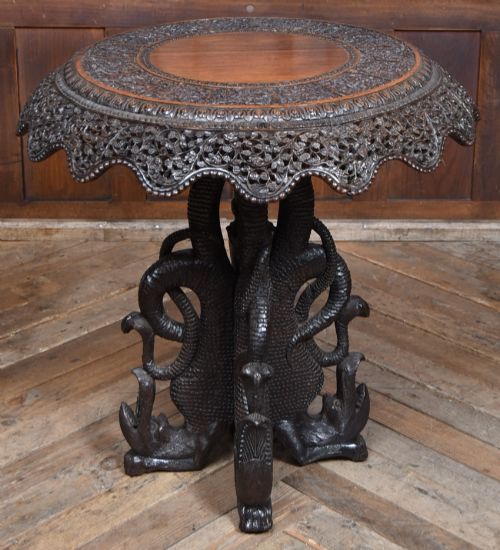
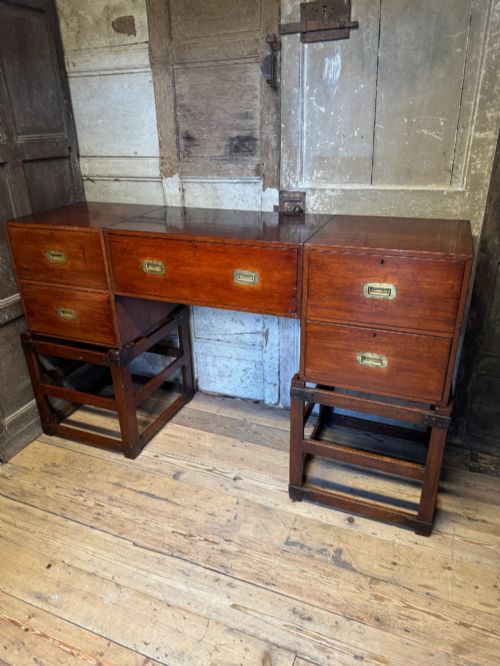
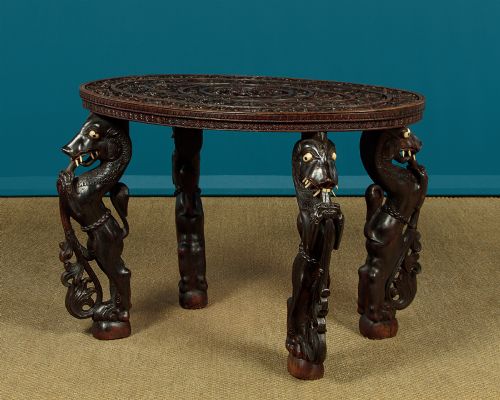
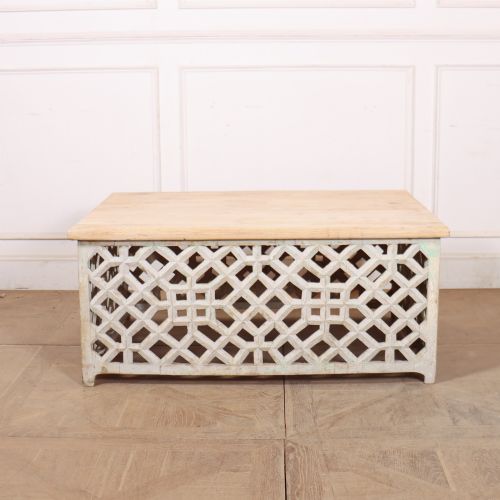
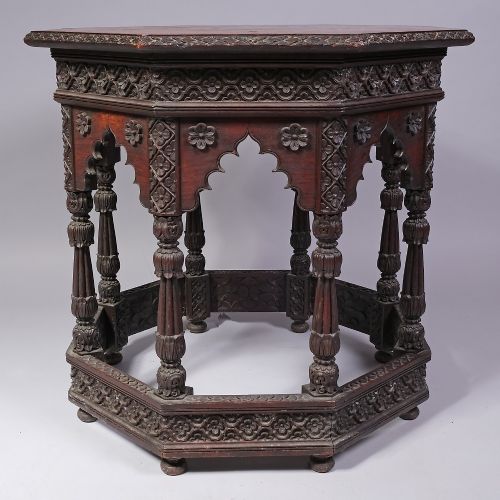
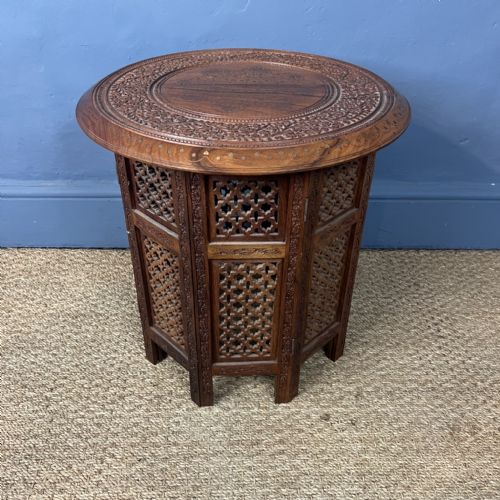
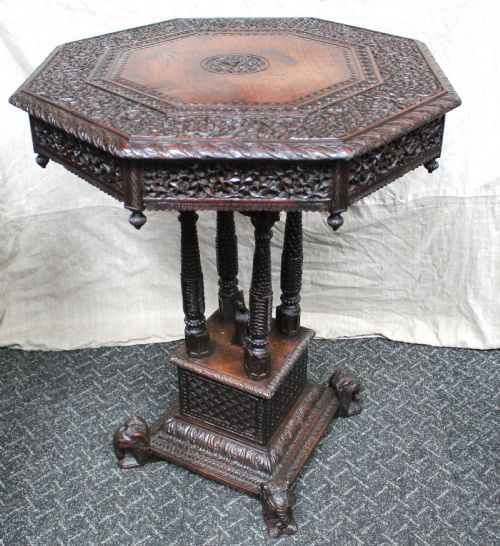
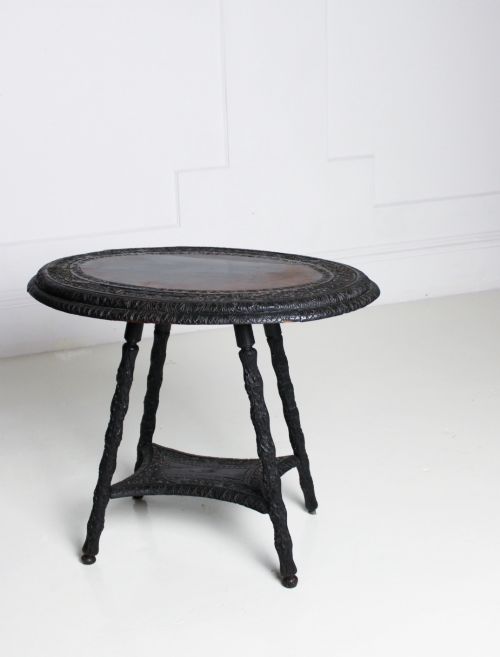
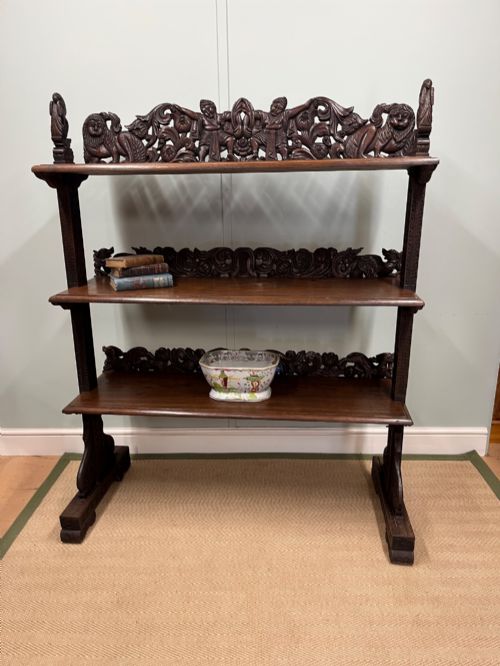
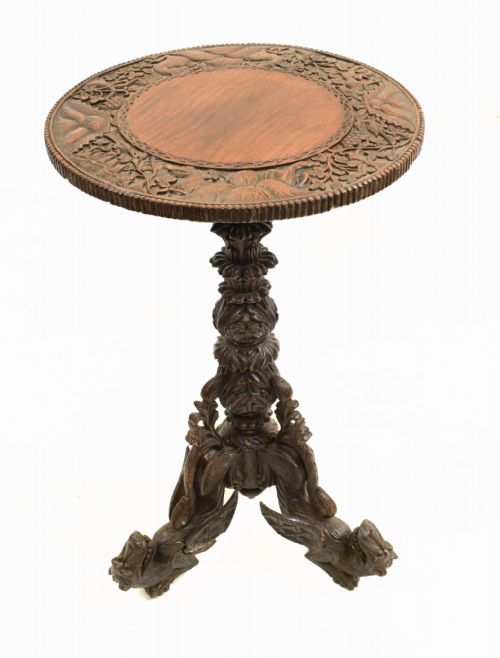
A colonial teak table represents the intersection of British domestic forms and South Asian or Southeast Asian craftsmanship, spanning the nineteenth and early twentieth centuries. These pieces encompass everything from compact coffee tables and occasional stands to large dining surfaces and partners desks. The most frequently encountered examples on this page are side tables, coffee tables, and occasional stands featuring carved motifs or metal inlay.
Makers working within the British colonial sphere adapted indigenous construction methods to suit European tastes, resulting in distinct regional styles such as Anglo-Indian and Anglo-Burmese. Tables frequently utilise dense hardwoods like teak and padouk, often shaped into octagonal forms, tilt-top designs, or folding campaigns variants. Animal carvings, particularly elephants and peacocks, alongside intricate foliage patterns, define the decorative vocabulary of these objects.
How colonial teak tables were made
Carpenters relied primarily on dense tropical timbers such as teak, rosewood, and padouk, selected for their natural oils and resistance to humidity. These heavy woods were joined using traditional framing techniques, often accommodating collapsible or folding mechanisms for transport.
Surface ornamentation involved deep relief carving, bone inlay, and contrasting metal wire or sheet brass work. Artisans combined these decorative elements with wax or polished finishes to highlight the grain and colour of the underlying hardwood.
Listings feature teak, padouk, and rosewood combined with brass and bone inlay across the nineteenth and early twentieth centuries.
What varies in quality
The depth, precision, and intricacy of the hand carving separate standard commercial pieces from exceptional workshop outputs. Superior examples display crisp undercutting in foliage and animal figures without splintering in the dense grain.
The integration of secondary materials, such as heavy gauge brass inlay and intact bone components, indicates higher production standards. Structural stability, particularly in folding campaign mechanisms and tilt-top joints, further distinguishes finer examples.
The Colonial Teak Table Glossary
- Campaign table
- A portable folding piece of furniture designed for military officers on the move. These items feature removable legs or hinged frames for easy packing.
- Anglo-Indian
- A style describing furniture made in India during the British colonial period, combining local timber and carving with European forms. This term encompasses various regional workshops across the subcontinent.
- Tilt-top
- A table mechanism allowing the surface to pivot to a vertical position when not in use. This design saved space in domestic interiors.
- Bone inlay
- A decorative technique where small pieces of animal bone are set flush into recesses carved into the wood. It creates contrasting geometric or floral patterns.
- Padouk
- A heavy, durable tropical hardwood with a reddish hue used in regional cabinetmaking. It shares the strength and density of teak.
Colonial Teak Table: Frequently Asked Questions
How do I identify an Anglo-Indian table?
Look for dense tropical hardwoods combined with deep relief carving depicting foliage, figures, or animals like elephants. These pieces often display distinct regional joinery and regional brass or bone inlay.
Examine the overall form against traditional British furniture shapes of the nineteenth century. The fusion of familiar domestic silhouettes with South Asian decorative techniques points directly to colonial workshops.
Are these tables suitable for everyday use?
Teak and padouk are exceptionally durable and heavy timbers built to withstand regular domestic demands. Their robust construction makes them practical for daily placement as coffee or side tables.
Care should be taken with inlaid brass or bone surfaces to prevent moisture damage and loss of small decorative elements. Routine dusting and occasional wax application will maintain the timber finish.
What is a campaign table?
A campaign table is designed to be disassembled or folded flat for transport by military officers or colonial administrators. They feature clever hinges, screw-in legs, or folding X-frames.
These functional pieces combine portability with sturdy construction, utilising tough hardwoods to survive long journeys. Today they function as versatile occasional or side surfaces in modern rooms.
How do I date a nineteenth-century colonial table?
Dating relies on examining the timber species, tool marks, construction joints, and the specific style of carving. Mid-nineteenth-century examples often favour simpler turned or tilt-top forms, while later Victorian pieces lean toward heavily carved surfaces.
Documentation or regional attribution, such as work from the Bombay Presidency or Burma, helps narrow the production window. Comparing decorative motifs with dated archive pieces provides further chronological context.