
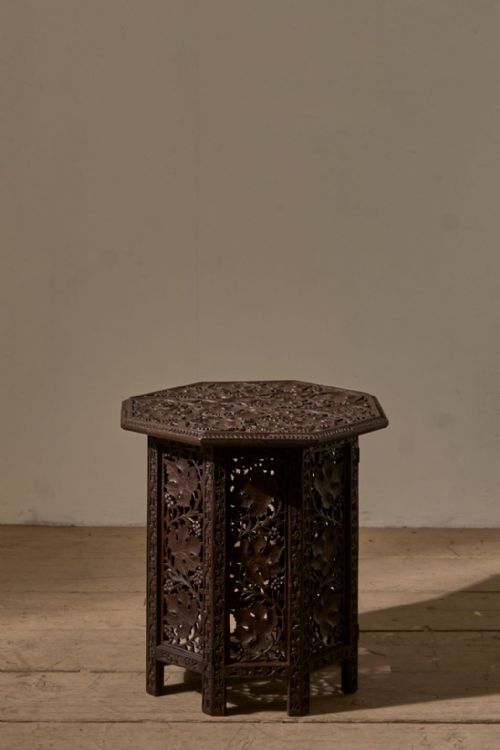
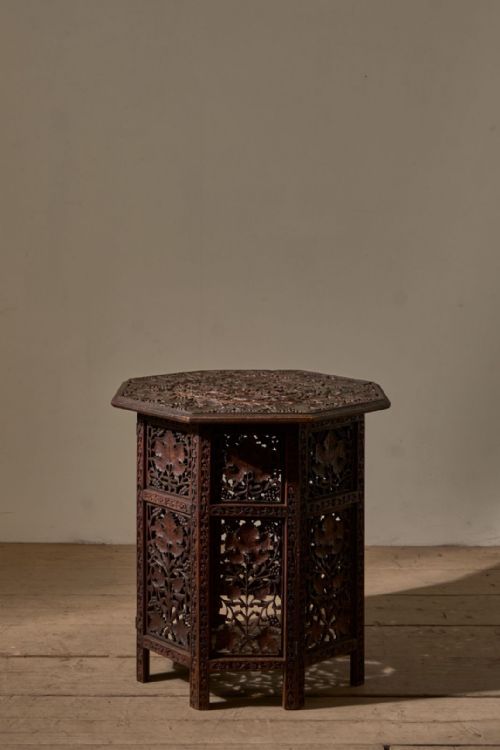


Colonial Indian Tea Table
A colonial indian tea table brings intricate craftsmanship and dense tropical timbers straight from nineteenth-century export workshops into a modern room.
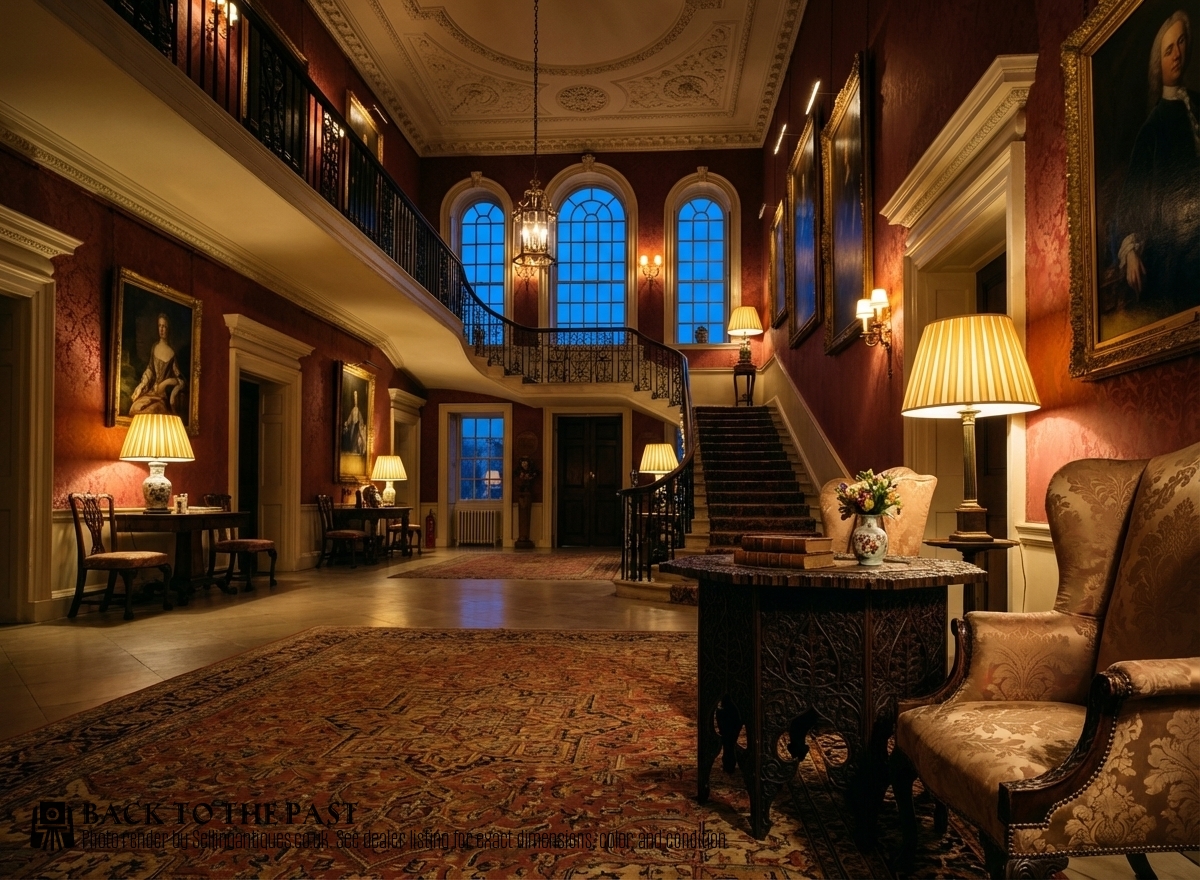
Colonial Indian Tea Table
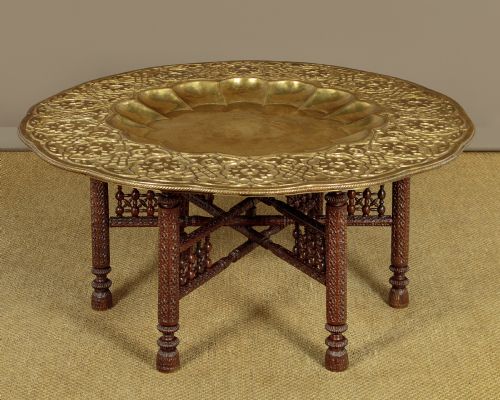
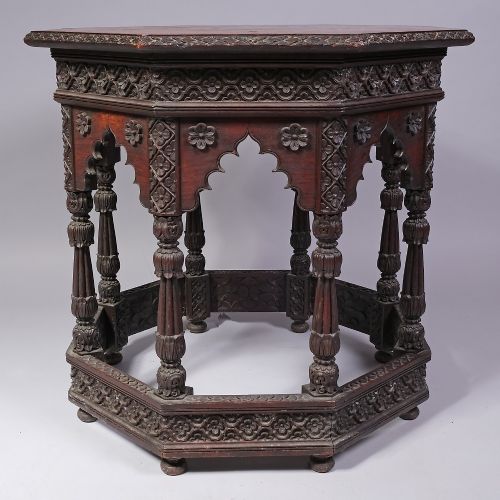
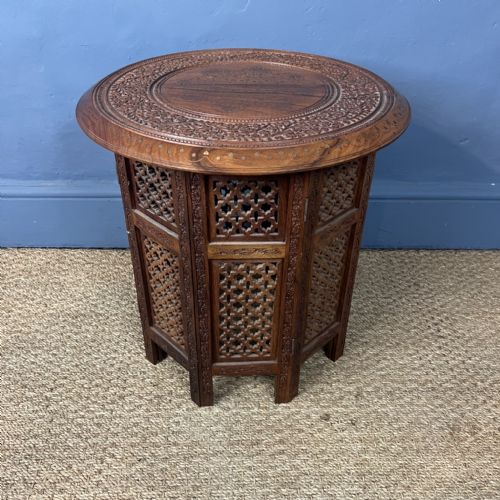
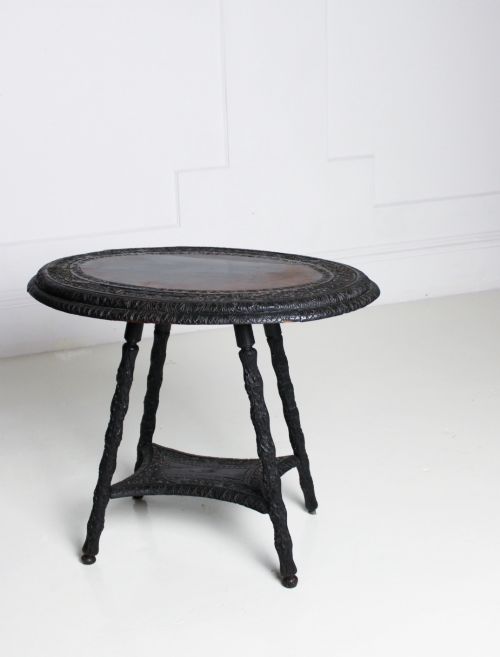
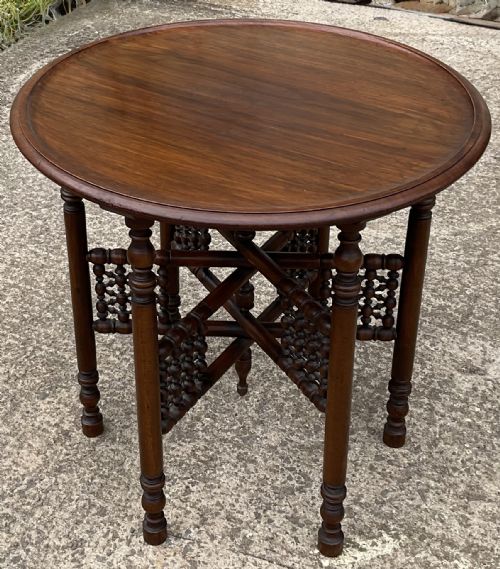
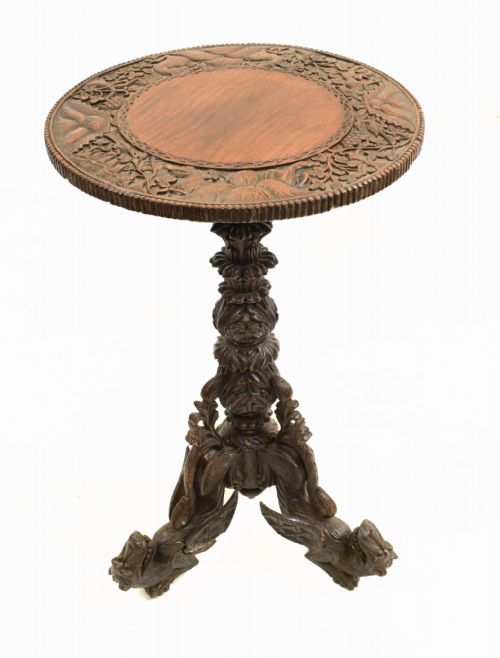
A colonial indian tea table encompasses a variety of occasional, coffee, and side tables produced during the nineteenth and early twentieth centuries under British influence. These pieces frequently appear in forms such as octagonal folding tables, circular tilt-top occasional pieces, and low coffee tables.
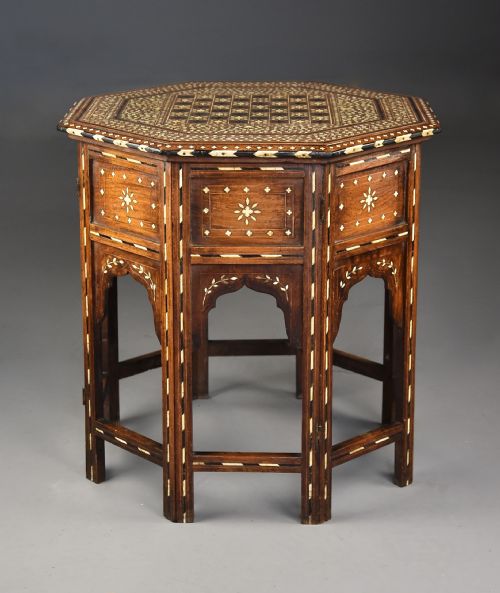
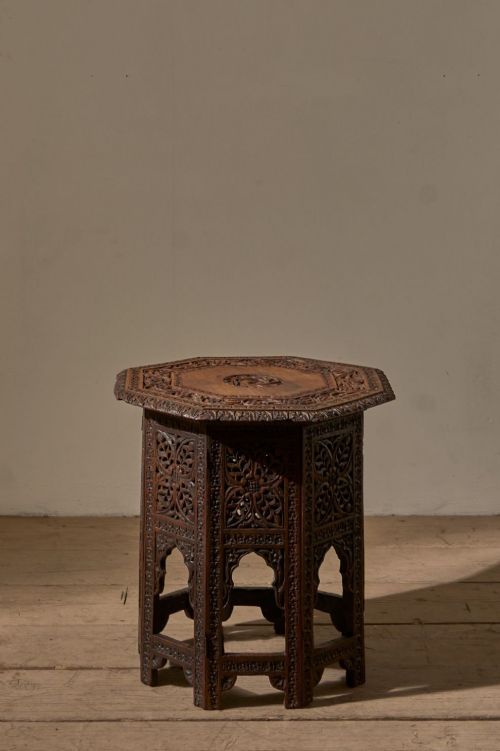
Makers in regions such as Hoshiarpur and Bombay adapted traditional carving and inlay methods for British colonial homes, producing distinctive furniture designed for portability and display. You will frequently encounter octagonal occasional tables decorated with dense floral carvings or geometric brass inlays.
The category extends across diverse regional styles, including Anglo-Indian, Anglo-Burmese, and Ceylonese work. While many function as compact side or lamp tables, larger dining and centre tables also occur within the evidence.
How They Were Made
Craftsmen utilised dense hardwoods such as teak, padauk wood, rosewood, and ebony as the structural base for these tables. These heavy timbers provided a stable foundation for the deep chisel work demanded by the prevailing aesthetic.
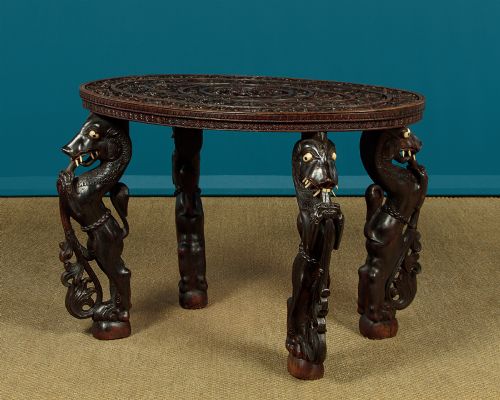
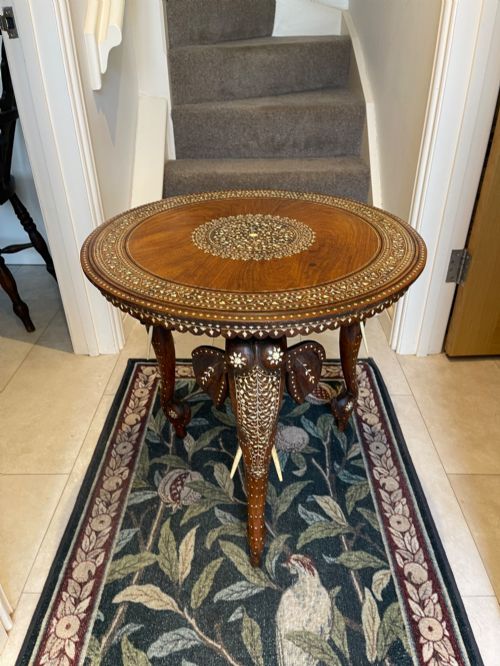
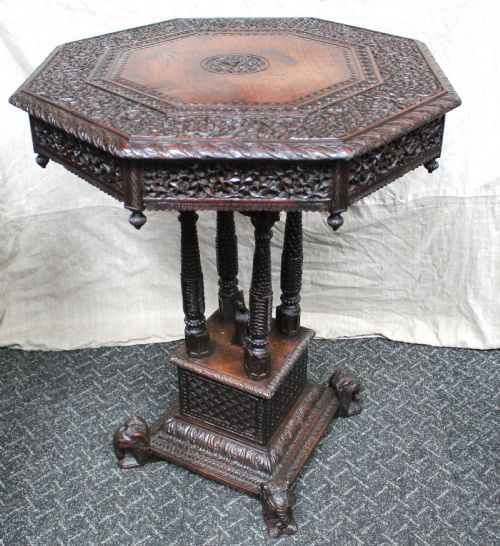
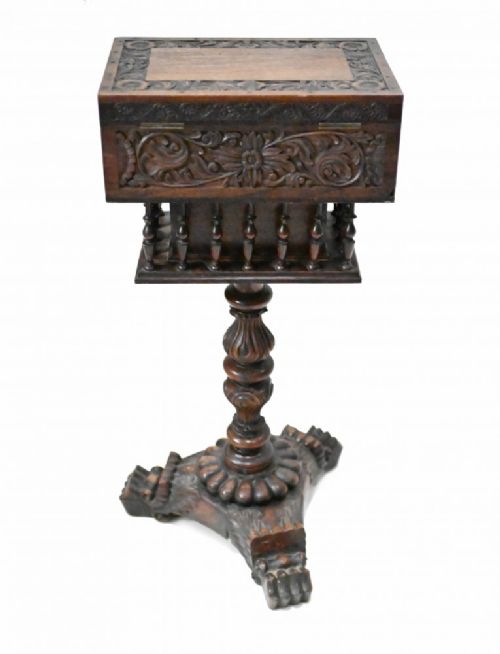
Surfaces were embellished through intricate hand carving depicting leaf motifs, dragons, and figurative elements like elephants. Artisans also integrated contrasting materials, setting brass, copper, bone, and mother-of-pearl directly into the timber.
Several tables feature carved elephant heads peering outward from the base, giving miniature trunk supports a sturdy job.
What Varies in Quality
The depth and crispness of the hand carving separate standard production pieces from exceptional examples. Superior items display sharp relief work where every leaf and animal form remains distinct and well-defined.
The precision of the inlay work marks another distinction, with higher quality pieces showing tight joints between the brass, bone, or mother-of-pearl and the surrounding hardwood ground. The choice of primary timber also influences the standing of the piece, with richly grained padauk and rosewood commanding attention.
The Colonial Indian Tea Table Glossary
- Anglo-Indian
- Furniture made in India during the British colonial period, combining British furniture forms with local decorative techniques. These objects often blend European silhouettes with regional carving styles.
- Octagonal
- Having eight sides. This geometric shape is particularly common in folding occasional tables from Hoshiarpur.
- Teapoy
- A small table used for holding tea equipment or serving drinks. The evidence shows these pieces appearing alongside standard occasional and side tables.
- Inlay
- A technique where contrasting materials are embedded into recessions cut into the wooden surface. Common materials include brass, copper, and bone.
- Tilt-top
- A tabletop mechanism that allows the surface to pivot to a vertical position for storage. This feature appears on circular occasional tables from the Bombay region.
Colonial Indian Tea Table: Frequently Asked Questions
How do I fold an octagonal table?
Many octagonal occasional tables feature a clever interlocking wooden lattice base that collapses flat once the top is lifted off. The sides fold inward on integrated hinges, allowing the entire frame to be stored compactly against a wall.
Take care when dismantling these folding frames to support the carved hinges evenly. Align the joints correctly before lowering the tabletop back onto the base.
What woods were used for these tables?
Carpenters relied on durable tropical hardwoods including teak, padauk, rosewood, and ebony. These dense timbers resisted warping in humid climates and provided a stable canvas for deep carving.
Darker woods like ebony and rosewood often served specific decorative functions, while teak and padauk formed the robust structural frames for campaign and side tables.
How do I clean brass inlaid surfaces?
Dust the surface regularly with a soft, dry brush to prevent dirt from accumulating inside the carved recesses and brass channels. Avoid liquid polishes that can seep into the surrounding wood grain and stain the timber.
If the brass requires brightening, apply a specialised metal cleaner very sparingly with a cotton bud directly to the metal, keeping it away from the wood entirely.
Where were these tables made?
Production centred on major crafting hubs across the Indian subcontinent and Burma, with specific regions developing distinct signatures. Hoshiarpur was renowned for intricate inlay and geometric carving, while Bombay favoured dense teak and circular tilt-top designs.
Workshop traditions also extended to Ceylon, where craftsmen applied local carving motifs to occasional and centre tables for the colonial market.