


Colonial Indian Hardwood Table
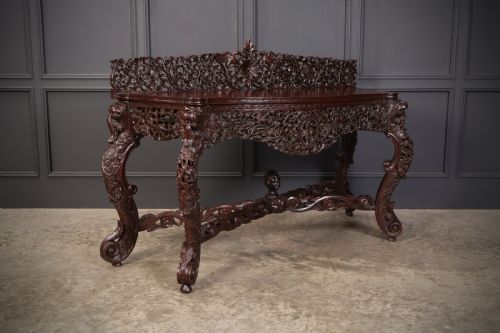
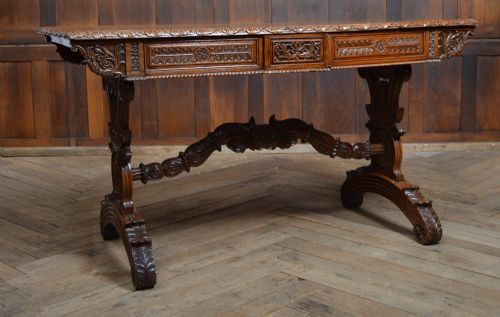
A colonial indian hardwood table brings dense grain and deep carving into a room, forged across the nineteenth and early twentieth centuries.
Colonial Indian Hardwood Table
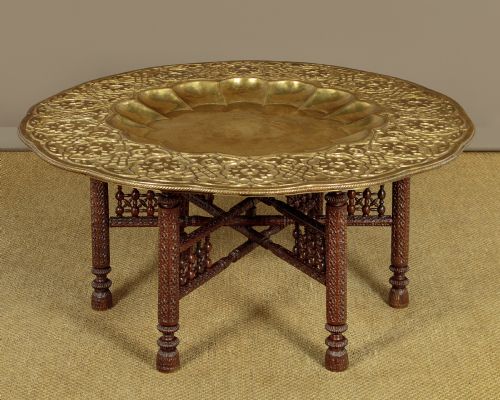
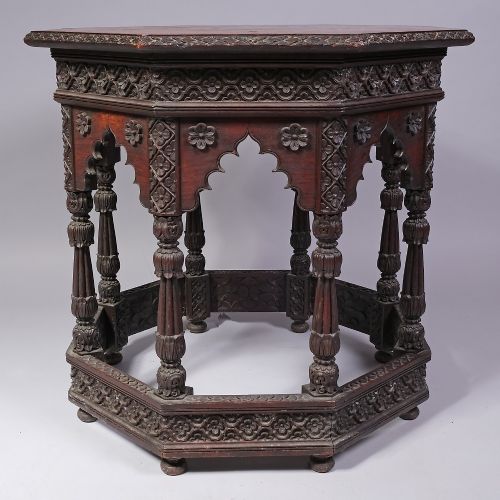
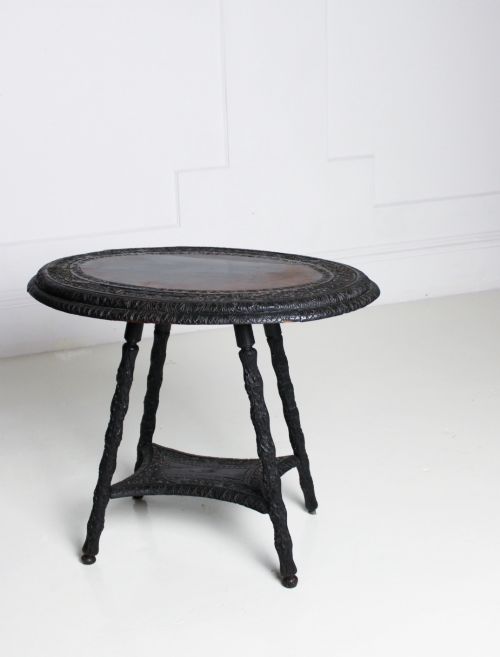
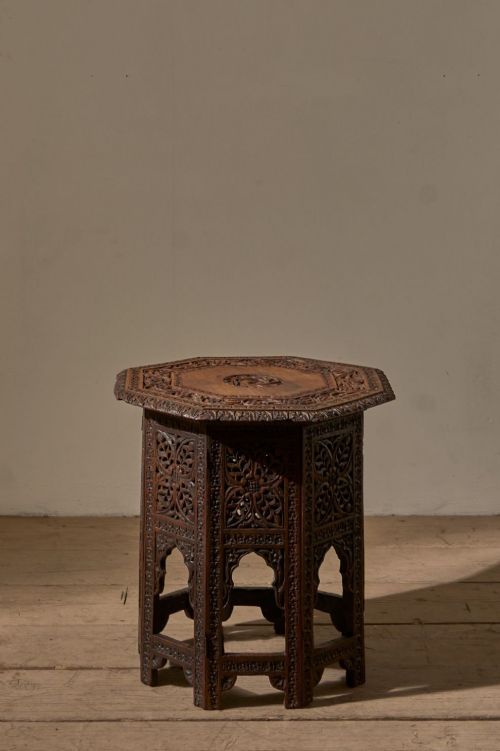
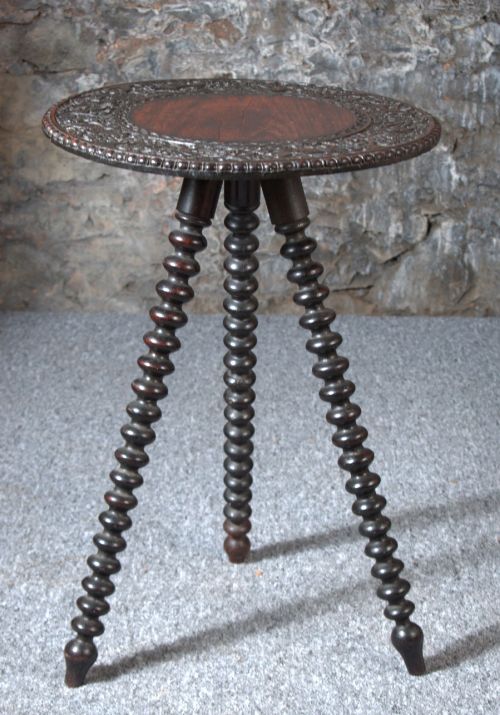
A colonial indian hardwood table bridges British domestic forms with South Asian workshop traditions, appearing in side, occasional, console, and library formats. These pieces emerge predominantly from the nineteenth century, stretching into the early decades of the twentieth century, and display regional British-Colonial design influences.
Buyers encounter variations that include circular tilt-top occasional tables, low tables, and distinct figural forms supported by carved elephants or camels. Padauk, teak, and rosewood serve as the primary timbers, shaped into forms ranging from simple campaign dining tables to heavily carved console pieces.
Evaluating Quality
Quality rests in the crispness of the hand carving and the selection of the timber, where dense, heavy padauk or rosewood demonstrates superior original stock. Pieces featuring well-proportioned figural supports, such as carved elephants, display a higher level of artisan skill than simpler geometric designs.
Construction methods also separate standard items from finer examples, noting particularly the stability of tilt-top mechanisms, the precision of brass or bone inlay work, and the structural integrity of heavy pedestals.
Several nineteenth-century tables feature carved elephants acting as structural table legs, complete with lowered trunks.
The Colonial Indian Hardwood Table Glossary
- Padauk
- A dense, heavy tropical hardwood prized for its reddish-brown colour and durability. It was frequently used by cabinetmakers in nineteenth-century colonial workshops.
- Tilt-top
- A tabletop mounted on a catch and pivot mechanism allowing the surface to fold vertical when not in use. This design saved space in colonial campaign settings.
- Anglo-Indian
- A descriptive term for furniture made in India during the British colonial period, combining traditional local carving with British domestic forms.
- Campaign
- Portable or collapsible furniture designed for easy transport by British military officers and administrators on colonial travels.
- Console table
- A table designed to stand flat against a wall, often supported by ornate legs or figural carvings rather than a standard four-leg frame.
Colonial Indian Hardwood Table: Frequently Asked Questions
What is a colonial indian hardwood table?
These pieces are tables manufactured in India and Burma during the British colonial era, combining local timber and carving with European furniture shapes.
They range from occasional and side tables to large desks and console formats.
How were these tables used?
Colonial administrators and British families utilised them in station bungalows and administrative offices for daily writing, dining, and display.
Tilt-top and folding variants also accommodated mobile lifestyles and easier transport between residences.
How do I date a carved table?
Dating relies on examining the timber species, construction joints, and the depth of the regional carving styles associated with the nineteenth and early twentieth centuries.
Records show pieces span the Victorian era up to the 1930s, shifting from heavy padauk forms to lighter inlaid designs.
How do I live with dark hardwood?
These dense tables anchor a room visually and pair well with both contemporary minimalist spaces and traditional interiors.
Maintenance involves keeping the timber away from direct heat sources and occasionally feeding the grain with appropriate wax.