
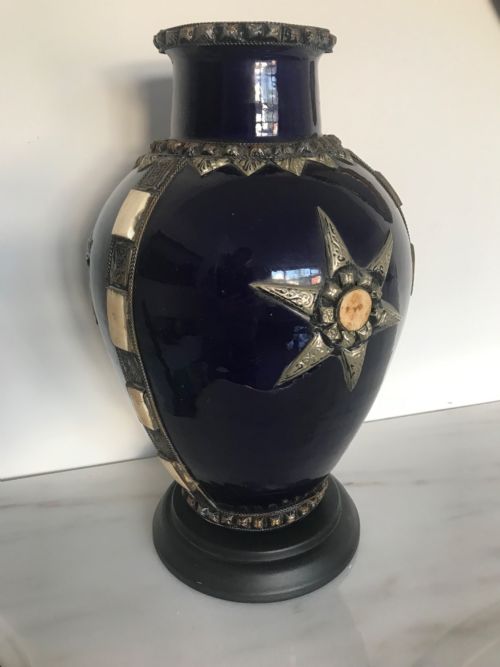
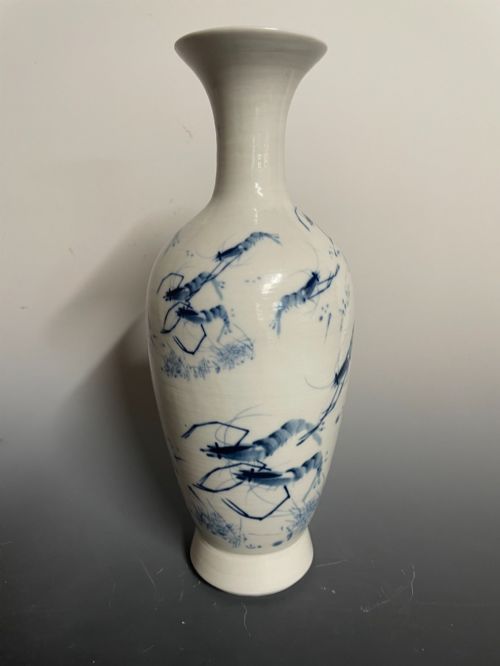
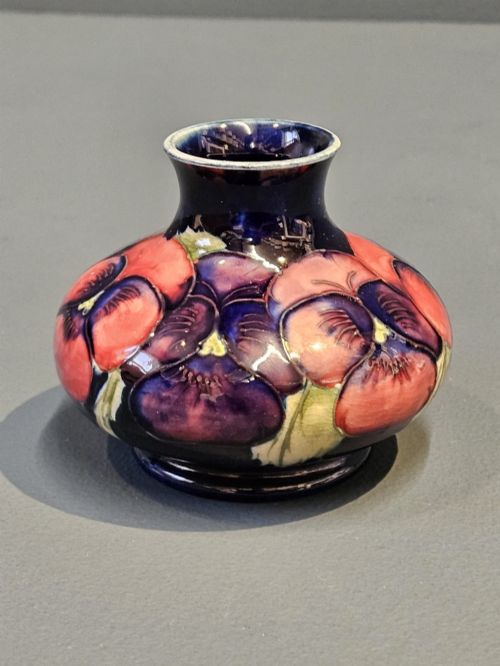
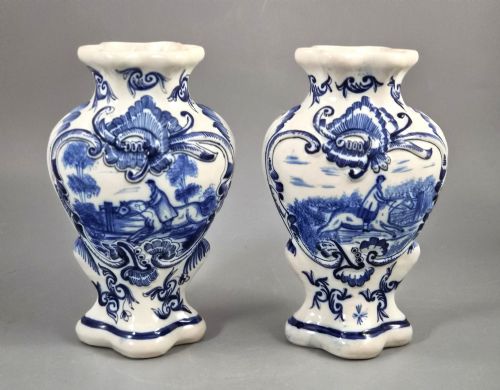
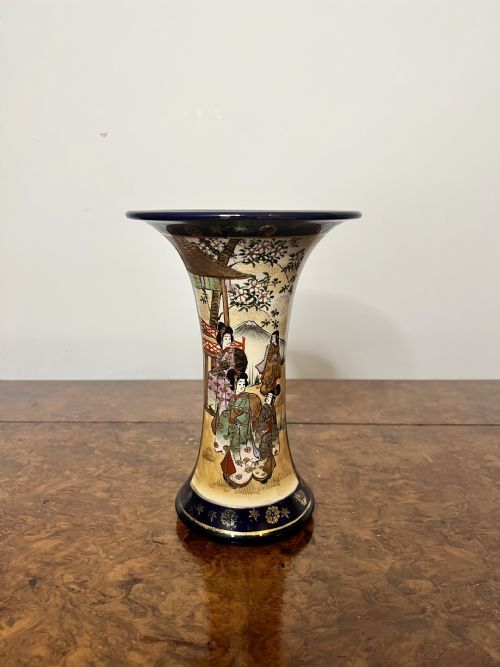


Cobalt Pottery Vases
Cobalt pottery vases bring deep blue mineral colour and varied ceramic forms into a room.
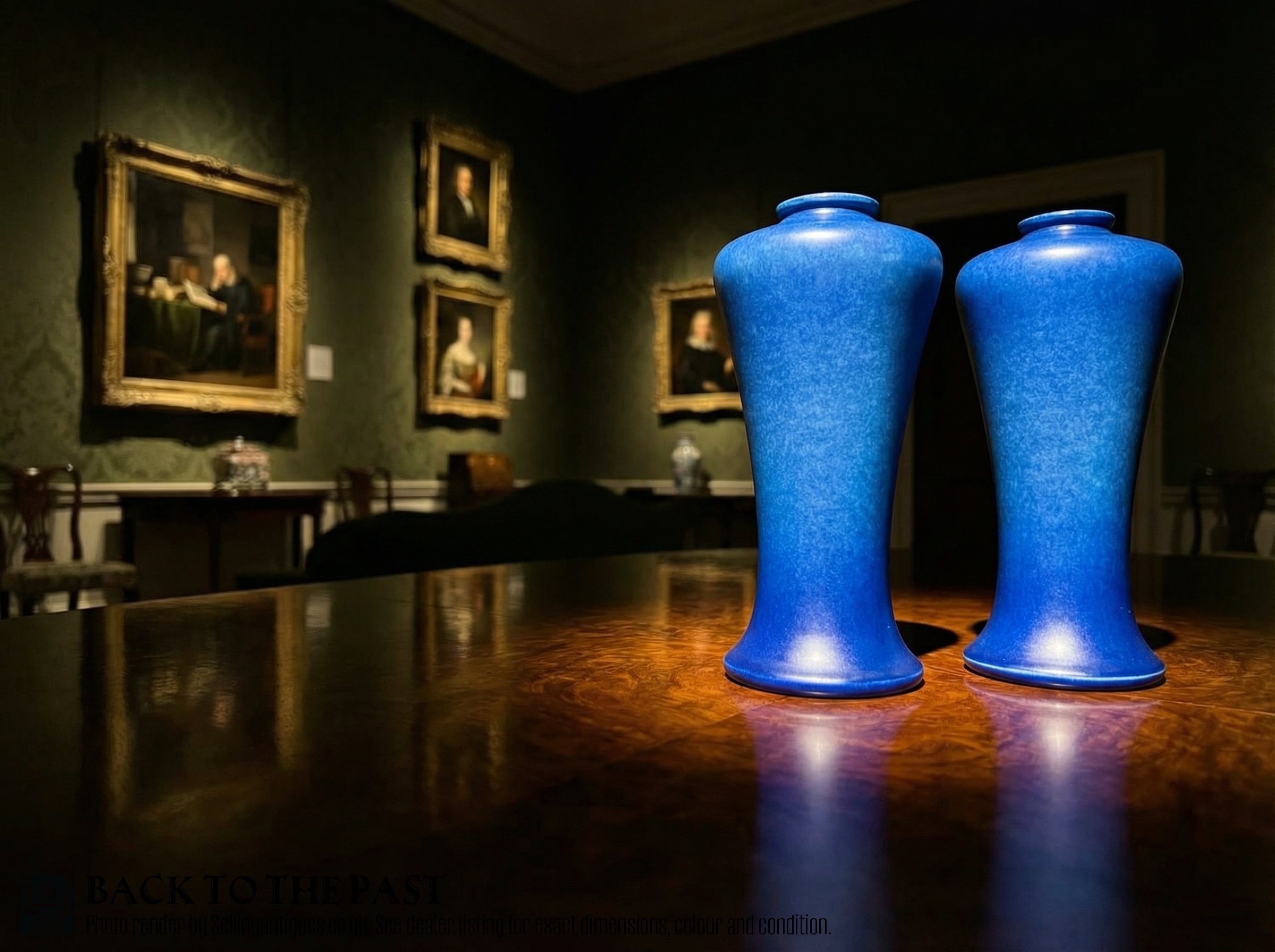
Cobalt Pottery Vases
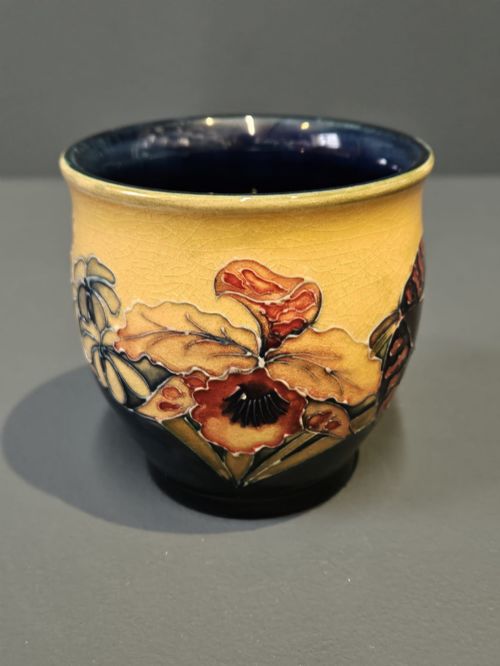
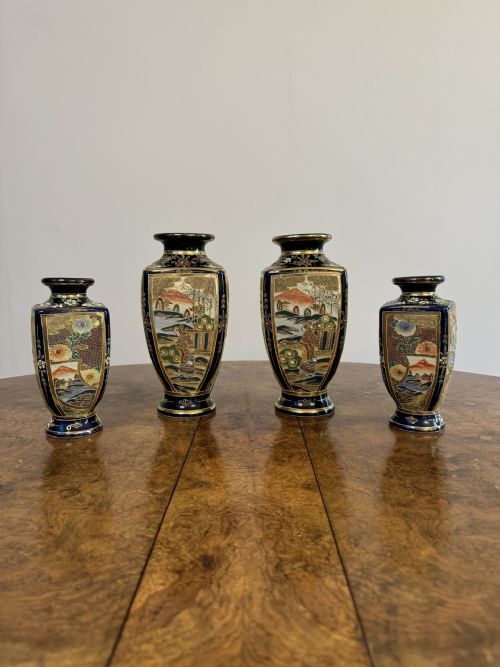
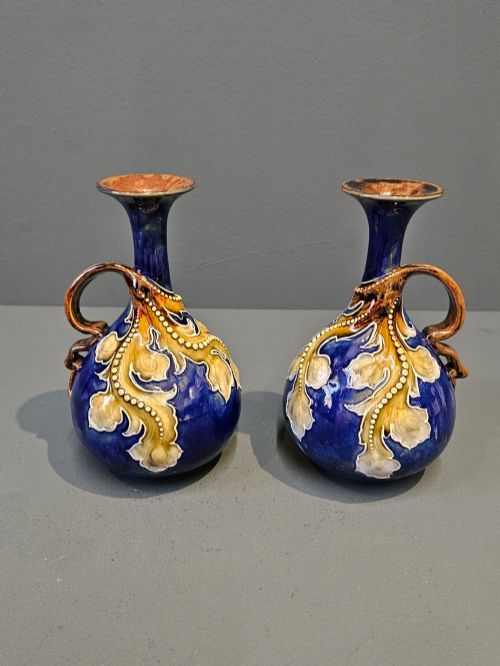
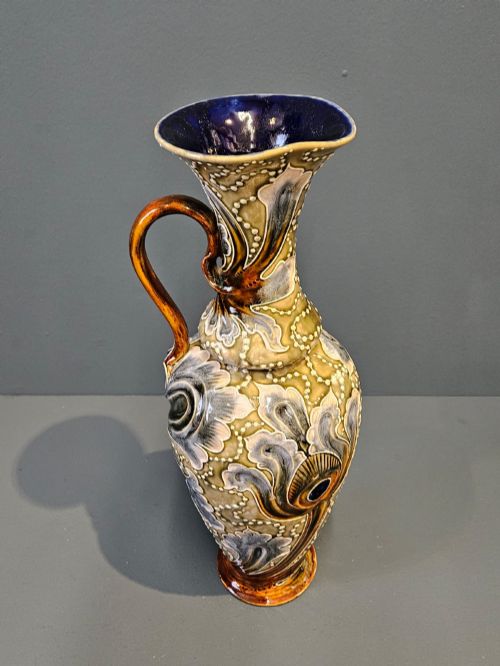
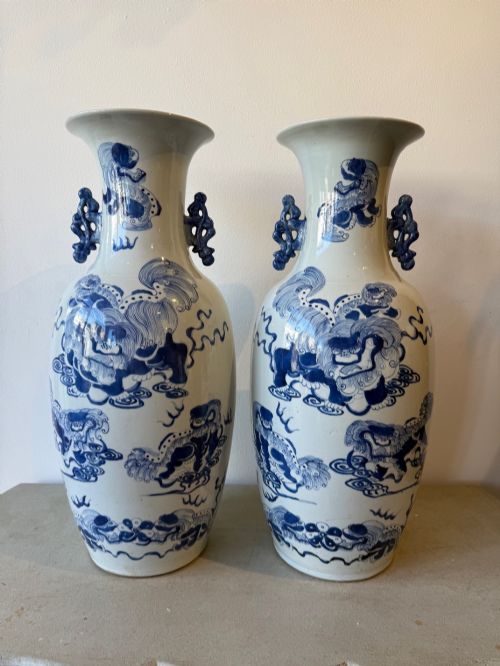
Cobalt pottery vases encompass a wide range of decorative vessels defined by their rich blue pigments, spanning centuries of global ceramic production. Buyers exploring cobalt pottery vases will encounter forms varying from traditional Asian porcelain bottles and Japanese satsuma garnitures to British art pottery and Victorian stoneware.
The selection includes pieces originating from diverse traditions such as Dutch Delftware, Chinese blue and white porcelain, and French faience. Ewers, jars, and standard vases appear across periods ranging from the eighteenth century through the Edwardian era and the 1920s.
Moorcroft, Doulton Lambeth, and various Japanese workshops contribute significantly to the variety visible in this category. Collectors find both single display pieces and matched pairs featuring intricate hand-painted or moulded details.
Materials and technique
Makers utilised earthenware, stoneware, and porcelain as the primary ceramic bodies for these vessels, applying cobalt oxide under or over the glaze to achieve the characteristic deep blue hue. Firing techniques varied from traditional kiln methods for Chinese and Japanese wares to specialised industrial kilns in British potteries.
Many examples incorporate additional decorative elements such as gold leaf, enamel highlights, moriage relief work, and silver mounts. Glaze application ranged from smooth, uniform surfaces to textured finishes on terracotta and faience bodies.
Listings feature ceramics spanning the 18th, 19th, and early 20th centuries, including Victorian and Edwardian examples.
Evaluating the pieces
Quality in these ceramics often rests on the precision of the hand-painting, the depth and clarity of the cobalt pigment, and the crispness of any moulded or applied relief work. Pieces featuring intricate gilding or complex pictorial panels demand a higher level of artisan skill.
The reputation of the pottery or the specific studio mark influences desirability, with documented works from established makers commanding greater attention. Condition of the glaze and the preservation of delicate surface details also distinguish standard items from superior examples.
Fourmaintraux-Courquin·Doulton Lambeth·Royal Crown Derby·Carlton Ware·Crown Devon·Kinkozan·Nanzan·Wedgwood·Moorcroft·Brannam
The Cobalt Pottery Vases Glossary
- Cobalt blue
- A deep blue pigment derived from cobalt salts, used extensively in ceramics for its stability at high kiln temperatures.
- Satsuma
- A type of earthenware from Japan typically characterised by an ivory crackle glaze decorated with enamel and gold.
- Imari
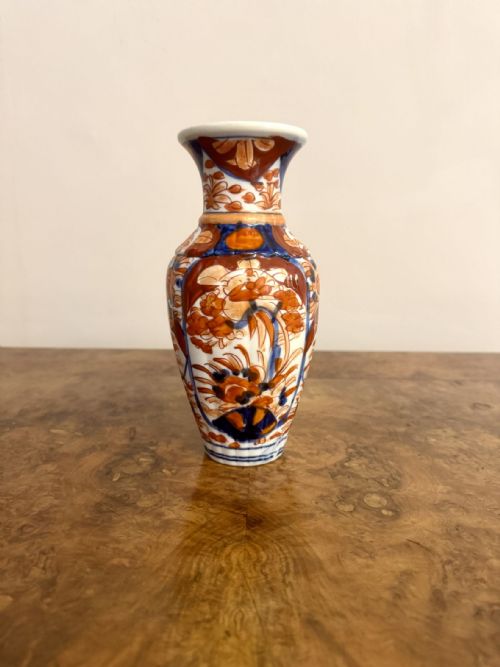
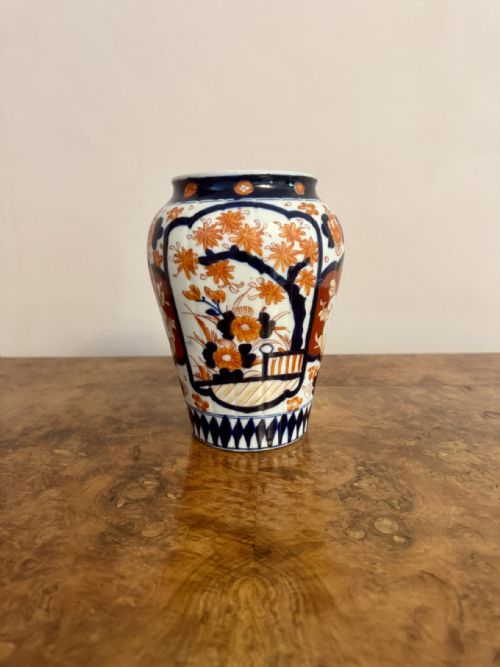
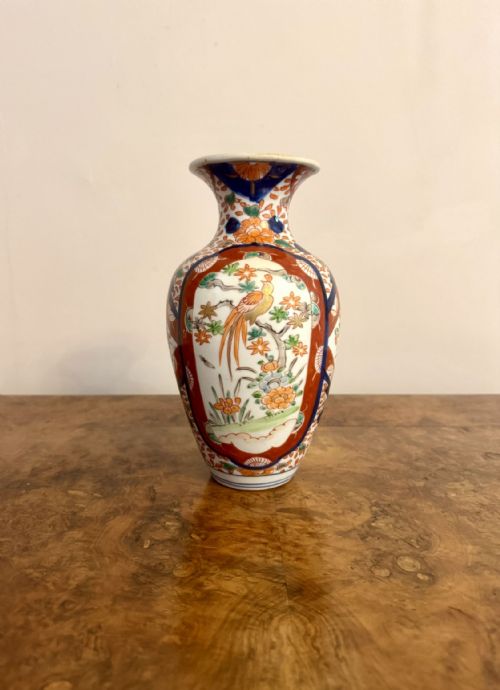
- Japanese porcelain decorated in underglaze blue and overglaze red, gold, and green, originating from the town of Arita.
- Moriage
- A Japanese ceramic technique using piped clay to create raised relief decorations before glazing and firing.
- Delftware
- Tin-glazed earthenware originating from the Netherlands, known for mimicking Chinese blue and white porcelain designs.
Cobalt Pottery Vases: Frequently Asked Questions
What is cobalt pottery?
Cobalt pottery refers to ceramic pieces decorated with a stable blue mineral pigment that withstands high firing temperatures. This pigment appears across earthenwares, stonewares, and porcelains from diverse global traditions.
The intensity of the blue results from the interaction between the metallic oxide and the glaze during the firing process. Potters utilise this technique to achieve rich monochrome designs or as a contrasting background for intricate enamel work.
Where were Doulton Lambeth vases made?
Doulton Lambeth vases were produced by the renowned British pottery firm operating in the Lambeth district of London. This workshop gained prominence during the Victorian era for artistic stoneware and salt-glazed ceramics.
Individual artists often signed or initialed their work, contributing to the distinct character of each piece. The manufacture combined industrial scale with studio pottery techniques, resulting in robust decorative objects.
How should I display antique vases?
Antique vases require stable placement away from direct sunlight and areas subject to sudden temperature fluctuations. Ensuring adequate space around each piece prevents accidental knocks and allows the form and colour to stand out.
Heavier items like ironstone or large stoneware vessels need sturdy support surfaces. Pairs and garnitures look effective when arranged symmetrically on mantelpieces or display cabinets.
What distinguishes imari porcelain?
Imari porcelain is characterised by a distinctive palette consisting primarily of underglaze blue, iron red, and gilt highlights. Originating in Japan, this style became widely exported to Europe and subsequently influenced Western ceramic production.
The designs frequently incorporate complex floral and geometric motifs arranged in symmetrical panels. The combination of deep blue and metallic gold creates a visually rich surface texture.