




Cobalt Orange Porcelain Plates
Cobalt orange porcelain plates bring striking blue and red palettes to the table, uniting Japanese Imari traditions with English adaptations.
Cobalt Orange Porcelain Plates
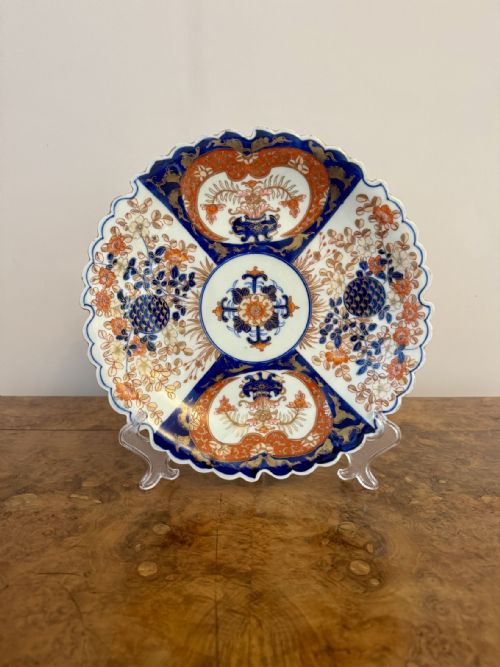
Cobalt orange porcelain plates combine vibrant underglaze blue with rich iron-red enamel and gold leaf accents. When searching for cobalt orange porcelain plates, the selection relies heavily on Japanese Imari wares produced across the Edo and Meiji periods alongside 18th and 19th-century European iterations.
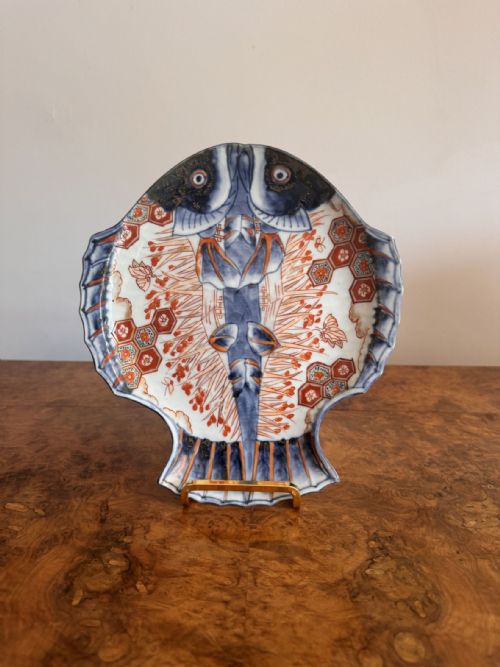
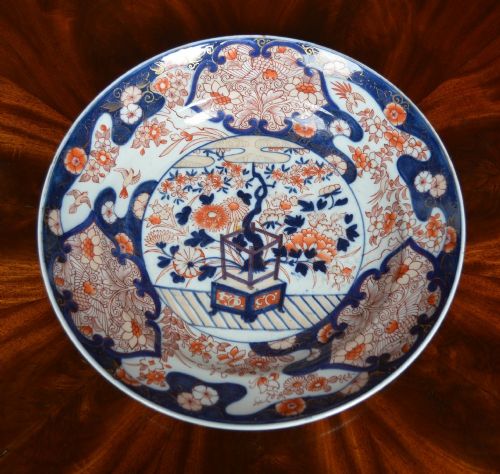
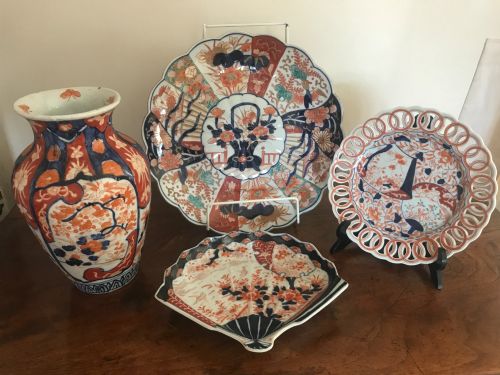
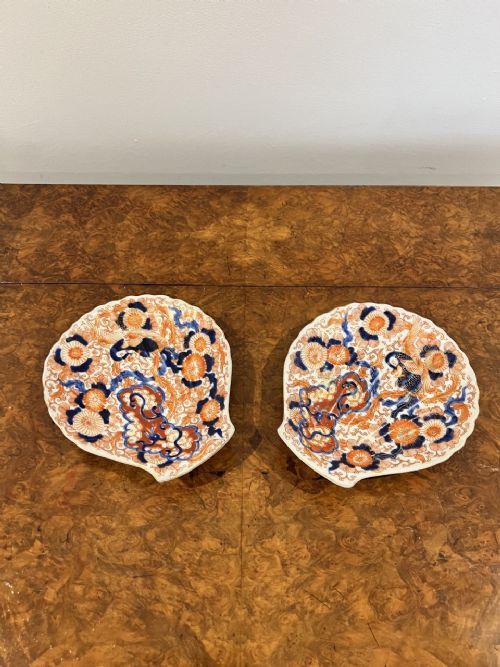
Most examples found in this inventory take the form of round plates, chargers, and decorative dishes featuring scalloped, square, fish, shell, ribbon, or fan shapes. These pieces serve primarily as decorative display items rather than everyday tableware, offering bold colour and intricate patterns to any interior.
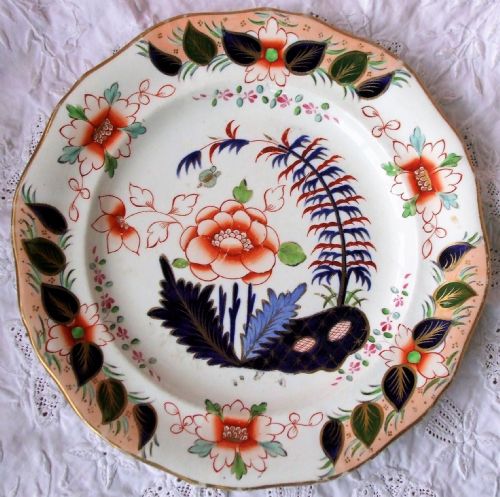
Beyond the predominant Japanese production, English potteries such as Derby and John Davenport of Longport contributed domestic interpretations of the palette on ironstone and porcelain bodies. These regional variations demonstrate the enduring appeal of the aesthetic across different manufacturing centres.
Materials and construction
Potters formed these pieces using fine ceramic and porcelain bodies, sometimes opting for sturdy ironstone for domestic English service. Cobalt oxide provided the deep underglaze blue, applied directly to the unbaked clay or biscuit body before firing.
After the initial glaze firing, artisans added iron-red enamel and gold leaf details by hand, requiring a second, lower-temperature kiln fixture to bond the surface decoration. This layered technique produced the characteristic contrasting palette seen on chargers and shaped plates.
Listings feature porcelain, ironstone, and enamel materials across Victorian, Edwardian, and earlier Edo periods.
Judging quality and execution
Quality rests in the crispness of the hand-painted brushwork and the vibrancy of the enamel colours against the white porcelain ground. Superior examples display dense, well-balanced compositions that make full use of the surface without appearing overcrowded.
The physical form of the plate also dictates distinction, with moulded shapes such as fish, shells, fans, and ribbons demanding greater skill from the potter than standard rounds. Preservation of the original gilding and enamel layer without excessive rubbing separates standard production from finer output.
John Davenport of Longport·Derby Porcelain
The Cobalt Orange Porcelain Plates Glossary
- Imari
- A style of Japanese porcelain originating from the port of Arita, traditionally decorated in cobalt blue, iron-red, and gold. The aesthetic proved highly influential among European porcelain factories during the eighteenth and nineteenth centuries.
- Charger
- A large decorative plate intended for display on a sideboard or wall rather than for serving food. These pieces measure significantly wider than standard dining plates.
- Ironstone
- A type of heavy, durable ceramic patented in the nineteenth century as a robust alternative to porcelain. It accepted glazes and enamels readily, making it suitable for colourful transfer-printed and hand-painted patterns.
- Enamel
- Opaque glass-like coloured material fused to the surface of fired porcelain during a secondary kiln firing. It provides the bright red and accent tones that sit on top of the glaze.
- Glaze
- A glassy coating applied to ceramic ware to seal the porous clay body and provide a smooth, glossy finish. Underglaze cobalt blue is painted beneath this layer before the primary firing.
Cobalt Orange Porcelain Plates: Frequently Asked Questions
What are cobalt orange porcelain plates?
These pieces are decorative ceramics featuring distinctive blue and red hand-painted designs. They draw heavily on Japanese Imari traditions alongside European interpretations.
Most items function as display chargers or shaped dishes rather than functional tableware. Their strong palette makes them focal points in traditional and eclectic interiors.
How do I date an antique Imari plate?
Dating relies on examining the porcelain body weight, the brightness of the enamel colours, and the kiln marks where applicable. Edo and Meiji period Japanese examples show distinct potting traits compared to later Victorian pieces.
English interpretations from factories like Derby or Davenport often carry specific factory marks on the reverse. Comparing the hand-painting style to documented pieces helps narrow down the production era.
Were these plates meant for dining?
While some sets served functional dining purposes, many larger chargers and shaped dishes were created purely for decorative display. Their intricate enamel and gold leaf decoration made them too valuable for daily rough use.
Dishes formed as fish, fans, or ribbons were particularly suited for sideboard presentation. Collectors today continue to display them on walls or stands rather than using them at the table.
How do I care for antique porcelain?
Antique porcelain requires gentle handling and should be washed by hand in lukewarm water using mild soap when necessary. Avoid soaking pieces with delicate overglaze enamels or gold leaf to protect the surface.
Display them away from direct sunlight and areas prone to heavy vibrations or temperature fluctuations. Secure wall hangers properly if mounting chargers for display.