
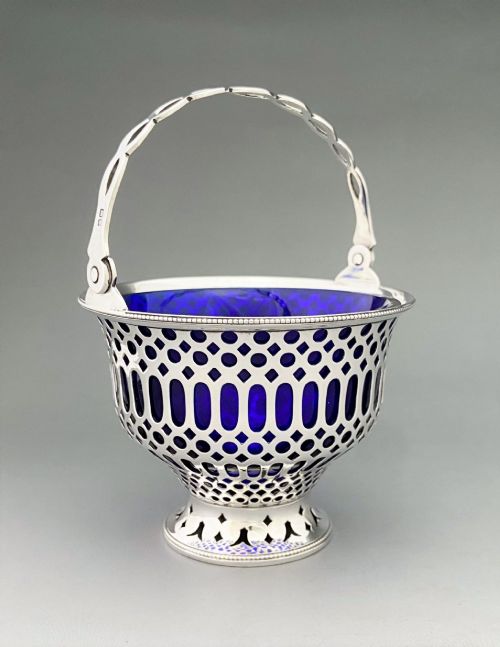


Cobalt Glass Silver Dish
A cobalt glass silver dish brings together deep blue glass and bright metalwork across periods from the eighteenth century to the twentieth century.
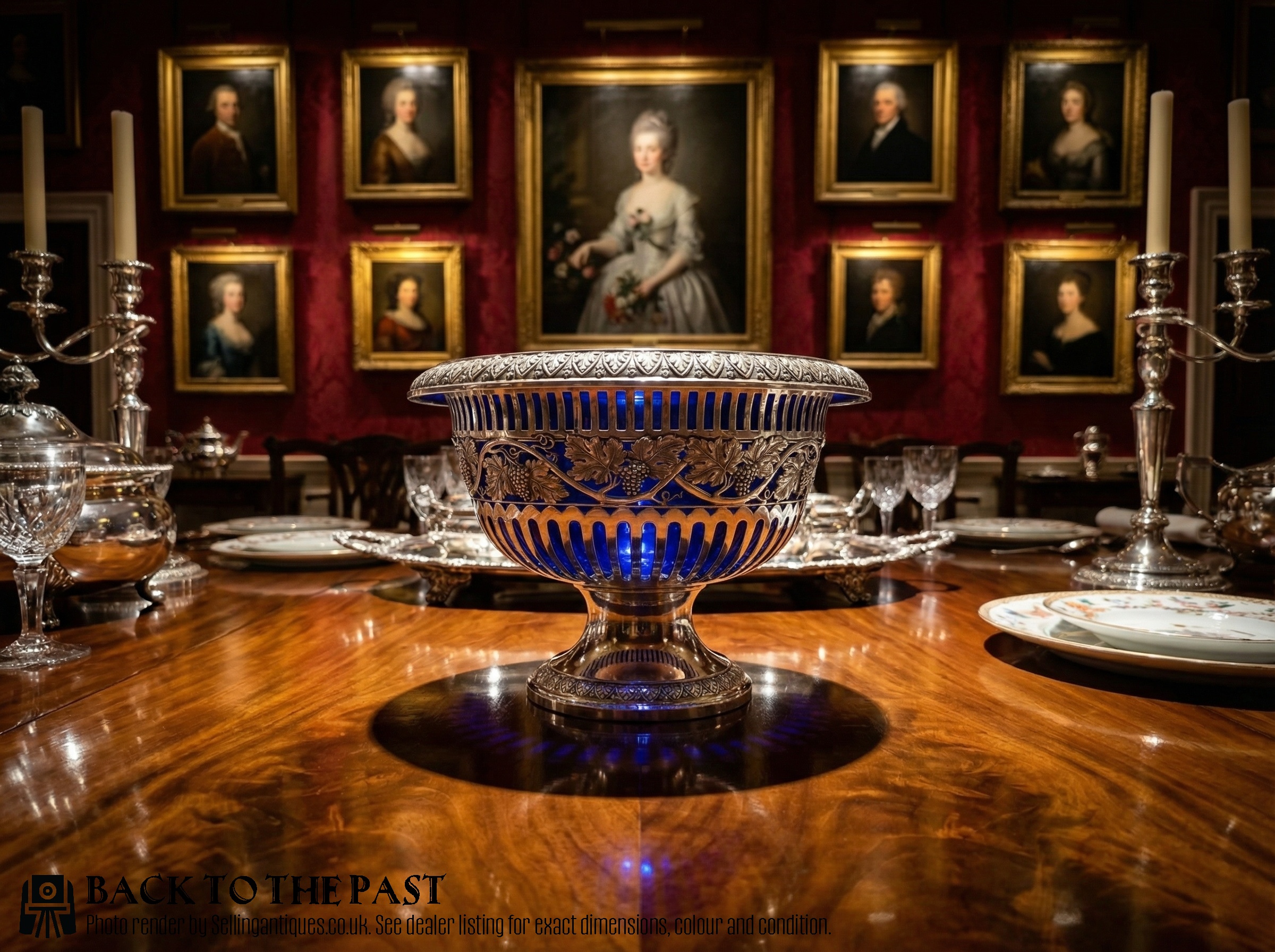
Cobalt Glass Silver Dish
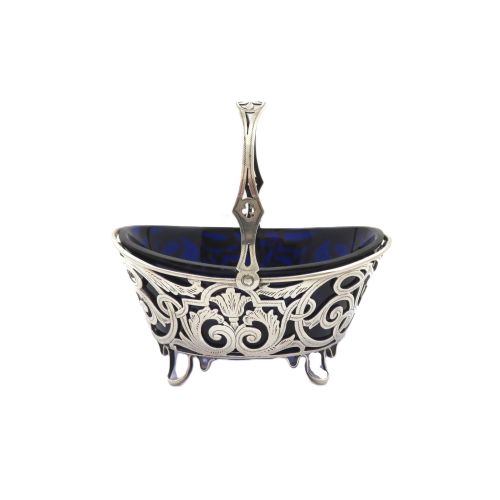
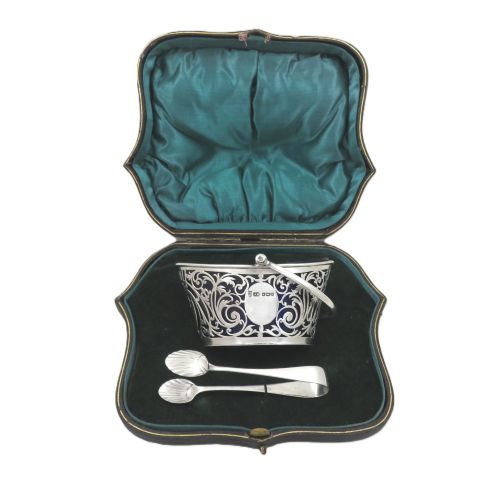
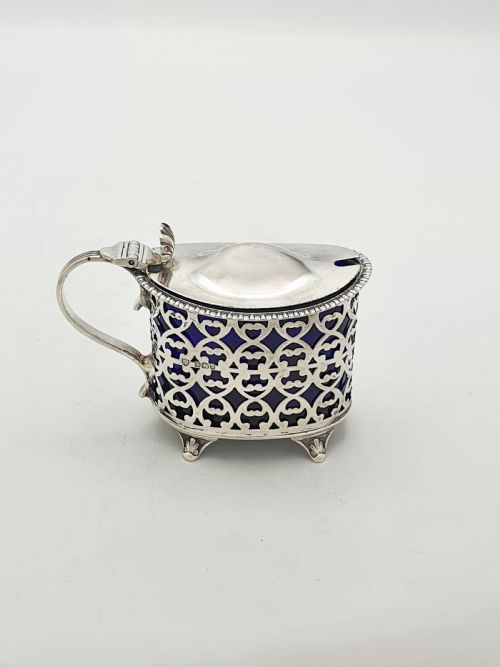
A cobalt glass silver dish search covers a variety of small tableware and serving items combining blue glass liners or inserts with silver or silver plated mounts. The forms range from salt cellars and mustard pots to larger sugar baskets, centrepieces, bonbon dishes, and dish rings.
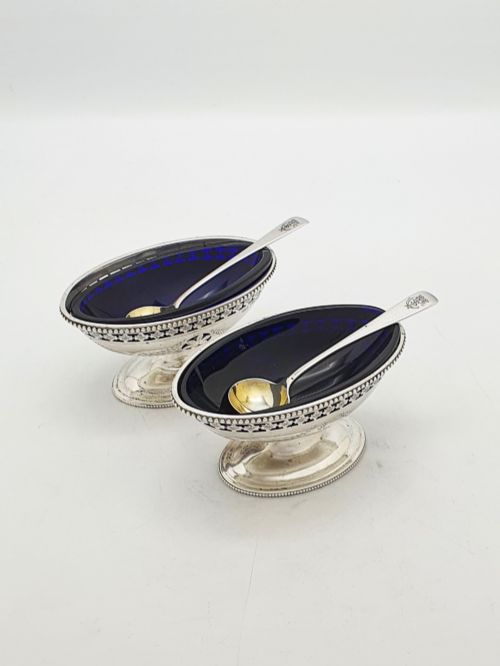
Victorian and Edwardian examples appear frequently, alongside pieces from the eighteenth century and the Art Deco era of nineteen thirty. Buyers encounter pairs of salt cellars with removable blue glass liners, boat shaped table salts, and swing handled baskets designed for sugar or sweets.
Origin and period vary widely, taking in English provincial and town silver, German historicism centrepieces, and Irish dish rings. Each piece serves a traditional dining table function, using the contrast between the dark blue glass and the surrounding metal.
How they were made
Silversmiths utilised sterling silver, silver plate, and eight hundred silver to form the frames, baskets, and holders that secure the glass inserts. Piercing, casting, and hand shaping created openwork galleries, floral handles, and boat shaped bodies.
The glass component relies on cobalt glass or blue glass blown and moulded to fit snugly into the metal mounts, sometimes accompanied by mirror glass for trays. Liners were produced separately to allow removal for cleaning after holding salts, mustard, or sugar.
Potato rings didn't hold potatoes at all; they acted as heat insulators to protect wooden tables from hot serving dishes.
What varies in quality
Quality rests upon the weight and crispness of the metalwork, distinguishing heavy cast floral handles and finely pierced galleries from simpler stamped mounts. The integration between the silver frame and its glass insert demonstrates the maker's precision.
The presence of original liners adds to the integrity of the piece, particularly where the cobalt blue glass matches the exact contours of the silver mount. Maker marks, town marks, and clear hallmarks contribute to the standing of silver items across Georgian, Victorian, and later periods.
The Cobalt Glass Silver Dish Glossary
- Cobalt glass
- Deep blue glass coloured with cobalt oxide, commonly utilised for liners in salt cellars and mustard pots. This material protects the silver from corrosive contents while offering a striking visual contrast.
- Salt cellar
- A small open vessel used on the dining table to hold salt before the invention of modern shakers. Many examples feature removable blue glass liners held within pierced silver frames.
- Dish ring
- A spool shaped ring, also known as a potato ring, used to elevate dishes on the dining table. These large silver stands often enclose a blue glass or mirror glass base.
- Swing handle
- A movable arched handle attached to baskets and centrepieces by pins or hinges. It allows the vessel to be lifted easily during service.
- Silver plate
- A base metal coated with a thin layer of silver through electroplating or older techniques. This method provided an accessible alternative to solid sterling silver for tableware.
Cobalt Glass Silver Dish: Frequently Asked Questions
What were cobalt glass silver dishes used for?
These items served functional roles on the dining table, holding condiments such as salt and mustard, or presenting sugar and sweets. The glass insert protected the metal frame from corrosion caused by salt.
Over time, forms evolved from Georgian salts and baskets to Edwardian bonbon dishes and Art Deco tableware, maintaining their role in food service and display.
How do I care for silver with glass liners?
Cleaning requires removing the glass liner from the silver frame to wash them separately using mild soap and warm water. A soft cloth prevents scratching on both the cobalt glass and the silver.
Silver polish should be applied sparingly to the metal mounts while keeping it away from the glass to preserve the finish of each material.
Are the glass liners usually original?
Many pieces retain their original blue glass liners, shaped precisely to fit the contours of the silver baskets and salt cellars. Replacement liners occur frequently due to the fragile nature of glass over centuries of use.
Examining how the glass sits within the metal mount helps determine whether the insert corresponds to the period of the silver.
How can I tell a Victorian piece from a Georgian one?
Georgian items often display neoclassical Adam style motifs and simpler geometric piercing, reflecting eighteenth century design preferences. Victorian pieces introduce heavier cast floral decoration and more ornate handle constructions.
Hallmarks stamped on the silver provide definitive date letters and town marks to confirm the exact year of manufacture.