



Pierced Silver Glass Bowl
These pierced silver glass bowl pieces combine pierced metalwork with coloured glass liners, offering both decorative presence and practical tableware utility.
Pierced Silver Glass Bowl
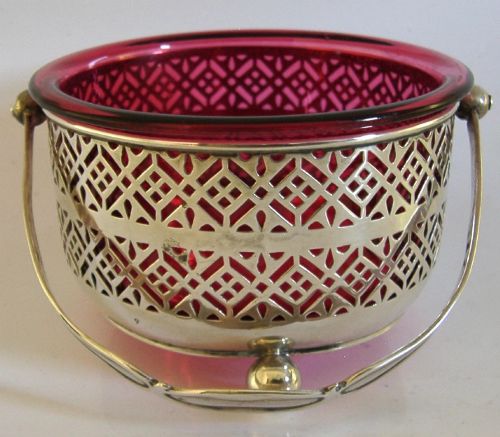
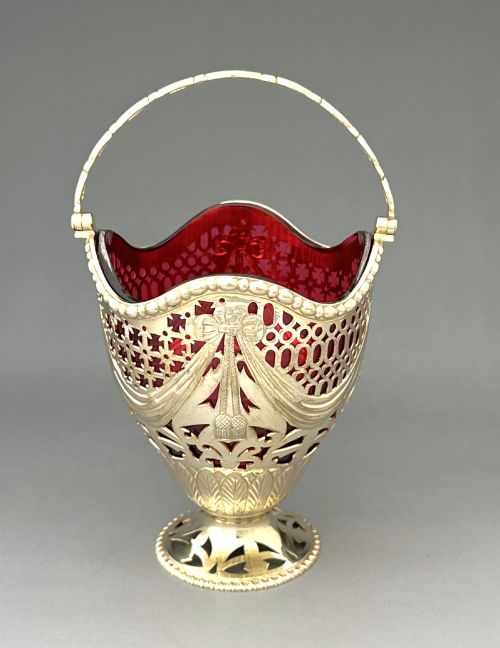
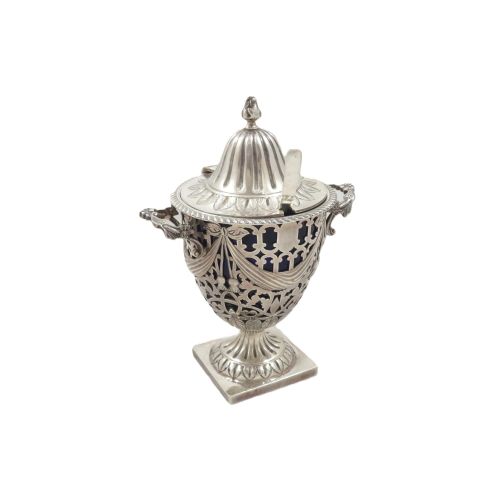
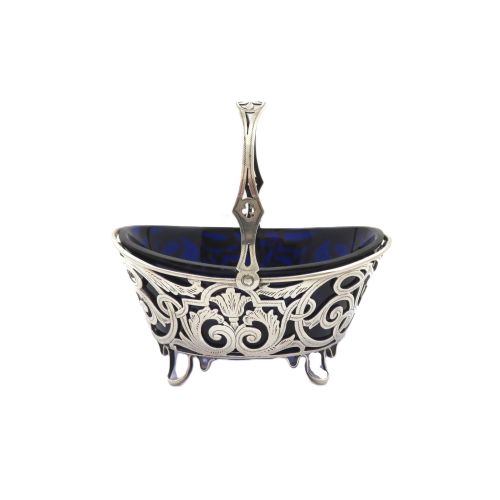
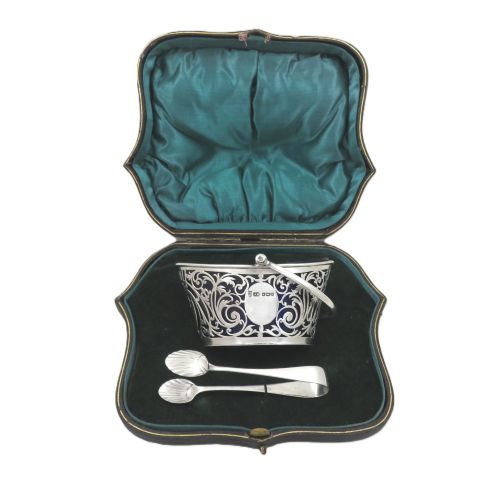
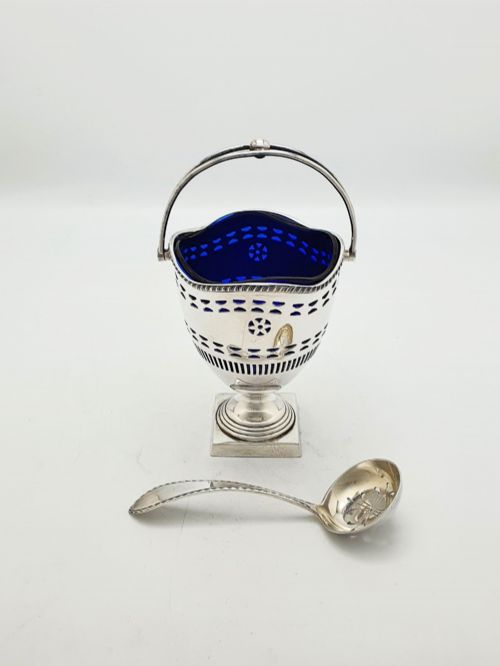
A pierced silver glass bowl typically manifests as a sugar basket, cream pail, or dessert dish designed to hold a coloured glass insert. Edwardian and Victorian examples predominate on this page, alongside Georgian pieces and later iterations from the twentieth century.
Form varies from swing-handled baskets and lidded urns to centrepieces and potpourri baskets. The metal cage or frame is worked in openwork patterns to reveal the vibrant glass within.
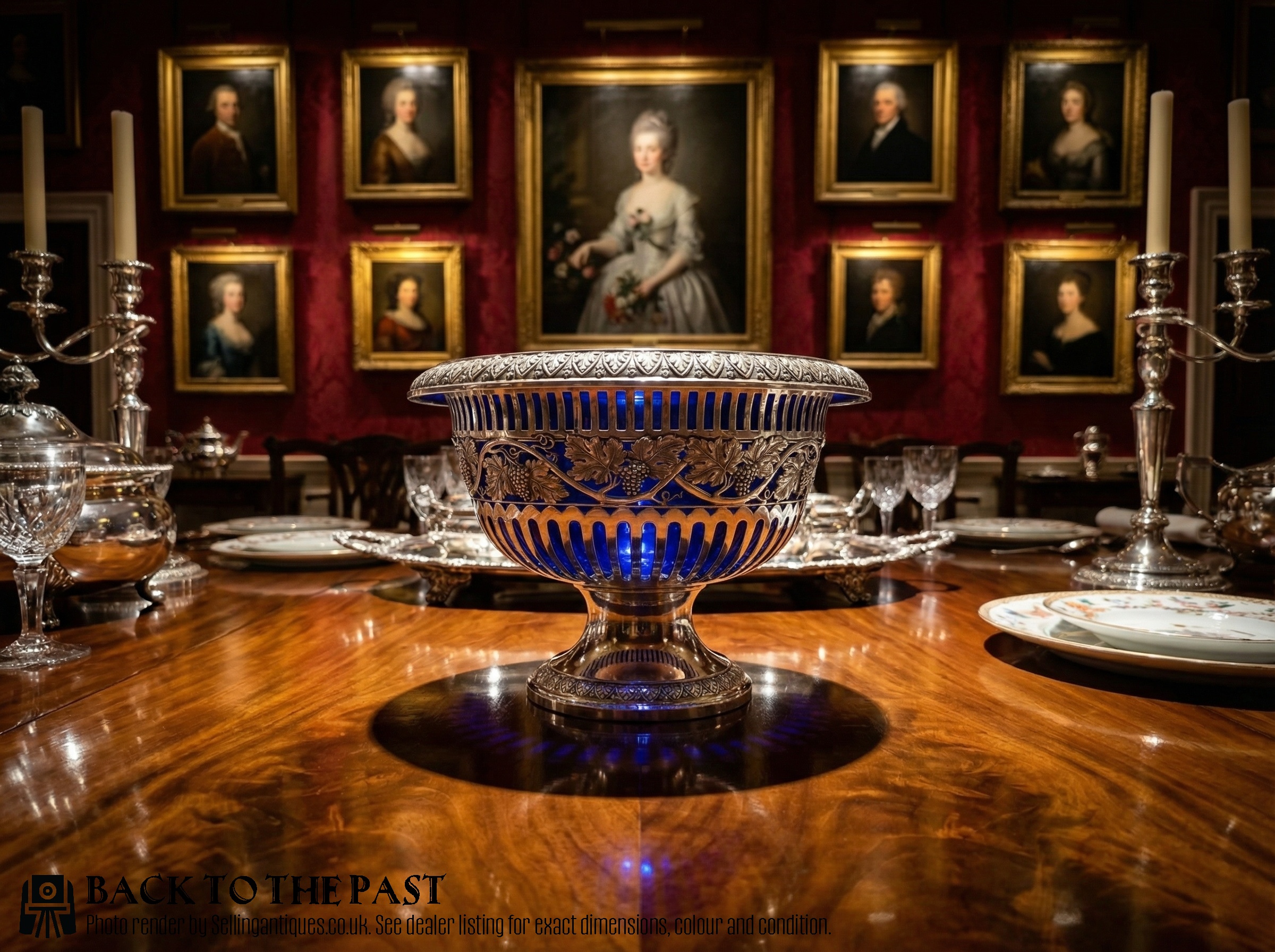
Liners appear in various hues, notably cobalt blue, cranberry, ruby glass, and rock crystal. These vessels served formal dining functions, particularly for sugar or dessert service.
Materials and construction
Construction relies upon sterling silver, silver plate, or silver-gilt frames combined with blown or moulded glass inserts. Metalsmiths pierced the silver sheets by hand or machine to create intricate openwork designs.
Liners are fitted precisely into the metal framework, often accompanied by swing handles, cast floral mounts, or matching spoons and sifters.
Some baskets came equipped with tiny matching silver sifter spoons designed specifically for dusting sugar over fruit.
Assessing quality and craftsmanship
Quality rests upon the crispness of the piercing work and the weight of the silver or silver plate used for the frame. Heavier gauge metal resists bending and provides a stable housing for the glass.
The integration of the glass liner matters greatly, with original matched liners commanding more interest than replacement glass. Hand-blown glass showing rich depth of colour elevates the piece above standard pressed alternatives.
Aldridge and Green·Viners·William Comyns·George Fox
The Pierced Silver Glass Bowl Glossary
- Pierced silver
- Metalwork perforated with decorative patterns to let light through. This technique creates delicate openwork frames around glass liners.
- Swing handle
- A movable arch attached to the rim of a basket by pivots. It allows the vessel to be lifted easily during service.
- Cobalt glass
- Deep blue glassware coloured with cobalt oxide. It provides a striking contrast when viewed through pierced silver frames.
- Silver-gilt
- Silver that has been coated with a thin layer of gold on the surface. This finish gives a warm, golden gleam to the metal framework.
- Cream pail
- A small bucket-shaped vessel used for holding cream at the table. These often feature swing handles and matching glass inserts.
Pierced Silver Glass Bowl: Frequently Asked Questions
What were pierced silver glass bowls used for?
These pieces functioned primarily as tableware for serving sugar, cream, or desserts during formal meals. The openwork metal frame held a coloured glass liner designed to contain food items safely.
Over time, some forms also served as potpourri baskets to scent rooms. Their dual nature as metalwork and glassware made them versatile parlour items.
How do I identify an Edwardian piece?
Edwardian examples often feature light, elegant pierced designs reflecting neoclassical or art nouveau influences. Hallmarks stamped on the silver provide exact dates and assay office locations.
Comparing the handle mounts and glass colour helps distinguish them from heavier Victorian or earlier Georgian predecessors.
Are the glass liners usually original?
Many pieces retain their original blown or moulded glass liners, particularly those fitted snugly into custom silver frames. Cobalt and cranberry liners were standard choices for the period.
Replacements do occur due to breakage over the decades, so checking the fit against the inner frame is standard practice.
How should I display these in my home?
These vessels suit placement on sideboards, dining tables, or within glass cabinets where light can pass through the pierced metal and coloured glass. Placing them near natural light enhances the depth of cranberry or cobalt liners.
They require stable surfaces away from heavy traffic edges due to the delicate nature of the combined materials.