

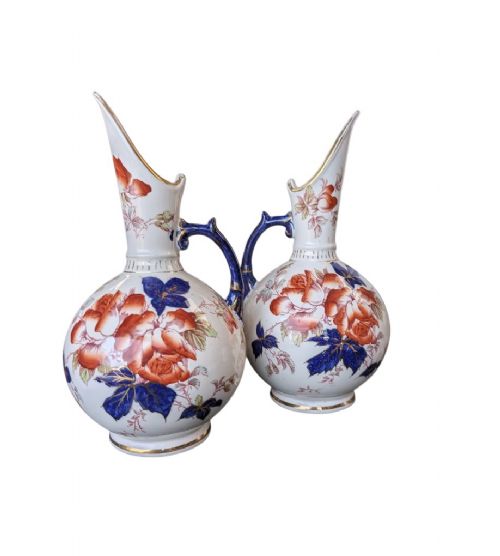
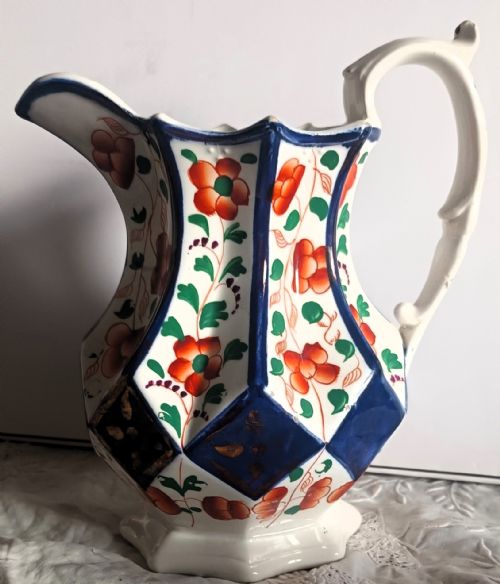
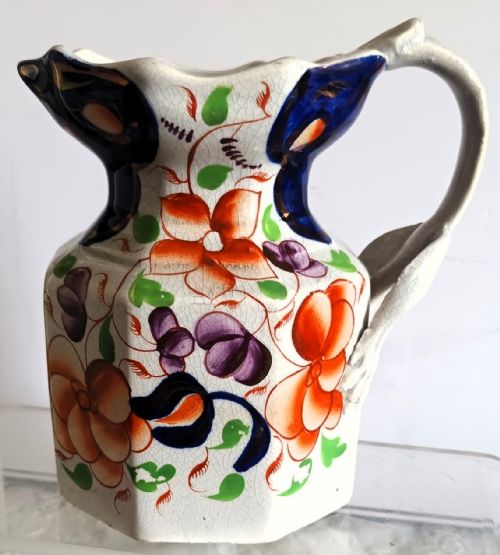
Cobalt Ceramic Pitcher
These cobalt ceramic pitcher examples range from Georgian ironstone to Victorian earthenware, offering deep blue decoration for display or service.
Cobalt Ceramic Pitcher
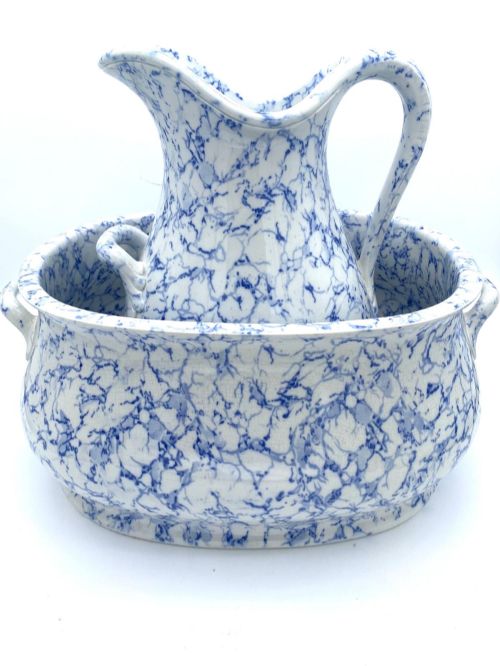
A cobalt ceramic pitcher is a pouring vessel defined by deep blue pigment applied under or over the glaze, spanning forms from small domestic jugs to large basin sets.
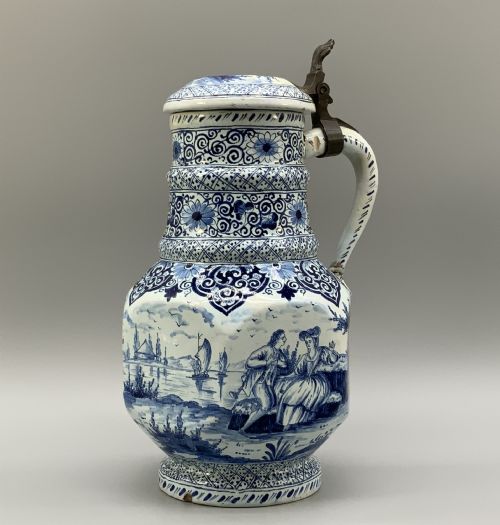
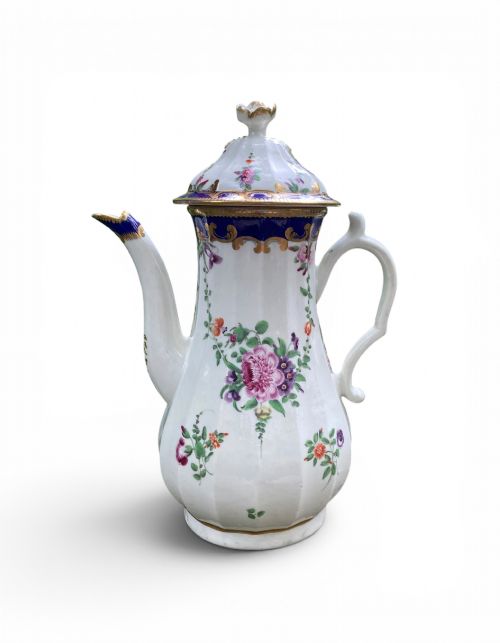
Buyers seeking a cobalt ceramic pitcher will frequently encounter nineteenth-century English ironstone and earthenware, alongside Dutch Delftware and German salt-glazed stoneware.
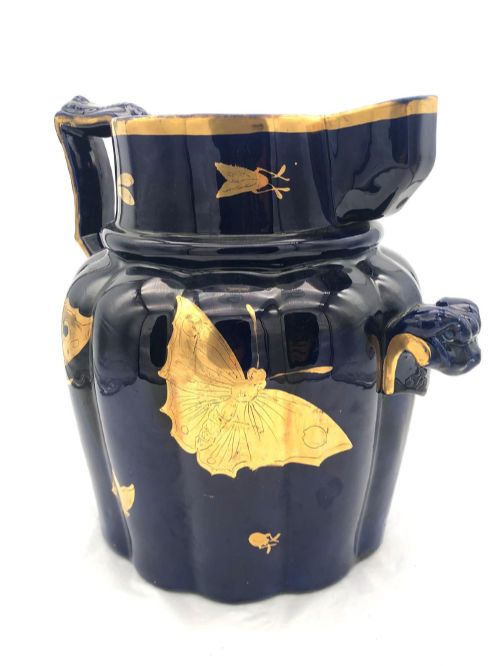
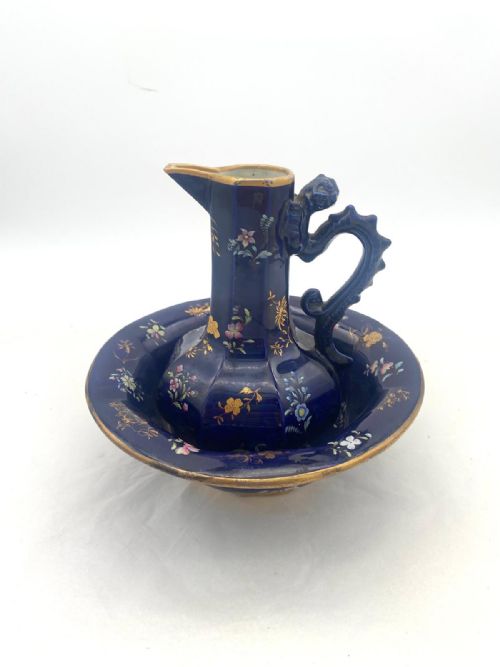
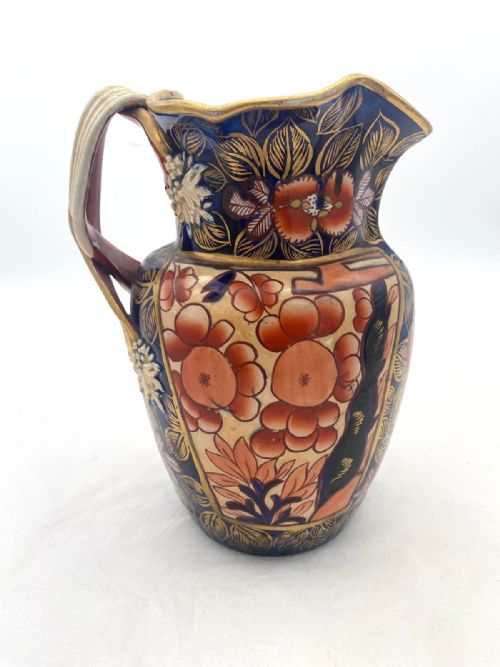
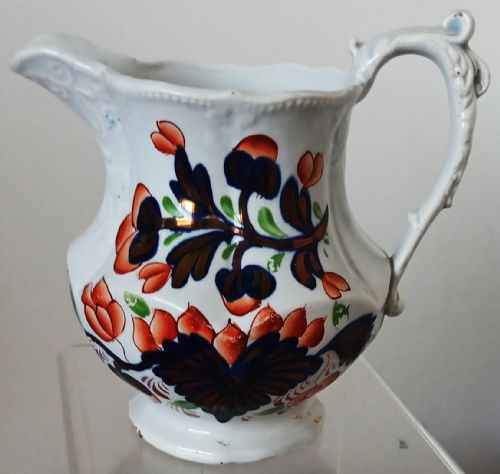
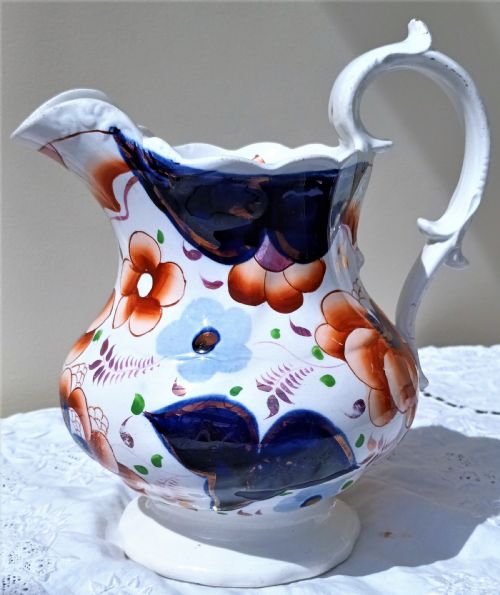
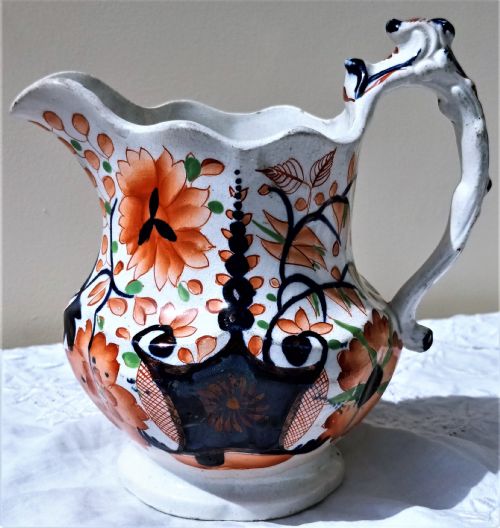
The selection includes specialised forms such as footbath jugs, ewers with grotesque handles, and miniature salesman samples featuring traditional patterns like Gaudy Welsh or Chinoiserie.
Materials and production
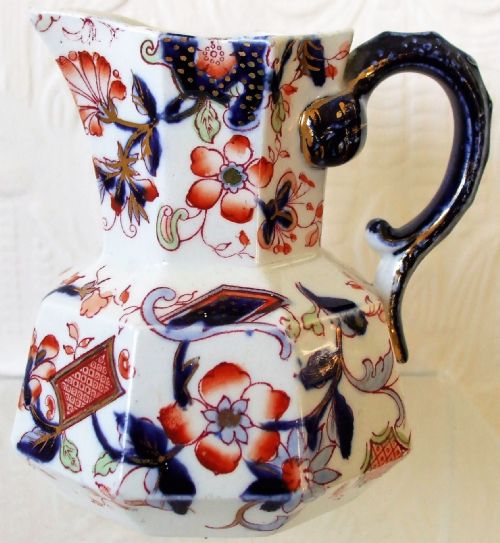
Potters utilised ironstone, porcelain, and earthenware bodies, shaping them into octagonal, pouch, or mask-head forms before applying cobalt blue glaze or transfer-printed decoration.
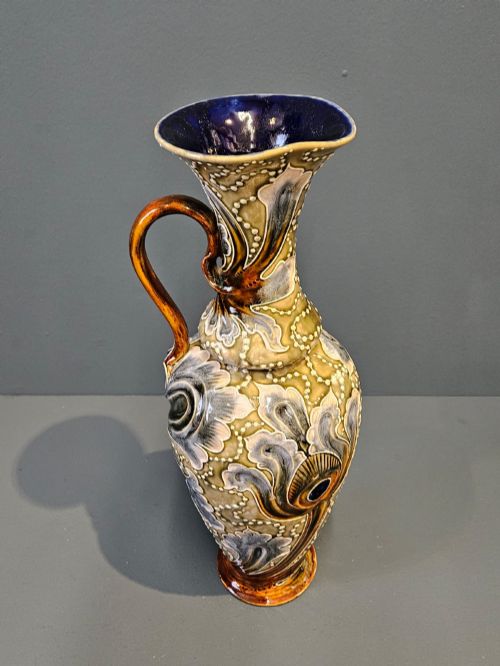
St Stoneware pieces received salt glazing during firing in Germany, while English factories combined gold leaf, gilt, and enamel highlights over cobalt grounds.
Listings feature items from the eighteenth and nineteenth centuries, spanning earthenware, stoneware, and porcelain.
Assessing quality
Quality depends on the crispness of the cobalt transfer printing or the hand-painted depth of the blue glaze against the ceramic body.
Refinement shows in the moulding of complex shapes like Hydra handles, grotesque masks, and well-defined spout geometry rather than heavy or indistinct potting.
Minton·Masons Ironstone·Doulton Lambeth·Simon Peter Gerz·Caughley Coalport·Keeling And Co
The Cobalt Ceramic Pitcher Glossary
- Cobalt
- A metallic oxide producing a permanent intense blue colour when fused with ceramic glaze at high temperatures. It remains stable under intense heat.
- Ironstone
- A dense, durable type of earthenware patented in England to imitate porcelain. It resists chipping better than soft-paste bodies.
- Salt glaze
- A texture created by throwing common salt into the kiln during firing, producing an orange-peel surface on stoneware. This finish withstands liquids without absorbing them.
- Ewer
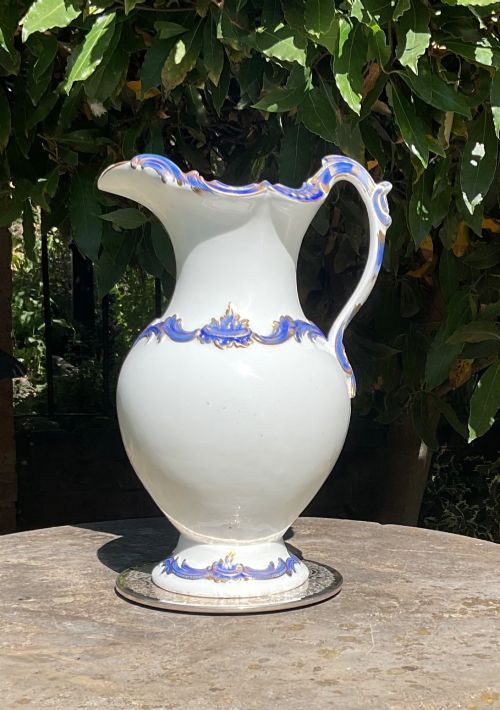
- A large pitcher with a flared spout and curved handle, historically used for washing hands or formal service. Many examples include matching basins.
Cobalt Ceramic Pitcher: Frequently Asked Questions
How were these pitchers used?
These vessels served water, milk, or beer at table, while larger examples formed parts of toilet sets for bedroom washing.
Some pieces functioned as decorative display items or pharmacy containers rather than active tableware.
How do I care for antique ceramic pitchers?
Wash them gently by hand in warm water using mild soap, avoiding harsh scrubbing that might damage gilt highlights or enamel.
Keep them away from rapid temperature changes to protect the old ceramic body and glaze from thermal shock.
How do I distinguish salt glaze from standard glaze?
Salt-glazed stoneware displays a slightly pitted, orange-peel texture created by vaporised salt during kiln firing.
Standard glazed earthenware or porcelain offers a smooth, glass-like surface sealing the underlying clay body.
What periods do these pieces cover?
The inventory spans from the seventeenth century up through the early twentieth century, taking in Georgian, Victorian, and later manufacturing eras.
English ironstone and Gaudy Welsh patterns dominate the nineteenth-century selections on display.