



Cobalt Blue Glass Dish
A cobalt blue glass dish brings rich colour and light to a table, combining vibrant glass with silver or silver plate.

Cobalt Blue Glass Dish
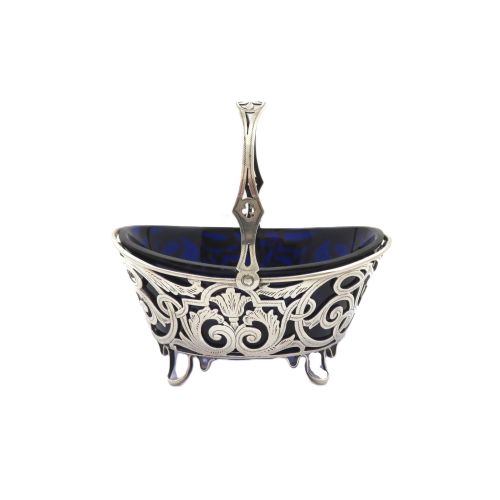
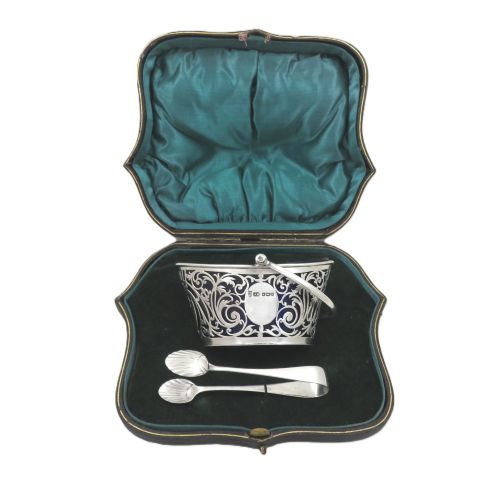
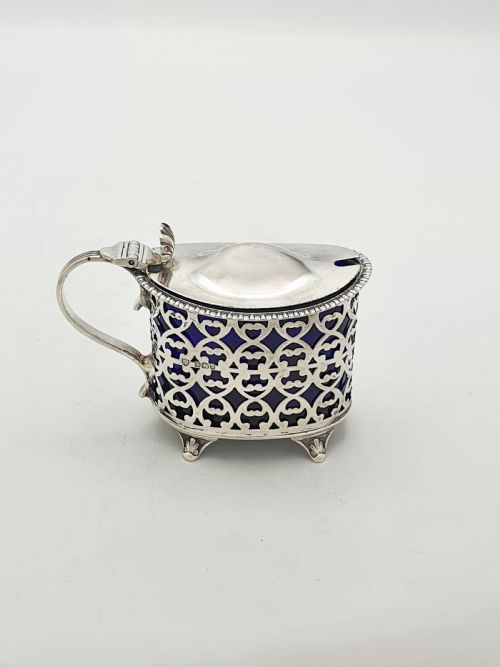
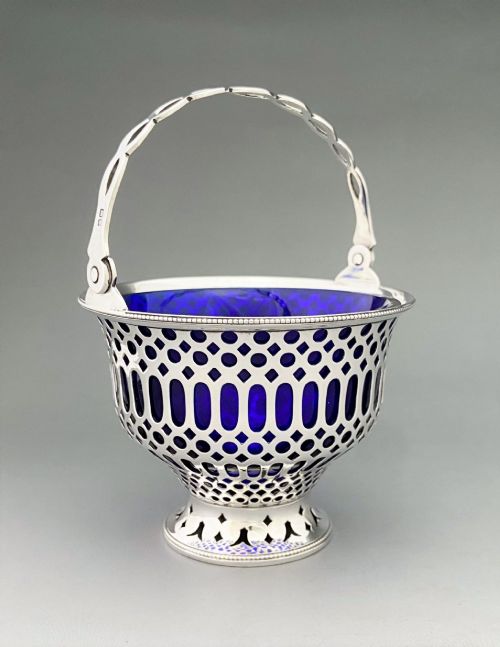
When you search for a cobalt blue glass dish, you encounter a range of tableware forms designed to hold small portions or serve as decorative centrepieces. The selection on this page centres on items such as salt cellars, sugar baskets, mustard pots, dressing table jars, and bowls.
The pieces you are most likely to meet span several eras, from the Georgian and Victorian periods through the Edwardian years and into the Art Deco era of the 1930s. Many of these items pair the deep blue glass with silver mountings, pierced sterling silver frames, or silver-plated mountings.
Originating from makers and workshops in Britain, France, Germany, Bohemia, and Belgium, these objects range from small individual salt cellars with original liners to larger centrepieces and swing-handled baskets. Each form reflects the domestic habits of its period, whether for dining table service or dressing table use.
What varies in quality
Quality in these pieces rests upon the crispness of the metalwork, whether it is cast floral handles, delicate piercing on a basket, or solid silver boat-shaped frames. Finer examples display precise execution in the metal mounts and a secure fit with the original glass liner.
The depth and clarity of the cobalt glass itself distinguish the work, alongside the presence of clear hallmarks on the silver components. Pieces that retain their original matched liners and undamaged enamel work represent the upper tier of what is available.
Listings feature items from the 18th century, Georgian, Victorian, Edwardian, and Art Deco periods, utilising cobalt glass, sterling silver, and silver plate.
Joseph Simon for Val St. Lambert
The Cobalt Blue Glass Dish Glossary
- Cobalt glass
- Glass coloured deep blue by the addition of cobalt oxide during the manufacturing process. It was widely used for tableware inserts and decorative vessels.
- Salt cellar
- A small open dish or container used to hold salt on the dining table, frequently paired with a cobalt glass liner and a silver frame.
- Sugar basket
- A small basket, often with a swing handle and pierced silver mount, designed to hold sugar lumps or loose sugar on the table.
- Dish ring
- A spool-shaped stand, sometimes called a potato ring, placed on the dining table to support hot dishes or bowls.
- Lead crystal
- A type of glass containing lead oxide that increases weight, brilliance, and clarity, used in several of the bowls and liners listed.
Cobalt Blue Glass Dish: Frequently Asked Questions
What were cobalt glass liners used for?
Cobalt glass liners protected metal frames from the corrosive properties of salt, mustard, and other condiments served at the table. They also provided a vivid splash of colour visible through pierced silver work.
Over time, these liners became standard additions to silver salt cellars and mustard pots, remaining removable for easy cleaning after meals.
How do I date an antique silver basket?
Dating relies primarily on the hallmarks stamped onto the silver components, which indicate the assay office, year of manufacture, and maker. Stylistic clues such as swing handles, cast floral motifs, or boat-shaped bodies also point to Georgian, Victorian, or Edwardian origins.
Examining the construction of the piercing and the weight of the silver helps narrow down the period of production.
Are these glass dishes safe to use daily?
While these items were originally made for functional dining and dressing table use, their age requires gentle handling. Hand washing in warm water preserves the antique glass and silver mountings.
Avoiding harsh detergents and abrasive scrubbers ensures the cobalt glass and delicate silver plate or sterling silver remain intact.
What is the difference between silver and silver plate?
Solid silver, often marked as sterling silver or indicated by regional hallmarks, consists of precious metal throughout the entire structure of the frame or basket. Silver plate involves a thin layer of silver bonded to a base metal core.
Both materials appear frequently in these tableware pieces, with sterling silver typically bearing official assay marks.