




Silver Plate Bonbon Basket
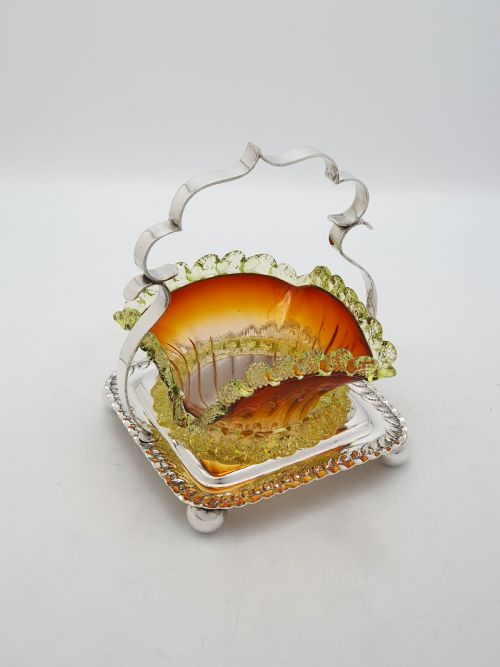
These silver plate bonbon basket pieces bring sparkle and colour to a table, combining polished metalwork with vibrant coloured glass.
Silver Plate Bonbon Basket
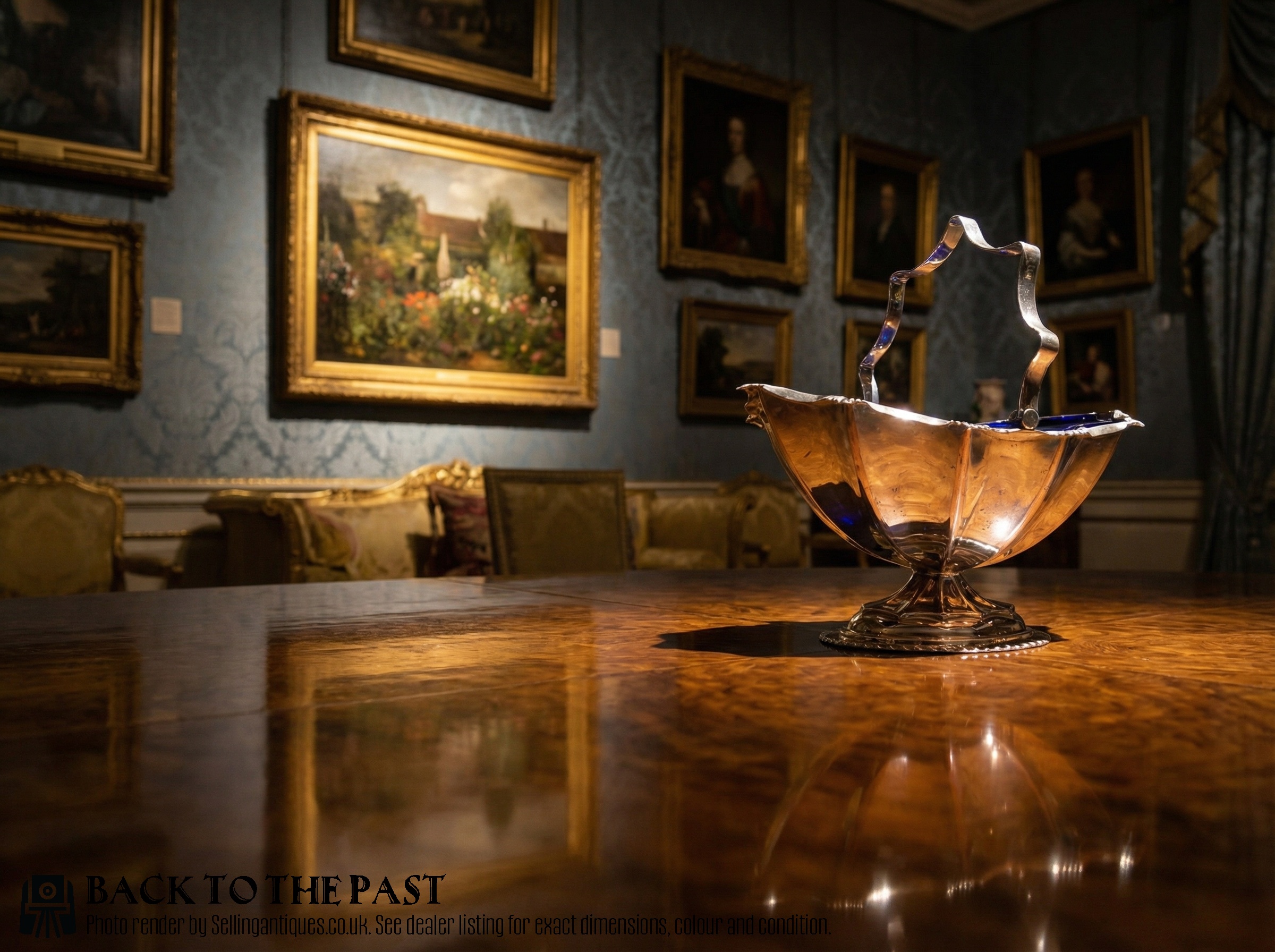
When you search for a silver plate bonbon basket, you look for small, decorative open vessels designed to hold sweets, sugar, or preserved fruits. These pieces appear across several periods, most notably in Victorian and Edwardian designs, alongside earlier Georgian sweetmeat forms.
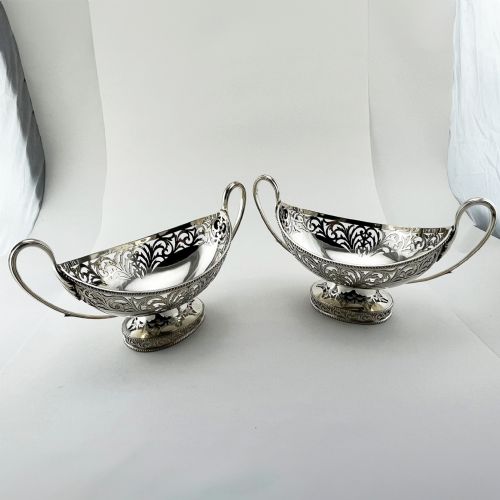
You meet a variety of forms on this page, including pierced metal baskets paired with removable coloured glass liners and stands. The selection ranges from swing-handled baskets to low decorative bowls and dishes intended for table service.
Materials and construction
Makers shaped the metal frameworks using silver plate, Old Sheffield plate, or copper sometimes finished with a gold wash. Pierced decoration and reeded handles appear frequently among the metal components.
The glass liners and inserts display distinct colours and types, including cranberry glass, vaseline glass, amber glass, ruby glass, and pink opaque glass. These glass inserts were often frilled or blown to fit securely within the metal stands.
Listings include items spanning from the 18th Century through the Victorian, Edwardian, and Art Nouveau periods.
Assessing quality and design
Quality rests on the crispness of the pierced metalwork and the integration between the silver plated frame and its glass insert. Pieces designed by notable figures or produced by established firms show finer attention to proportion and detail.
The depth of colour and integrity of the glass liner also distinguish the pieces. Intact coloured glass liners that match the exact contours of the silver plate mount elevate the overall standard of the object.
Thomas Bradbury·Roberts and Belk·W M F
The Silver Plate Bonbon Basket Glossary
- Silver plate
- A base metal coated with a thin layer of silver. This technique allowed makers to achieve the appearance of solid silver at a lower cost.
- Old Sheffield plate
- An earlier method of fusing a thin sheet of silver to a copper core before rolling and shaping. This process produces a distinct appearance visible at seams and edges.
- Cranberry glass
- A rich red glass coloured with gold chloride during production. It appears frequently in Victorian and Edwardian tableware liners.
- Sweetmeat basket
- An early form of small tabletop basket used for serving sweets, nuts, or small preserves. These precursors to the bonbon basket date back to the eighteenth century.
Silver Plate Bonbon Basket: Frequently Asked Questions
What is a silver plate bonbon basket used for?
These pieces served on dining tables to hold small confections, sugar plums, or preserved fruits during formal meals. They functioned as both practical tableware and decorative centrepieces.
Today, they suit similar decorative uses on sideboards or coffee tables, or for holding small items in living spaces.
How do I clean the glass inserts?
The coloured glass liners lift out from the silver plated frames for separate cleaning. Use warm soapy water and a soft cloth to avoid scratching the glass or the inner surfaces.
Keep harsh abrasives away from both the glass and the silver plate to preserve the finish.
How do I tell Victorian from Edwardian pieces?
Victorian pieces often display heavier ornamentation, rich cranberry or vaseline glass, and styles associated with the Aesthetic Movement. Edwardian examples tend towards lighter frames and refined pierced work.
Design motifs and registration numbers help narrow down the production period of individual items.
Are the glass liners original?
Many pieces retain their original blown or moulded glass liners, matched in size and colour to the metal basket. Cranberry, amber, and vaseline glass inserts were standard for these designs.
Examine how the glass sits within the frame to understand its fit and alignment with the metalwork.