

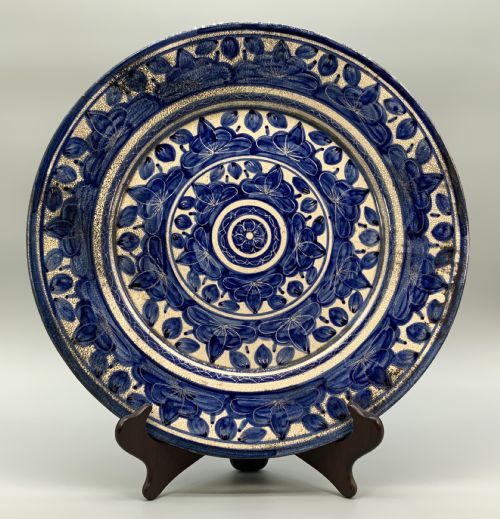


Cobalt Blue Delftware Dish
A cobalt blue delftware dish brings seventeenth and eighteenth-century earthenware into a room with tin glaze and cobalt pigment.
Cobalt Blue Delftware Dish
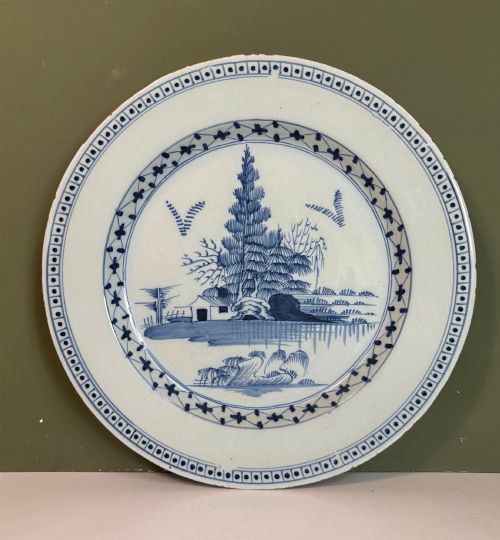
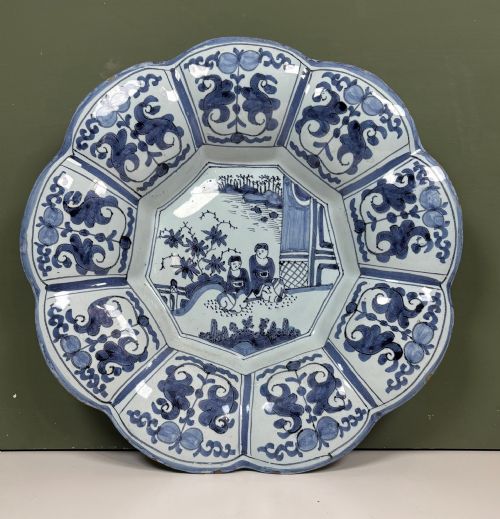
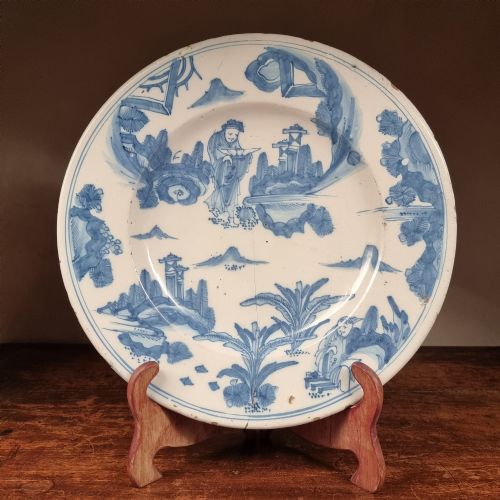
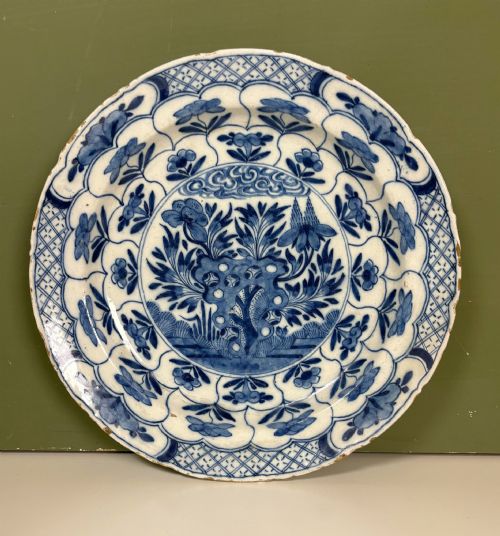
A cobalt blue delftware dish represents tin-glazed earthenware shaped as plates, bowls, and large charger plates. These items emerge primarily from seventeenth and eighteenth-century production, alongside continental and Moorish style variations.
The version most commonly met on this page is the eighteenth-century English or Dutch charger or plate. Examples span various forms including shallow bowls and large decorative chargers bearing blue and white painted surfaces.
How they were made
Potters formed the body using earthenware clay before applying a tin glaze that dried to an opaque white surface. Cobalt oxide or cobalt pigment was then painted directly onto the unfired glaze.
The pieces underwent kiln firing to fuse the cobalt pigment with the tin glaze, producing the characteristic blue and white coloration seen across Dutch and English workshops.
Listings span seventeenth-century origins through to nineteenth and twentieth-century interpretations, utilising earthenware, tin glaze, and cobalt pigment.
What varies in quality
Quality rests in the crispness of the cobalt painting and the stability of the tin glaze over the earthenware body. Brushwork ranges from rapid, loose floral motifs to detailed Chinese inspired or Kraak designs.
The scale of the charger or plate and the smoothness of the glaze influence the overall visual impact. Deeper dishes and larger chargers command attention through their substantial presence and balanced proportions.
The Cobalt Blue Delftware Dish Glossary
- Charger
- A large decorative plate traditionally used for display or service rather than daily dining. These substantial pieces measure wider than standard dinner plates.
- Tin Glaze
- An opaque white ceramic glaze containing tin oxide that provides a smooth canvas for painted decoration. It absorbs the cobalt pigment during firing.
- Kraak
- A style of imported Chinese porcelain featuring panelled decoration that inspired European delftware potters. Plates in this manner display segmented borders.
- Earthenware
- Porous pottery fired at lower temperatures than stoneware or porcelain. It forms the structural body beneath the tin glaze.
- Cobalt Oxide
- A mineral pigment used to achieve deep blue painting on ceramic glazes. It reacts with the tin glaze during kiln firing.
Cobalt Blue Delftware Dish: Frequently Asked Questions
What is a delftware dish?
A delftware dish is a ceramic piece made from earthenware and coated with an opaque tin glaze. These items are painted with cobalt pigment in blue and white.
Potters produced these plates and chargers in England and the Netherlands during the seventeenth and eighteenth centuries.
How were chargers used?
Chargers served as large decorative plates for formal display on sideboards and walls rather than everyday meals. Their generous diameter showcased intricate blue painted scenes.
Households utilised these large dishes to display wealth and artistic taste in reception rooms.
How do I identify eighteenth-century pieces?
Eighteenth-century examples typically display specific tin glaze characteristics and cobalt blue painting styles associated with English and Dutch kilns. Form and decorative motifs help distinguish the period.
Plates from this era often feature Chinese inspired designs or traditional European floral patterns.
Can I hang a delft charger?
Many large chargers and plates feature structural qualities suited for display when properly supported. Their decorative blue and white surfaces make them natural wall ornaments.
Secure fixings designed for heavy ceramics ensure safe exhibition in living spaces.