
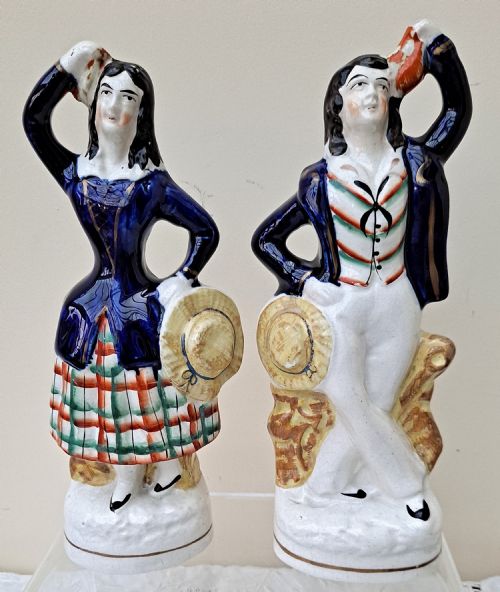
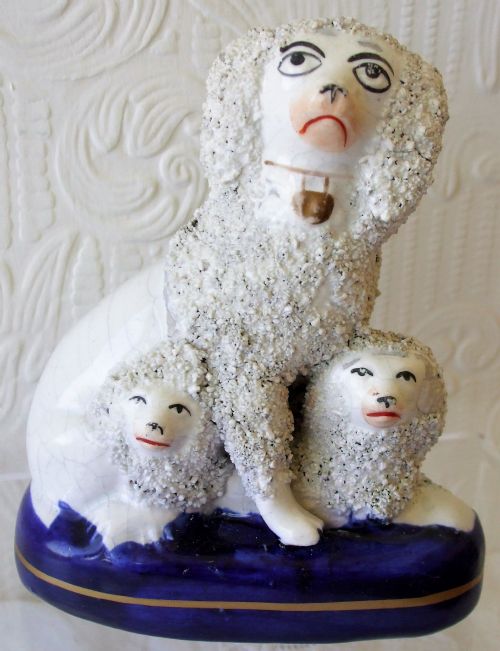


Cobalt Blue Ceramic Figurine
These pieces of cobalt blue ceramic figurine work bring nineteenth-century domestic character into a room through rich glazes and modelled forms.
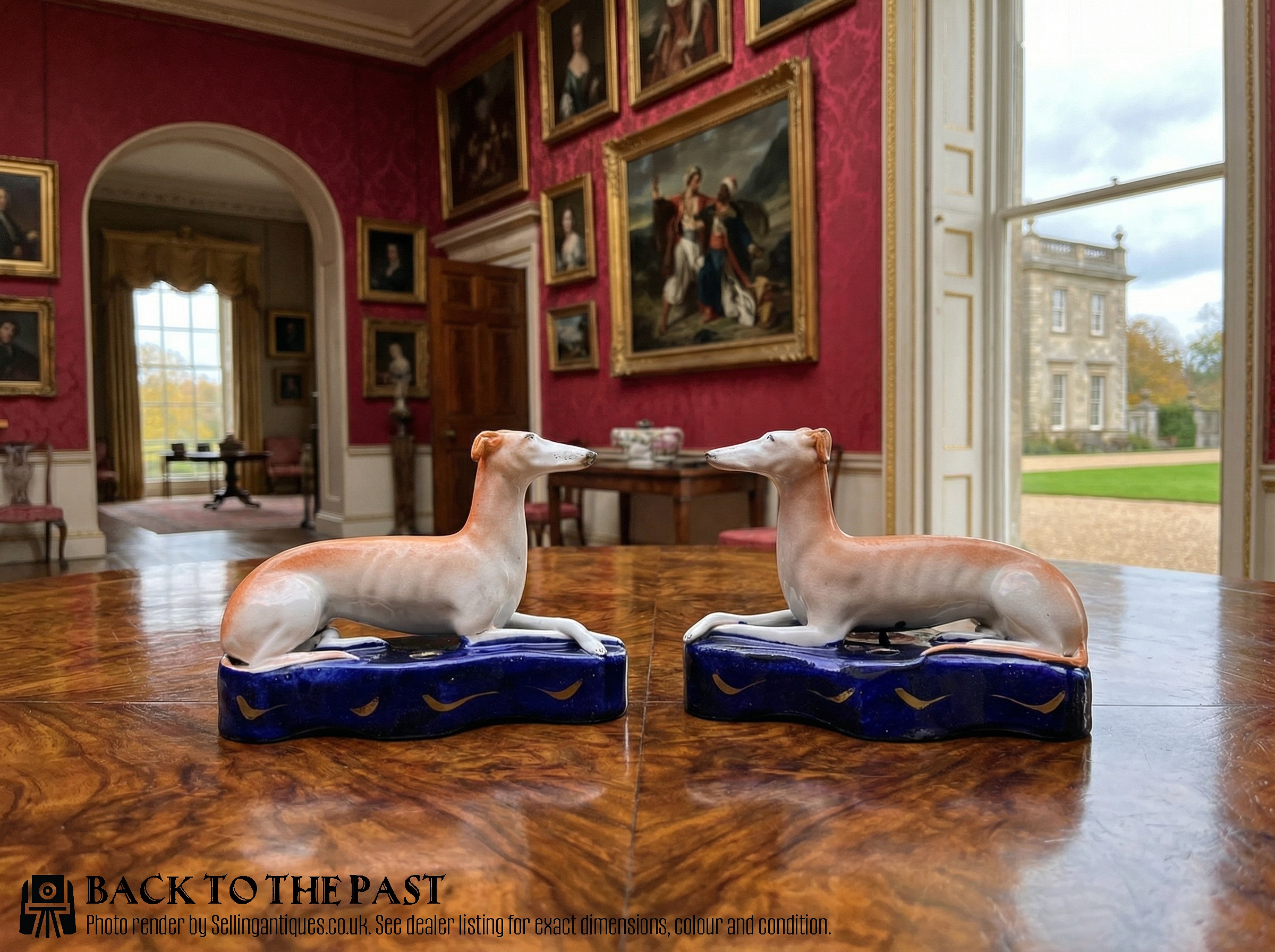
Cobalt Blue Ceramic Figurine
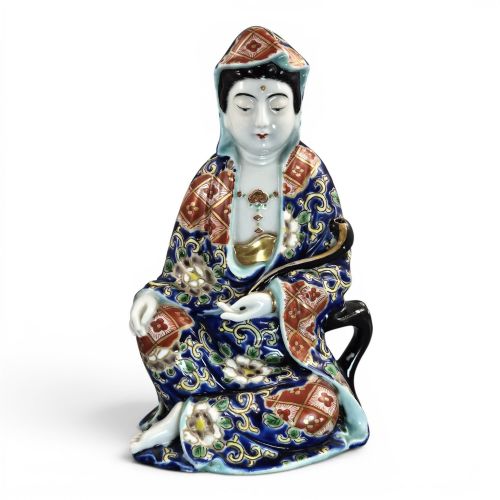
A cobalt blue ceramic figurine encompasses nineteenth-century earthenware and porcelain works, spanning English Staffordshire pottery, Japanese Arita and Kutani pieces, and continental European porcelain.
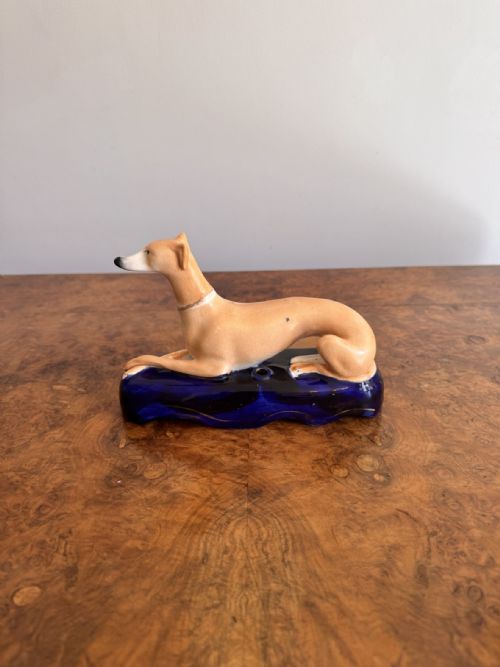
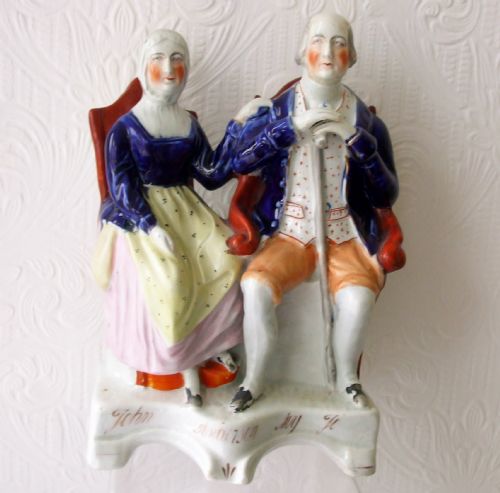
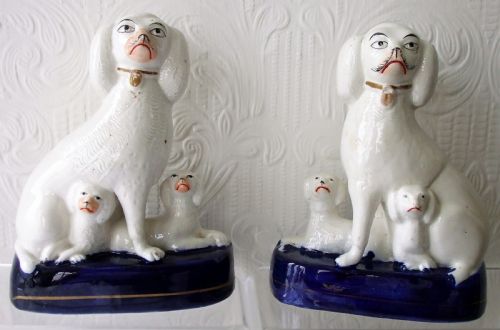
Buyers most frequently encounter Victorian Staffordshire pottery figures, poodles, spaniels, and royal portrait groups featuring cobalt ground colours alongside gilt and enamel paint.
The selection ranges from utilitarian spill vases and inkwells to theatrical groups, literary subjects, and Japanese Meiji period figures.
Materials and construction methods
Potters shaped these objects using earthenware and porcelain clays, applying lead glazes and rich cobalt blues before secondary firing.
Finishing touches often included hand-painted enamel details and applied gold leaf or gilt highlights over the fired glaze surface.
Blue glazes appear alongside lead glaze, enamel paint, and gold leaf across Victorian animal and portrait groups.
Distinctions in craftsmanship and finish
Quality rests upon the crispness of the original mould and the precision of the hand-painted enamel and gilt decoration.
The Cobalt Blue Ceramic Figurine Glossary
- Flatback
- A figure moulded with a finished front and a largely unadorned flat rear, designed to stand directly against a wall or mantelpiece. These formed the staple output of nineteenth-century Staffordshire potteries.
- Spill vase
- A hollow cylindrical holder attached to a ceramic figure, designed to hold wooden spills for lighting candles and fires. They combine practical domestic utility with decorative modelling.
- Enamel paint
- Vitreous pigments applied over a fired glaze and fixed by low-temperature refiring. This technique provided the vibrant colours seen on nineteenth-century pottery figures.
- Lead glaze
- A glossy coating containing lead oxide applied to earthenware bodies before firing. It produces a smooth, reflective surface that enhances underlying blue pigments.
Cobalt Blue Ceramic Figurine: Frequently Asked Questions
What are cobalt blue ceramic figures?
These pieces comprise nineteenth-century earthenware and porcelain sculptures, animals, and utilitarian vessels decorated with deep blue glazes.
They reflect Victorian domestic tastes alongside Meiji period Japanese export standards.
How were these figures used?
Many served as decorative mantel ornaments, while others incorporated functional elements like inkwells, watch-holders, and spill vases.
They added colour and narrative interest to nineteenth-century parlours.
How do I date a figure?
Dating relies on stylistic markers, historical subjects, and material characteristics recorded in the manufacturing period.
Staffordshire pieces often correspond to mid-nineteenth-century historical events and portraiture.
How do I care for antique ceramics?
Keep pieces out of direct sunlight and clean them gently with a dry or slightly damp soft cloth.
Avoid abrasive materials that might damage surface gilt and enamel paint.