
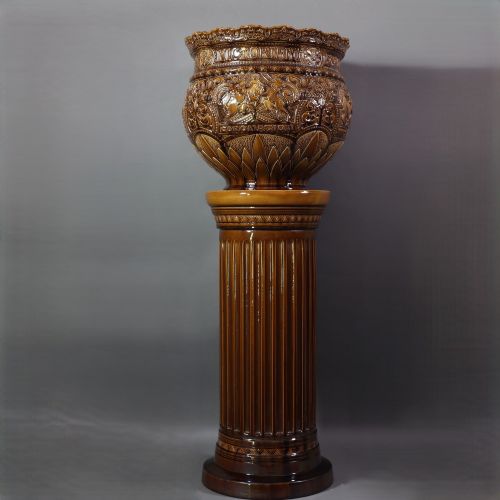


Antique Ceramic Queen Victoria
These antique ceramic Queen Victoria pieces capture royal likenesses across the nineteenth century through Staffordshire figures, commemorative jugs, and miniature tea sets.
Antique Ceramic Queen Victoria
When you search for antique ceramic Queen Victoria, you encounter nineteenth-century Staffordshire pottery figures, commemorative jugs, and portrait groups. The examples on this page span from the middle decades of the Victorian era towards the diamond jubilee close of the century.
The most common form is the Staffordshire flatback figure, designed to sit neatly against a mantelpiece wall. You will also find standing portrait figures, royal marriage groups with Prince Albert, and large salt-glazed stoneware or Doulton Lambeth jubilee jugs.
Domestic settings across Britain displayed these ceramics to demonstrate loyalty to the monarch. Makers produced seated figures with cobalt blue crowns alongside multi-figure alliances depicting historical political alignments.
How they were made
Potters shaped these earthenware and stoneware bodies using moulds before applying lead glazes and hand-painted enamel colours. Many Staffordshire pieces feature painted gilt highlights to accentuate the royal regalia and crown details.
Flow blue transfer printing appears on domestic tableware sets, creating soft, bleeding cobalt designs across the ceramic surface. Salt-glazed stoneware production involved throwing large pitchers on a wheel and introducing salt into the kiln during firing to achieve a textured finish.
Queen Victoria shares shelf space here with Wellington and diplomatic allies from Turkey and France.
What varies in quality
The sophistication of the facial painting and the crispness of the mould impression distinguish finer royal portrait figures from simpler production. Superior examples preserve vibrant enamel colours and intact gilding across the crown and robes without excessive firing blemishes.
Scale and complexity also define the tier of a piece, separating standard single-character flatbacks from elaborate multi-figure portrait groups or monumental stoneware vessels.
Doulton Lambeth
The Antique Ceramic Queen Victoria Glossary
- Flatback
- A Staffordshire pottery figure moulded with a finished front and a plain, unglazed or lightly glazed flat reverse designed to stand against a wall.
- Staffordshire
- A generic term for ceramic figures and pottery produced in the numerous kilns operating within the Staffordshire Potteries region during the nineteenth century.
- Salt-glazed
- A ceramic ware finished by throwing common salt into the kiln during high-temperature firing, producing a distinctive pitted texture resembling orange peel.
- Flow blue
- A nineteenth-century transfer printing technique where lime or calcium chloride was added to the kiln to deliberately blur the cobalt blue design into a soft halo.
- Enamel
- Opaque glass-like coloured paints applied over the fired glaze of a ceramic piece and fixed in a secondary muffle kiln.
Antique Ceramic Queen Victoria: Frequently Asked Questions
What are Staffordshire flatback figures?
Staffordshire flatbacks are earthenware ceramic sculptures manufactured in central England during the Victorian period. They were specifically modeled with flat backs because they stood on mantelpieces or shelf edges rather than in the round.
Potteries produced these ornaments to commemorate monarchs, military heroes, and contemporary events for everyday homes. Their cheerful enamel decoration made them popular household displays.
How do I date these ceramics?
Dating relies on stylistic clues, costume details, and specific historical events referenced in the titles or inscriptions. Figures depicting royal marriages or political alliances often correspond closely to the decade of the event.
Nineteenth-century pieces typically display specific earthen bodies, lead glazes, and hand-painted enamel palettes characteristic of Victorian Staffordshire production.
What is Doulton Lambeth pottery?
Doulton Lambeth was a prominent ceramic works operating in London known for producing salt-glazed stoneware jugs and commemorative vessels. Their output often featured detailed sprigged decoration and impressed manufacturer marks.
Pieces from this studio frequently marked significant royal milestones, such as Queen Victoria jubilees, using durable stoneware materials.
How were commemorative jugs used?
Commemorative jugs served both functional liquid storage and decorative display purposes in nineteenth-century households. Large stoneware pitchers held beverages for gatherings while displaying portraits of the monarch.
Owners placed these vessels on sideboards or tables to mark national celebrations and royal anniversaries.