
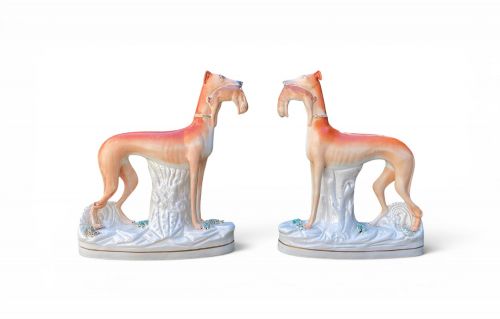


Staffordshire Pottery Greyhounds
These Staffordshire pottery greyhounds bring nineteenth-century canine character to a mantelpiece, combining practical desk accessories with decorative figures.
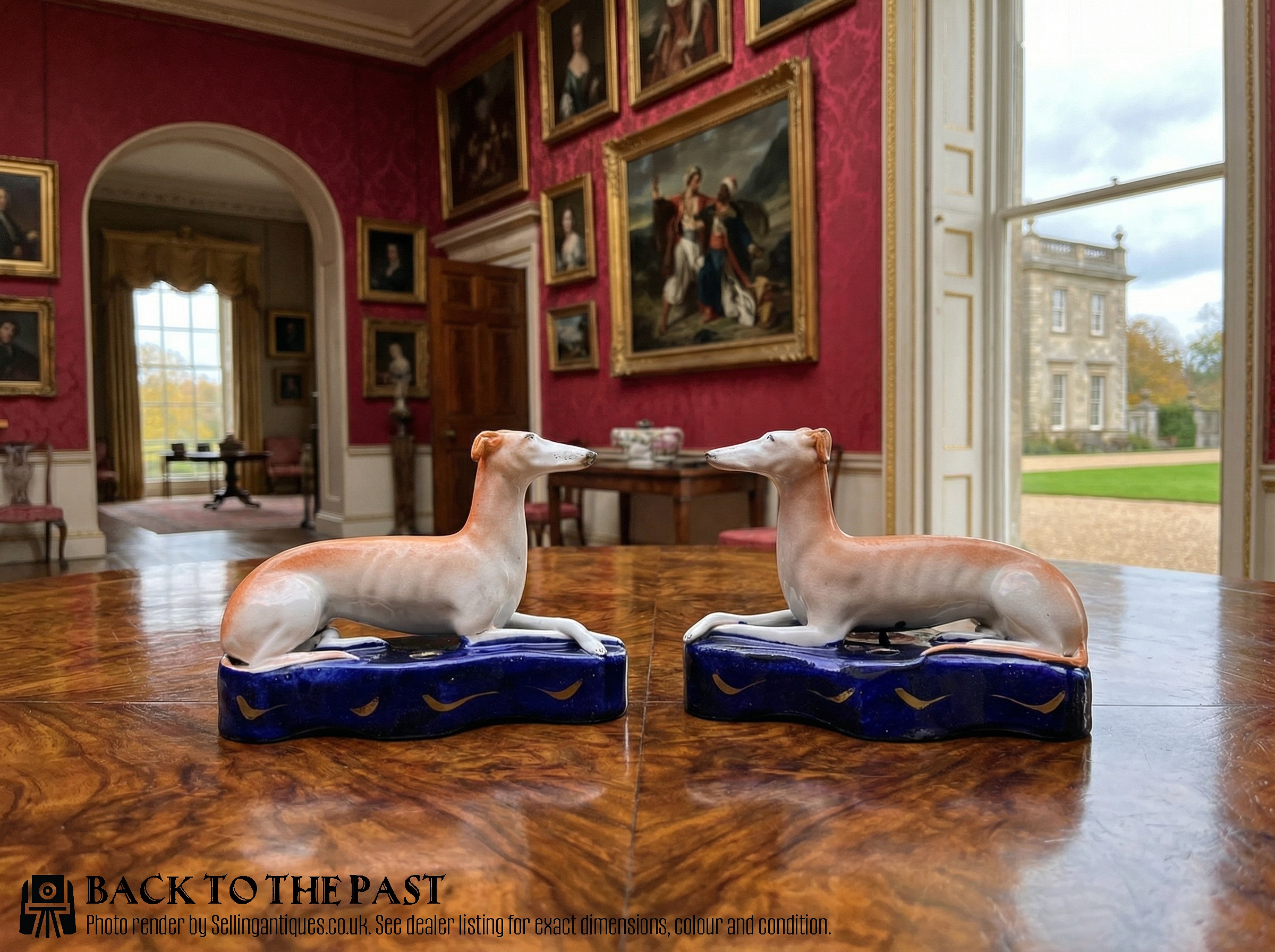
Staffordshire Pottery Greyhounds
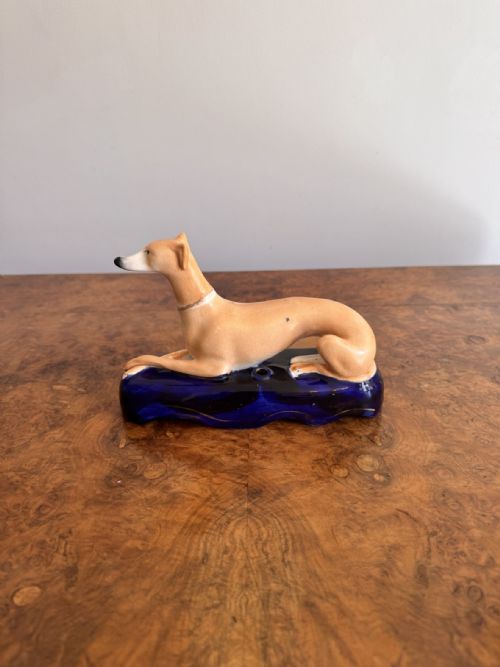
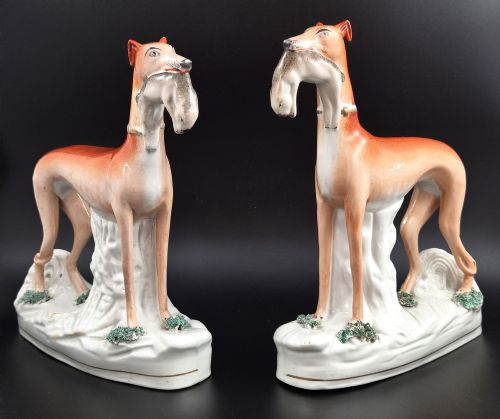
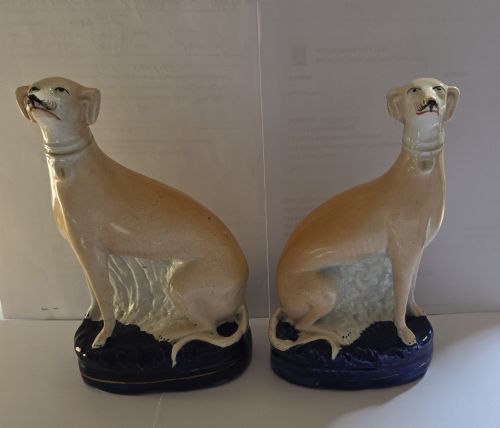
Staffordshire pottery greyhounds emerge primarily as nineteenth-century figures, ranging from individual hounds to matched pairs and groups incorporating hares. Makers shaped these decorative ceramics into various forms, including desk accessories such as inkwells and quill holders, as well as spill vases.
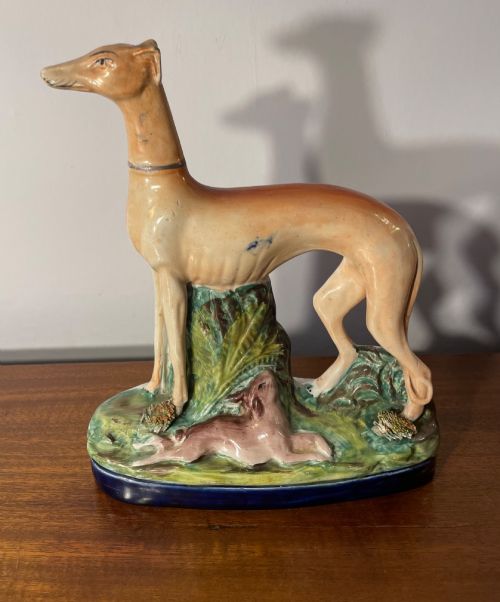
The pieces on this page span the Victorian era, with dates stretching from the early nineteenth century through to eighteen eighty. Collectors frequently encounter pairs of seated whippets or greyhounds, often accompanied by hunted game at their feet.
Most examples originate from English country potteries, capturing the Victorian fascination with hunting dogs and domestic pets. These earthenware sculptures range from standard decorative ornaments to unusually large figures designed for prominent display.
Materials and Techniques
Potters utilised earthenware as the primary body for these figures, shaping the clay through moulding before firing. Artisans then applied lead glaze to seal the porous ceramic and create a smooth, reflective surface across the dog's coat.
Colour and detail arrived through enamel paint brushed onto the earthenware body, sometimes supplemented by gold leaf accents on collars or bases. Finished pieces underwent subsequent firings to fix the enamels permanently beneath or over the glaze.
Victorian desk owners could dip their pens near a ceramic hound while a stationary hare watched quietly from the inkwell base.
Evaluating Quality
Quality rests upon the crispness of the modelling and the expression captured in the hound's face, distinguishing spirited figures from flat or routine production. Superior examples maintain balance within a matched pair, showing careful attention to the proportions of the dogs and their accompanying hares.
The application of enamel paint and gold leaf dictates visual success, where clean brushwork and well-preserved surface decoration elevate the piece. Larger scales and functional forms, such as inkwells or quill holders, demand greater sculptural ambition from the pottery.
Thomas Parr
The Staffordshire Pottery Greyhounds Glossary
- Earthenware
- Porous pottery fired at lower temperatures than stoneware or porcelain. It forms the standard ceramic body for nineteenth-century Staffordshire figures.
- Lead glaze
- A glossy coating containing lead oxide applied to pottery before firing. It produces a shiny, waterproof surface over the earthenware body.
- Enamel paint
- Coloured glass powders mixed with oil and applied over the glaze. These pigments require a low-temperature kiln firing to fuse with the ceramic surface.
- Spill vase
- A hollow ceramic tube attached to a figure designed to hold wooden spills for lighting fires or pipes. They frequently accompany animal models from this period.
- Quill holder
- A desk accessory featuring a modelled channel or rest for writing feathers. In Staffordshire pottery, these often take the form of recumbent greyhounds.
Staffordshire Pottery Greyhounds: Frequently Asked Questions
How do I date a Staffordshire greyhound?
Dating relies on stylistic markers, glazing characteristics, and comparison with documented nineteenth-century production periods. Early nineteenth-century examples often display different modelling and richer enamel palettes compared to later Victorian output.
Evidence from datable pieces such as quill holders and inkwells helps narrow down the decade of manufacture. Potteries continued producing these popular canine figures across several decades without major changes to basic earthenware techniques.
Were these figures meant for writing desks?
Many Staffordshire greyhound figures served a practical purpose alongside their decorative appeal. Variants incorporate inkwells or quill holders designed for nineteenth-century writing desks.
Other models functioned purely as decorative ornaments or spill vases for the mantelpiece. The presence of functional apertures distinguishes desk accessories from standard sculptural groups.
Why do greyhounds often appear with hares?
Greyhounds and whippets were bred for coursing and hunting hares, a sport popular during the Victorian era. Staffordshire potters naturally combined the dogs with their quarry to create narrative pairs and groups.
These compositions reflected contemporary rural life and sporting pursuits prized by the households purchasing the ceramics. The inclusion of the hare also added visual balance to seated pairs of dogs.
How should I clean my pottery greyhound?
Dusting gently with a soft, dry cloth removes everyday accumulation without risking the enamel paint or gold leaf. Avoid harsh chemical cleaners or soaking, as nineteenth-century lead glazes and overglaze enamels can be sensitive to moisture and abrasion.
Displaying the figures away from direct sunlight protects the painted surfaces from fading over time. Careful handling remains essential given the brittle nature of earthenware pottery.