


Antique Whippet Dog Statue
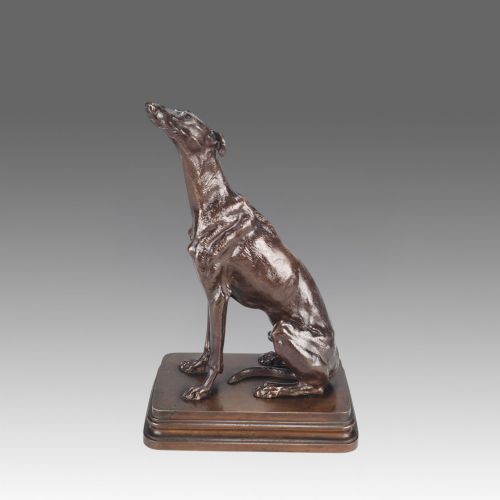
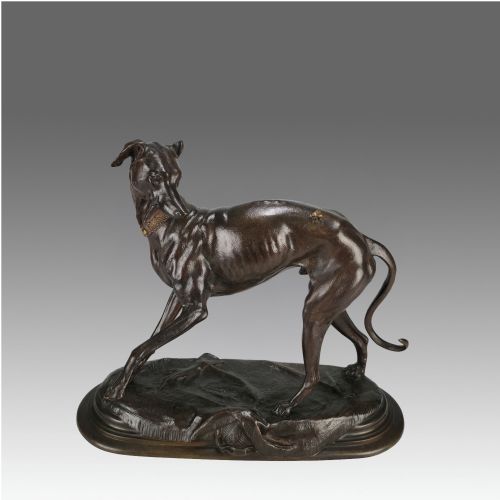
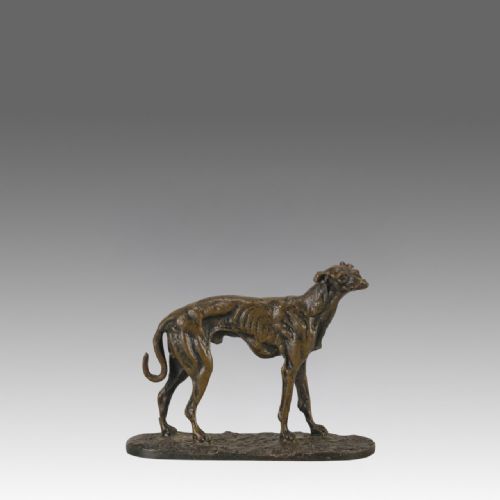
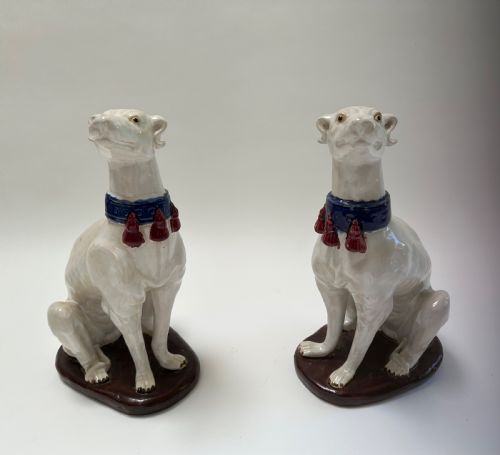
An antique whippet dog statue captures the sleek lines and gentle grace of the breed in bronze, earthenware, or porcelain.
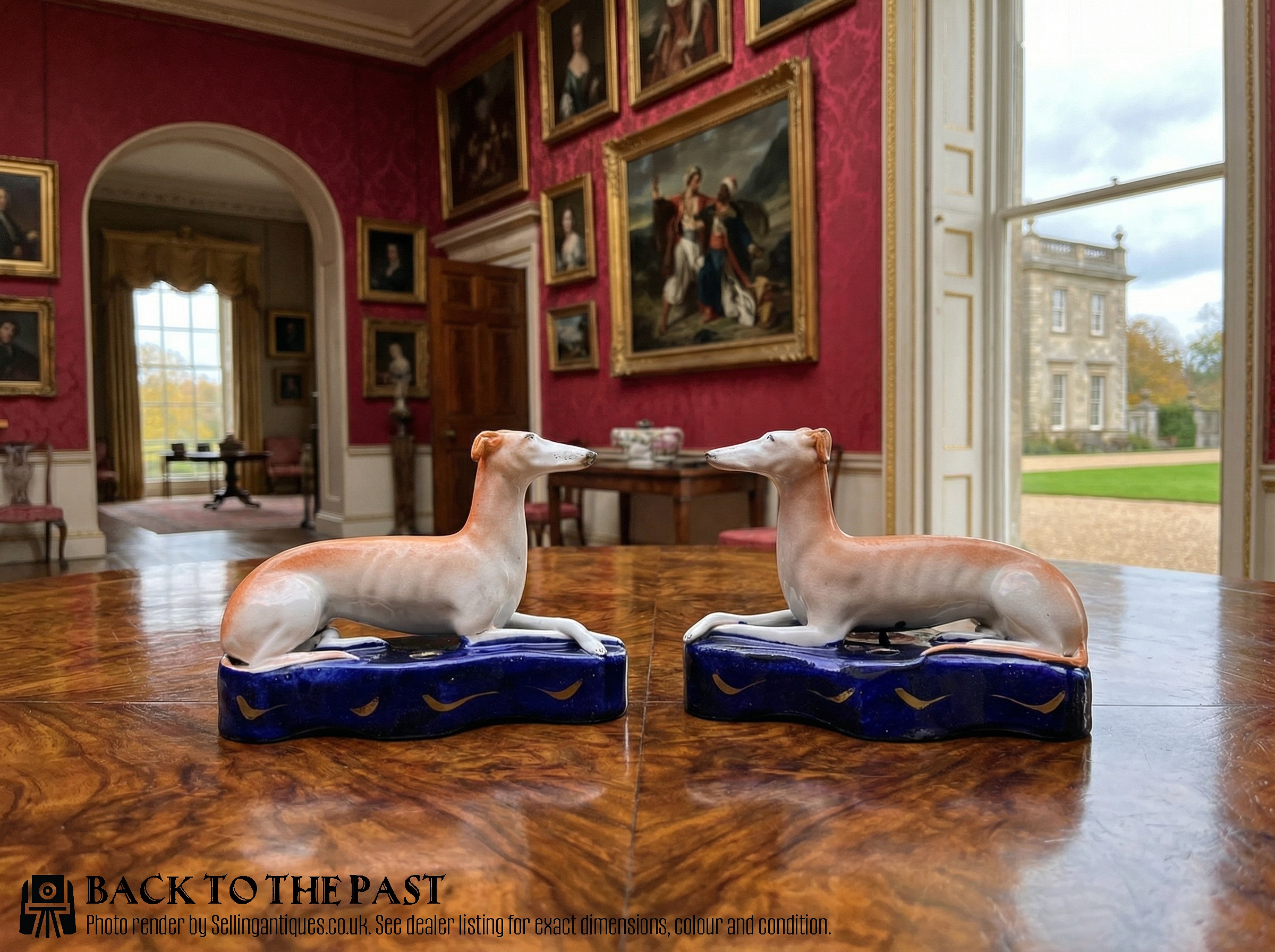
Antique Whippet Dog Statue
An antique whippet dog statue captures the slender musculature and distinctive stance of sighthounds, often modelled as seated or recumbent figures. When exploring this phrase, buyers encounter two primary traditions: the robust earthenware Staffordshire pottery produced in England and the finely detailed bronze sculptures originating from French animalier workshops.
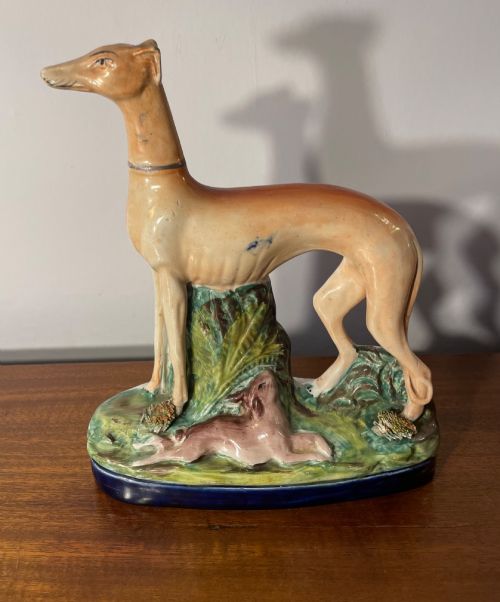
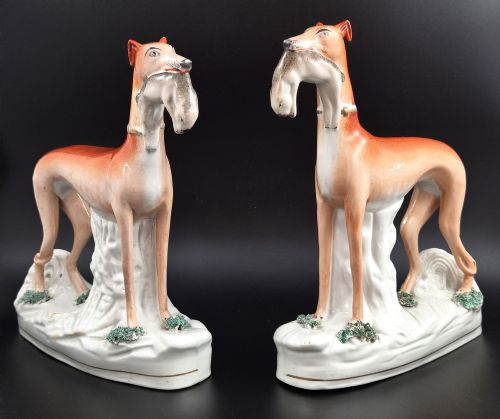
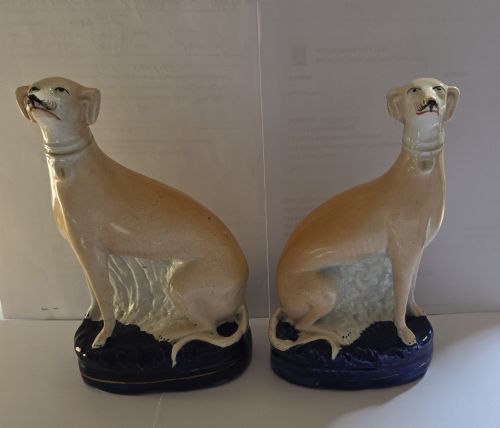
The Staffordshire pottery pieces frequently appear as pairs, sometimes incorporating practical elements such as quill holders or depictions of hares at the base. These ceramic figures date predominantly to the nineteenth century, reflecting the Victorian fascination with domestic and sporting animals.
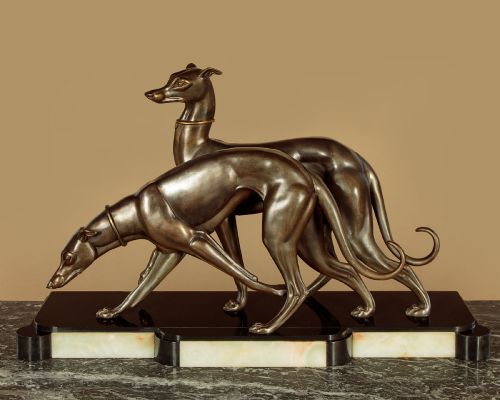
Bronze interpretations emerge from the French animalier movement of the nineteenth century alongside later Art Deco designs. These metal sculptures render the anatomical precision of greyhounds and whippet dogs through lost-wax casting, frequently mounted upon marble plinths or utilised as decorative paperweights.
Materials and construction
Staffordshire potters shaped these earthenware figures by hand or in moulds, finishing the ceramics with lead glaze and enamel paint details. The resulting pottery displays the characteristic surface gloss and hand-painted markings typical of mid-nineteenth-century British kilns.
Bronze sculptures utilise the lost-wax casting technique to capture fine musculature, fur texture, and facial expression. Artisans then applied chemical patination or silvering to the metal surface, occasionally pairing the cast dog with a shaped marble base.
Listings combine nineteenth-century British earthenware pottery with French bronze sculptures and twentieth-century porcelain.
Assessing craftsmanship
In ceramic examples, the clarity of the enamel paintwork and the evenness of the glaze determine the visual success of the piece. Staffordshire figures with well-preserved polychrome decoration and minimal firing distortions represent the higher tier of production.
Alfred Dubucand·Alfred Barye·P J Mêne·Pierre Jules Mene·Karl Hagenaur·Joseph Francois Victor Chemin·Christophe Fratin·Rosenthal
The Antique Whippet Dog Statue Glossary
- Animalier
- A nineteenth-century artistic movement focused on the realistic portrayal of animals, particularly in bronze sculpture. Practitioners studied live subjects in menageries to achieve anatomical fidelity.
- Staffordshire
- Earthenware pottery manufactured in the industrial potteries of Staffordshire, England. These utilitarian and decorative figures were moulded and hand-painted for domestic mantelpieces.
- Lost-wax casting
- A metalworking method where a molten bronze is poured into a mould created from a wax model. This technique allows for intricate detail and undercut forms.
- Patina
- The surface colour and sheen developed on bronze through age or chemical treatment. Artists manipulate this finish to accentuate the contours of the sculpture.
- Quill holder
- A ceramic desk accessory featuring a modelled figure alongside a hollow channel for writing implements. These functional Staffordshire pieces combined decorative appeal with desktop utility.
Antique Whippet Dog Statue: Frequently Asked Questions
How do I distinguish bronze from ceramic whippet statues?
Bronze sculptures are metal castings, often mounted on marble bases, that rely on patination for their surface colour. They feel heavy and cold to the touch.
Ceramic figures are earthenware or porcelain, finished with lead glaze and enamel paint. These Staffordshire pieces exhibit the characteristic weight and glazed surface of pottery.
What is the difference between a whippet and a greyhound in these antiques?
In nineteenth-century titles, the terms whippet and greyhound are frequently used interchangeably to describe slender sighthound figures. Both breeds share the same characteristic arched back and tucked abdomen.
Sculptors and potters of the period focused on capturing the general athletic form of the sighthound type rather than strict modern kennel club distinctions.
How do I identify French animalier bronzes?
French animalier bronzes from the nineteenth century often bear the cast signature of the sculptor on the base or plinth. They are characterised by realistic anatomical studies of dogs and other animals.
These pieces typically date from the mid to late nineteenth century and reflect the rigorous training of the Paris animalier school.