




Coastal Genre Painting
Coastal genre painting captures daily shore life and maritime labour, offering a direct window into nineteenth and twentieth-century coastal communities.
Coastal Genre Painting
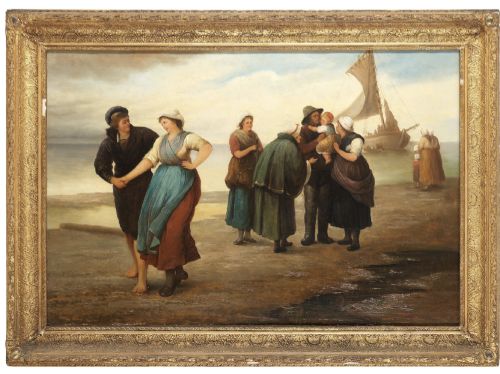
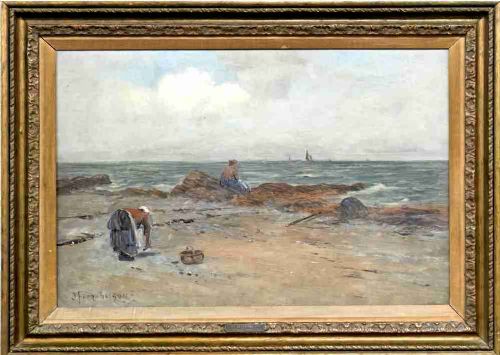
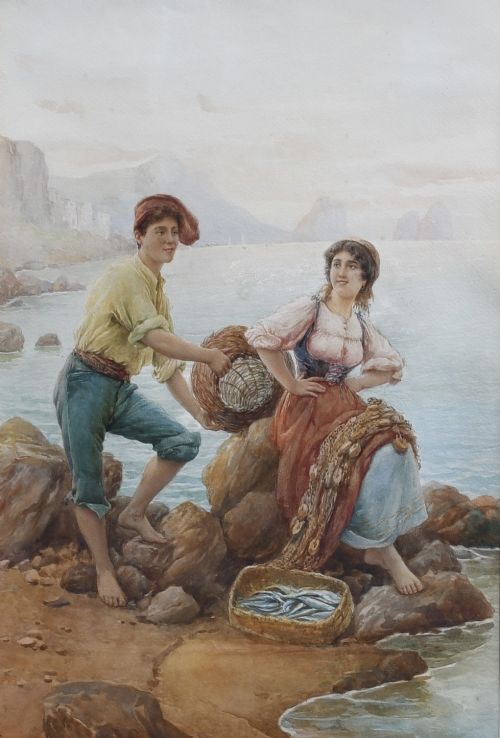
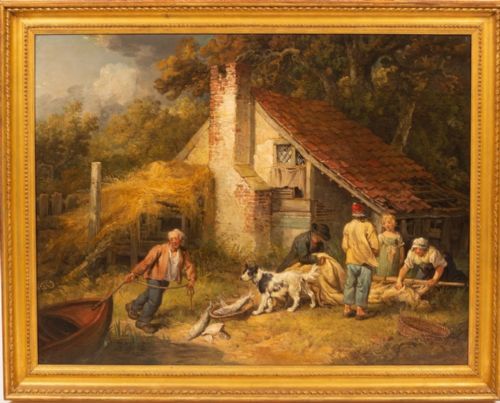
A coastal genre painting portrays ordinary people engaged in maritime labour or daily shore activities along the water's edge. When you explore coastal genre painting here, you encounter figures gathering seaweed, packing for market, or resting after a voyage.
The works span the nineteenth century, the Victorian era, and into the mid-twentieth century. Examples range from French school studies and Dutch fisher girls to Yorkshire flither pickers and Newlyn school scenes.
Subjects frequently focus on fisherfolk, oyster pickers, and children on the beach. These pieces combine landscape scenery with human narrative, grounding the sea in daily toil.
Distinctions in Quality
Quality rests in the descriptive handling of figures and the atmospheric rendering of sea air and coastal light. Superior examples convey the weight of labour and the specific character of regional dress rather than generic coastal scenery.
The strength of the composition and the confidence of the brushwork separate the finest works from standard decorative pieces. Signed works by established painters demonstrate a higher degree of execution in the faces and hands of the subjects.
Donkeys occasionally share the sand with children, reminding viewers that Victorian beaches doubled as bustling commercial transport hubs.
Joseph Farquharson·Carlo Ferranti·James Kyd·Kate E Booth·Ralph Todd·Madeline Hughes·Robert Farren·Arthur David McCormick·Ralph Hedley·William Shayer·John Duvall
The Coastal Genre Painting Glossary
- Genre painting
- The pictorial representation of scenes from everyday life, typically involving ordinary people at work or leisure. These works derive their interest from human narrative rather than grand historical events.
- Flither pickers
- People who collected limpets along the shore to use as fish bait. The term appears frequently in regional British coastal art.
- Watercolour pigment
- A colour medium suspended in a water-soluble vehicle, used extensively on paper for detailed coastal studies. It allows for translucent washes that evoke sea mist and open skies.
- Gilt wood
- Wood carved and coated with gold leaf or gold-coloured paint to form a decorative picture frame. Period frames contribute significantly to the presentation of nineteenth-century works.
- Oil on panel
- A painting executed on a flat wooden board rather than stretched canvas. This rigid support was common for smaller nineteenth-century works.
Coastal Genre Painting: Frequently Asked Questions
What is a coastal genre painting?
A coastal genre painting depicts everyday human activity by the sea, such as gathering seaweed or sorting catches.
These works focus on the labour and lives of fisherfolk rather than pure landscape views.
How were these paintings created?
Artists used oil paint on canvas or panel, alongside watercolour pigment on paper, to capture maritime scenes.
Techniques varied from studio finishing to direct observation of coastal life and weather.
Where do these pieces originate?
The listings include works from British, French, Dutch, and American schools spanning the nineteenth and twentieth centuries.
Specific regional scenes document local shore industries in places like Yorkshire, Newlyn, and Whitby.
How should I display a coastal painting?
These works suit traditional or eclectic interiors where their narrative subjects can be clearly observed.
Pairing them with period gilt wood frames enhances their historical character on a wall.