




Coastal Cottage Painting
These coastal cottage painting works capture vernacular seaside architecture and maritime life through traditional oils and watercolours spanning the Victorian era to the mid-twentieth century.
Coastal Cottage Painting
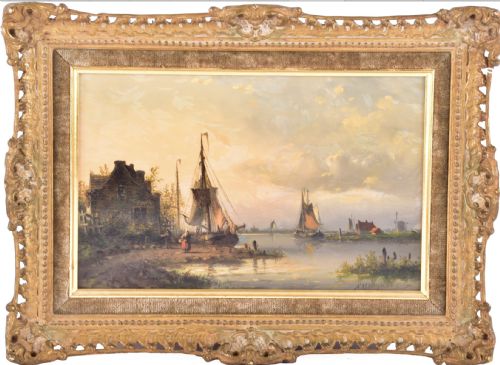
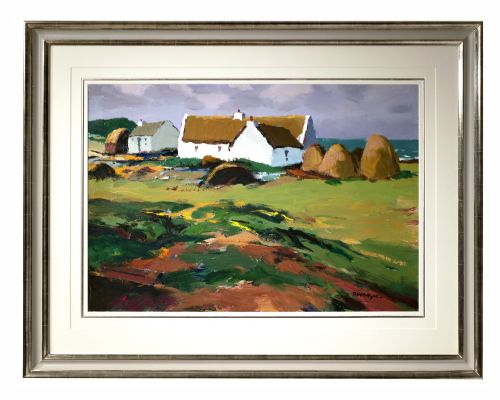
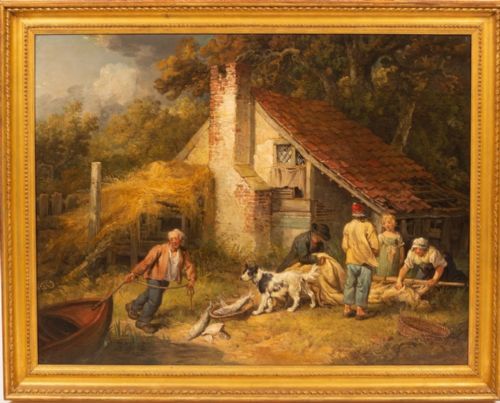
A coastal cottage painting focuses on domestic seaside architecture, rural dwellings, and maritime settlements set against coastal backdrops. These works emerge from diverse periods including the Victorian era, Edwardian years, and the mid-twentieth century.
The common form on this page is the framed watercolour on paper or oil on board and canvas. Many examples capture specific British locales such as Yorkshire, Devon, Wales, and the Isle of Man.
Creators range from named artists working in British Impressionism and Victorian Realism to anonymous regional painters. The subjects span from quiet domestic scenes with figures to open coastal landscapes featuring fishing boats and whitewashed walls.
Materials and technique
Artists utilise oil paint and watercolour as the primary media, applying them onto traditional supports such as canvas, wood board, paper, and wood panels. Watercolours often employ delicate washes on paper, while oils build rich textures on canvas and board.
Framing forms an integral part of presentation, enclosing paper and canvas works behind glass or within traditional wood frames. These physical supports reflect the standard studio and plein air practices of nineteenth and twentieth century British art.
Listings feature works executed in watercolour, oil paint, and board, spanning Victorian, Edwardian, and mid-twentieth century British art movements.
Factors determining quality
Quality rests upon the handling of light, atmosphere, and spatial depth within the coastal setting. Superior examples demonstrate confident brushwork and a coherent palette that anchors the cottage within its maritime environment.
The strength of provenance, clarity of attribution to a recorded artist, and the preservation of the original paper or canvas surface further distinguish finer works from standard regional pieces.
Donald McIntyre·Arthur Tucker·John McDougal·John Abernethy Lynas-Gray·Walter Henry Sweet·James Ward·Ralph Hedley·Walter Meegan·Henry Valter·George G Fryer
The Coastal Cottage Painting Glossary
- Watercolour
- A painting method where the paints are made of pigments suspended in a water-based solution. Paper serves as the primary support for these luminous works.
- Oil on board
- A painting technique using pigment suspended in drying oils applied directly to a rigid wooden or composite board. This surface offers a stable alternative to stretched canvas.
- British Impressionism
- A late nineteenth and early twentieth century painting style focused on loose brushwork and natural light. Artists working in this manner sought to capture fleeting atmospheric effects.
- Provenance
- The documented history of ownership of an artwork. Clear provenance helps verify the authenticity and background of a piece.
- Plein air
- The act of painting outdoors to capture direct observations of natural light and weather. Many coastal scenes rely on this immediate engagement with the landscape.
Coastal Cottage Painting: Frequently Asked Questions
What periods do these paintings cover?
The available works span from the nineteenth century through the Edwardian period and into the mid-twentieth century. This timeline includes Victorian pieces alongside later modernist interpretations.
Artistic styles shift across these decades from detailed realism to looser impressionistic handling while maintaining the core subject of the seaside dwelling.
Are these works painted on canvas or paper?
Both supports appear frequently across the selection depending on the medium chosen by the artist. Watercolours utilise paper supports, often framed behind glass for protection.
Oils utilise canvas, wood panels, or rigid boards. Each material dictates the physical structure and framing style of the finished artwork.
Which regions are typically depicted?
Depicted locations concentrate primarily on British and Manx coastal areas. Specific regional scenes recorded in the titles include Yorkshire, Devon, Wales, Cornwall, and the Isle of Man.
Artists frequently recorded specific fishing villages and bays, documenting local architecture and maritime trades of the period.
How do I distinguish watercolours from oils?
Watercolours feature transparent washes of pigment on paper, typically displayed under glass to prevent moisture damage. They present a lighter, more luminous surface.
Oils employ thicker, opaque pigments applied to canvas or board, possessing a visible textured surface that usually remains unglazed.