




Clear Lead Glass Rummer
A clear lead glass rummer is a sturdy historic drinking vessel built for serious toasts, bringing substantial weight and brilliant clarity to any table.
Clear Lead Glass Rummer
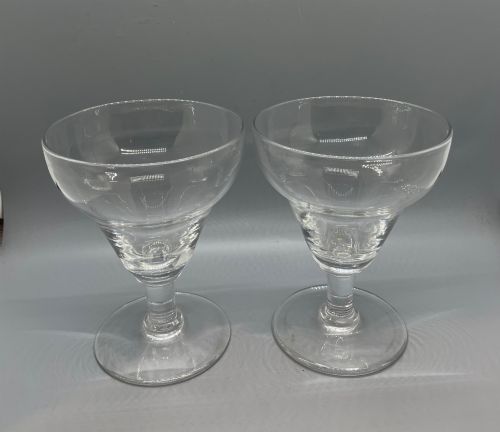
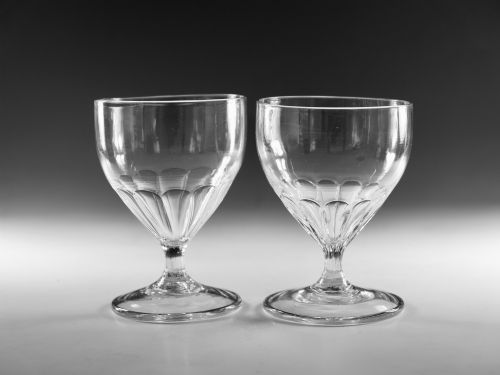
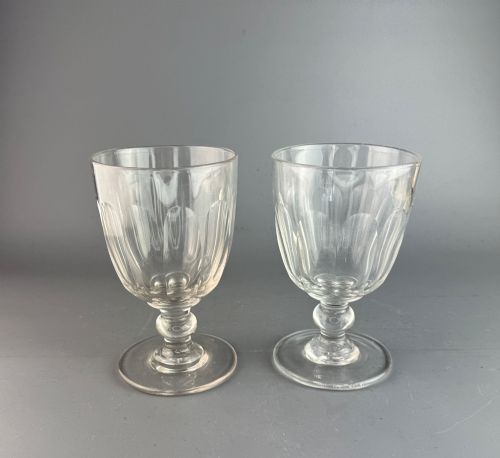
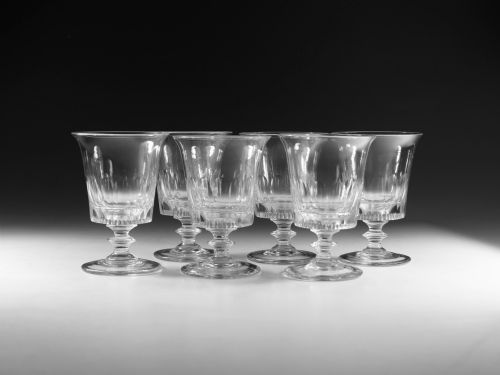
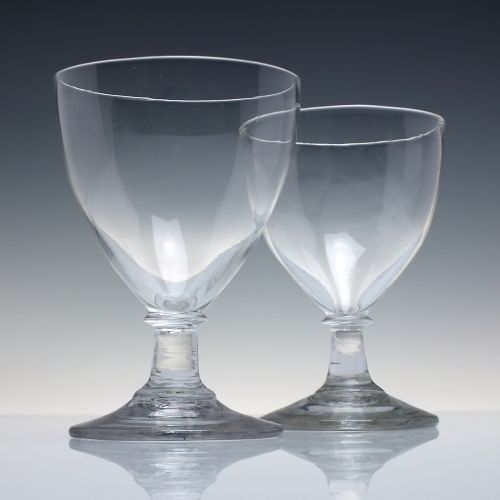
A clear lead glass rummer is a sturdy drinking vessel designed for ales, wines, and spirits during the Georgian, Regency, and Victorian eras. These robust glasses appear in various bowl shapes including ovoid, pan top, and ogee profiles sitting atop stemware bases.
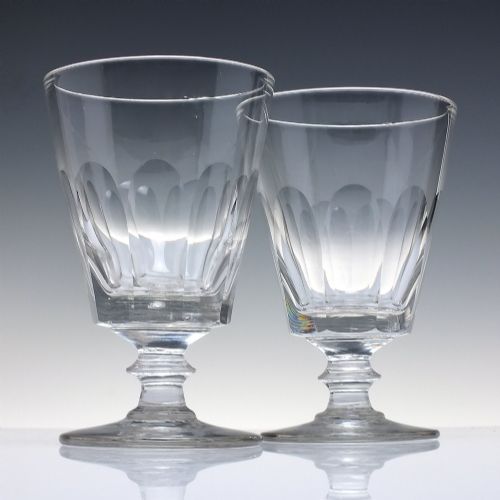
The specimens found here span from the late eighteenth century through to the Edwardian period, with a strong concentration of English Georgian examples. Buyers encounter everything from plain stem goblets to massive serving rummers and matched pairs.
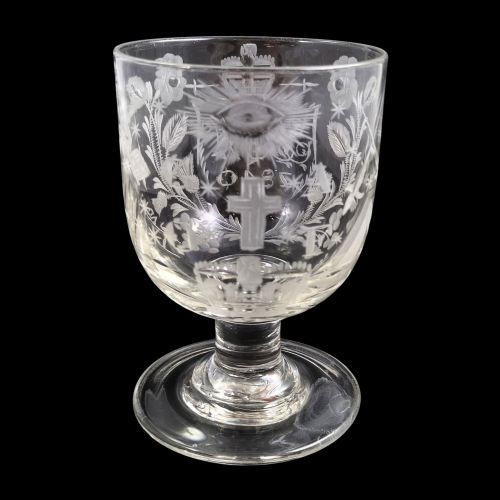
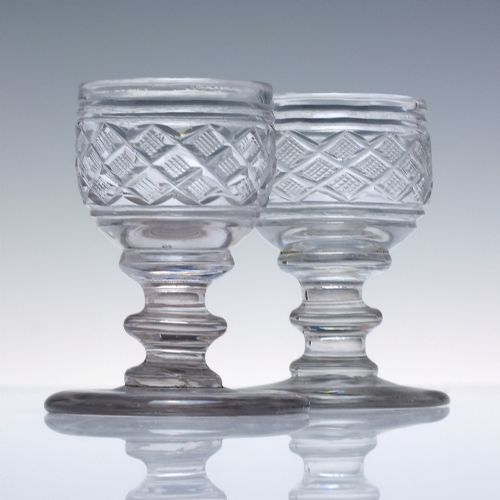
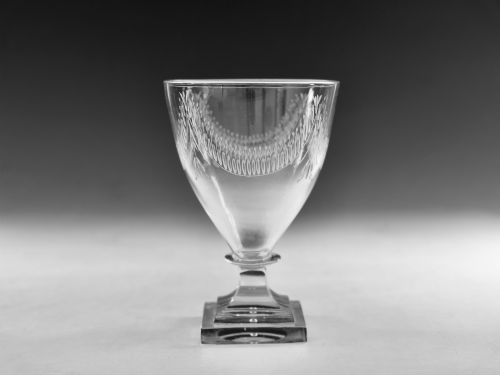
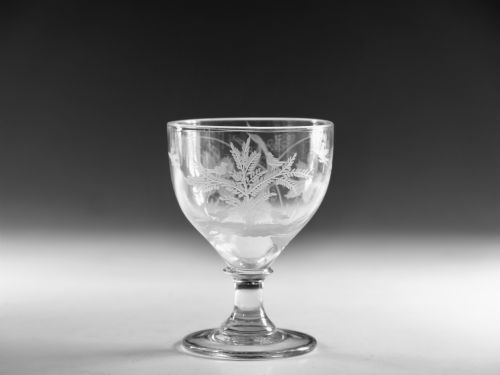
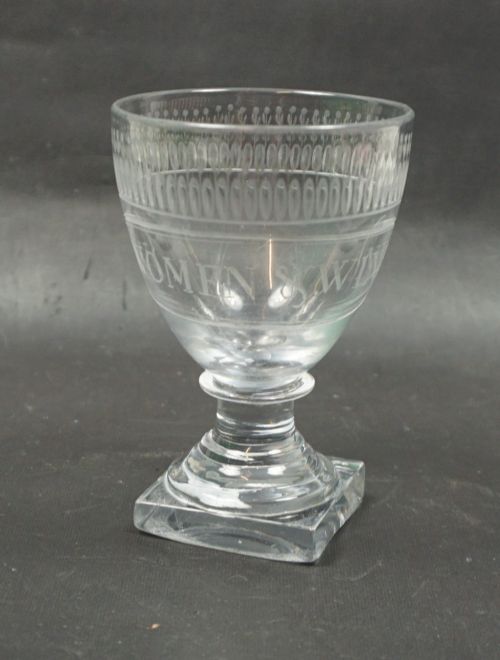
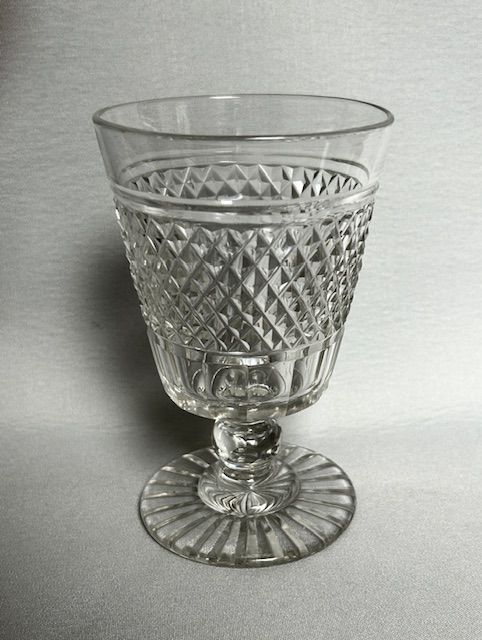
Many pieces display surface decoration such as hand engraving depicting hops and barley, hunting scenes, ships, or armorial crests. Others feature heavy cut glass facets, hobnail patterns, or distinct square lemon squeezer feet.
Manufacturing and materials
These objects rely heavily on lead glass, lead crystal, and flint glass formulations that provide a heavy handle and high refractive index. This dense material allows artisans to cut deep facets and engrave intricate details cleanly across the surface.
Manufacturing methods involve hand-blowing the molten glass into desired bowl configurations before attaching stems and heavy footed bases. Workers then finish selected pieces through wheel-cutting, optical moulding, or diamond-point and wheel engraving.
Listings feature lead crystal, flint glass, and hand-blown lead glass formed into Georgian, Regency, Victorian, and Edwardian drinking vessels.
Evaluating quality and execution
Quality rests primarily in the weight of the metal and the crispness of the glass cutting or engraving. Superior examples demonstrate deep, precise facet cutting and finely detailed pictorial engraving rather than shallow, hasty surface work.
Proportion and stability also dictate worth, as better pieces balance heavy bowls securely upon well-formed stems and substantial feet like the square lemon squeezer type. The clarity of the lead glass itself, free from excessive cloudiness or heavy impurities, marks the finest specimens.
The Clear Lead Glass Rummer Glossary
- Rummer
- A large heavy drinking glass popular in Britain from the late eighteenth century onwards for consuming ale, wine, or spirits. The name likely derives from a corruption of roemer, though British forms developed distinct stout bowl and stem proportions.
- Lemon squeezer foot
- A square pressed glass base with sloping sides resembling a traditional culinary lemon squeezer. This distinctive architectural foot appears frequently on Georgian and Regency rummers.
- Ogee
- An 'S'-shaped curved profile curving out at the rim and in towards the base. This graceful bowl shape is common among eighteenth and nineteenth century drinking vessels.
- Hobnail cut
- A raised geometric pattern of multifaceted diamond points resembling the hobnails used in heavy boots. It creates intense light refraction across the body of cut glass rummers.
- Flint glass
- An early British term for high-quality clear glass containing lead oxide. It offers superior brilliance and weight compared to standard soda glass.
Clear Lead Glass Rummer: Frequently Asked Questions
How were rummers used originally?
These vessels served everyday and celebratory drinking needs for ales, wines, punches, and spirits in British households and taverns. Their substantial size suited communal toasts and hearty portions.
Over time, larger variants also functioned as table serving pieces for desserts or central displays.
Can I use antique rummers for drinks today?
Many collectors use sturdy lead glass rummers for modern dining, provided they receive careful hand washing. Sudden thermal shock from hot liquids or modern dishwashers can damage historic glass.
Gentle handling preserves the fragile engraved surfaces and historic lead metal integrity for daily enjoyment.
How do I date a clear lead glass rummer?
Dating relies on combining bowl shape, manufacturing technique, foot style, and engraving motifs. Georgian examples often feature pontil marks, thick lead metal, and hand engraving like hops and barley.
Later Victorian and Edwardian pieces show machine polishing, crisper mould lines, or heavier symmetrical diamond cutting.
What is the difference between a rummer and a wine glass?
Rummers are noticeably larger, heavier, and broader in the bowl than standard historic wine glasses. They were engineered for stronger drinks and larger volumes rather than small sips of fine wine.
The sturdy proportions reflect a transition from delicate Jacobite glasses to practical nineteenth century tableware.