


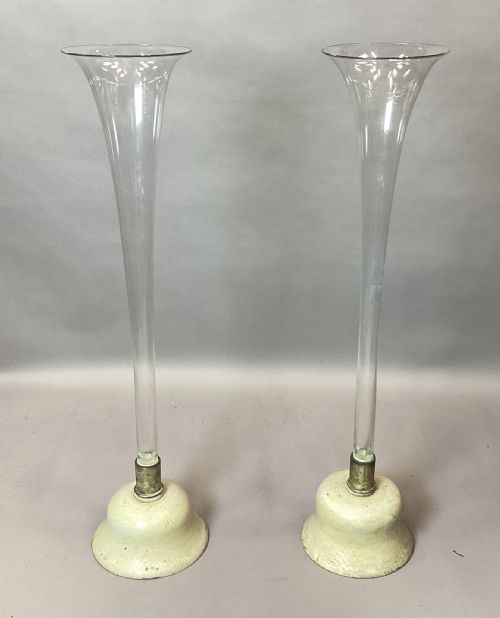


Clear Glass Trumpet Vase
These clear glass trumpet vase examples bring striking vertical form and period elegance to any tabletop.
Clear Glass Trumpet Vase
A clear glass trumpet vase presents an unmistakable flared silhouette expanding upward from a stable base, designed specifically to support long-stemmed blooms. These items appear across various periods on this page, including Victorian, Edwardian, and Art Deco eras.
Makers utilised diverse supplementary materials alongside the primary medium, combining silver plate, carved wood, and gilt bronze mounts with the transparent vessels. Examples range from simple tall lily forms to elaborate centrepieces featuring cranberry glass and cut crystal.
Materials and construction methods
The fabrication relies upon traditional glassblowing and crystal-cutting techniques, often enhanced by wheel engraving, gilding, or applied glass trails such as white cane decoration. Artisans shaped the molten metal into sweeping floral profiles before employing skilled cutting wheels to achieve deep geometric facets.
Mixed media assemblies incorporate structural elements like silver plated mounts, cast gilt bronze, and carved wooden stands originating from Black Forest workshops. These secondary mounts provide secure housing for the fragile glass inserts while introducing contrasting textures and tones.
Some towering Victorian pairs reach forty inches tall, demanding exceptionally high ceilings or very confident floral arrangements.
Distinguishing superior craftsmanship
Quality reveals itself in the precision of the glass cutting, the clarity of the crystal, and the weight of the vessel itself. Superior items display crisp, hand-cut facets that catch the light evenly without surface distortion or excessive bubbles within the metal.
The integration of secondary components like silver plate, gilt bronze, or carved wood further separates standard production from exceptional work. Finer pieces demonstrate seamless fitting between the glass trumpet and its metal or wooden base, retaining original gilding and secure structural joints.
The Clear Glass Trumpet Vase Glossary
- Trumpet vase
- A vessel characterised by a narrow base that flares outward progressively toward the rim in the shape of a musical horn. This profile supports individual heavy-headed flowers effectively by holding them in an upright arrangement.
- Crystal
- A type of glass containing metallic oxide additives that increase brilliance, weight, and workability for deep cutting. It rings with a clear tone when struck gently.
- Epergne
- A large table centrepiece featuring a central bowl with multiple detachable arms or trumpet vases radiating outward. It served as a decorative focal point for formal dining tables.
- Cranberry glass
- A rich red transparent glass created by adding gold chloride to the molten batch during production. It appears frequently in Victorian decorative wares.
- White cane decoration
- Fine opaque white glass rods fused into the body of a clear vessel during blowing to create linear patterns. This technique requires precise thermal control by the glassmaker.
Clear Glass Trumpet Vase: Frequently Asked Questions
What flowers fit a trumpet vase?
These vessels suit long-stemmed blooms such as lilies, roses, and single decorative stems that benefit from the narrow neck support. The expanding rim allows the flower heads to fan out naturally.
Heavier arrangements find stability when the base possesses sufficient weight and width to counterbalance the height of the stems.
How are these vases cleaned safely?
Warm water and mild washing liquid remove interior residue effectively without damaging historic surfaces or applied gilding. Soft bottle brushes reach narrow bases safely.
Harsh chemical detergents and abrasive pads must be avoided entirely to prevent scratching the clear glass or wearing away delicate engraved details.
Were these used on dining tables?
Dining tables frequently featured these tall vessels or complex epergne centrepieces during formal Victorian and Edwardian meals. Their vertical design allowed guests to converse across the table without visual obstruction.
Sideboards and mantelpieces also provided prominent display surfaces for large matched pairs in domestic interiors.
How do I date a glass vase?
Stylistic indicators such as cut patterns, applied colour trails, and associated mounts help determine the period of manufacture. Art Deco pieces show geometric styling, whereas Victorian examples often feature cranberry tones or heavy wheel engraving.
Examination of the base for pontil marks and wear provides further evidence of age and manufacturing method.