
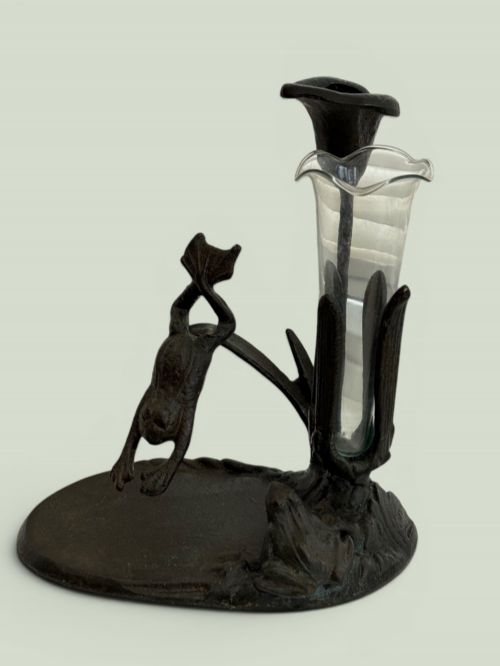
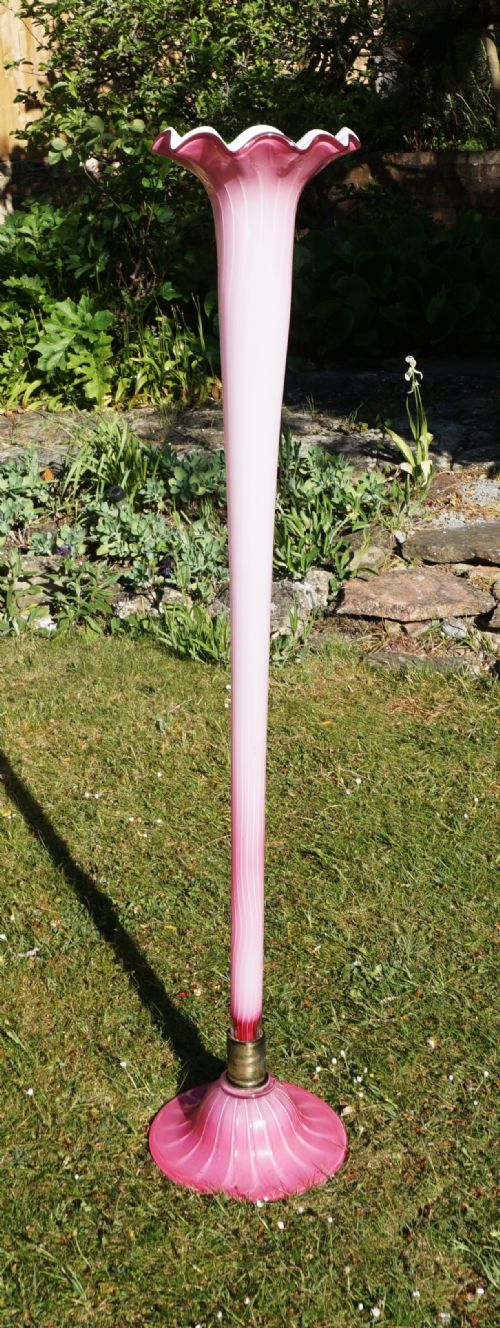


Antique Glass Epergne Vase
When you want an antique glass epergne vase, you are looking for a centrepiece designed to hold flowers aloft.
Antique Glass Epergne Vase
An antique glass epergne vase is a multi-stemmed table centrepiece designed to hold floral displays for dining tables and reception rooms. These pieces appear primarily as Victorian creations, with additional examples spanning the Edwardian, Art Nouveau, and Art Deco periods.
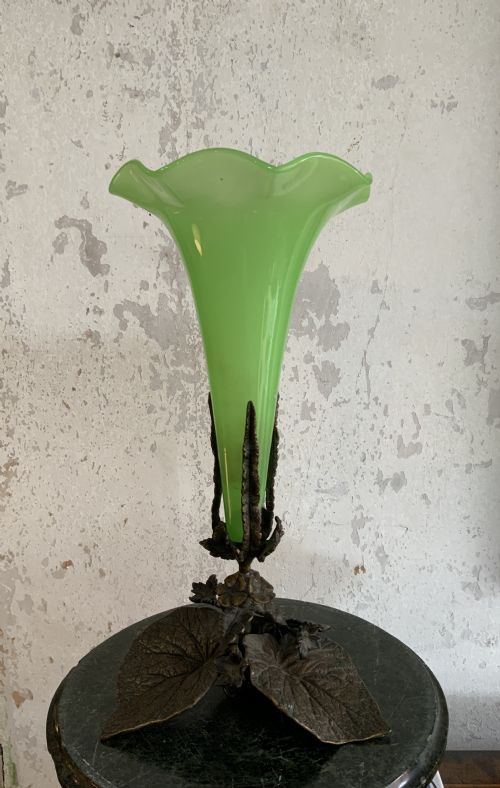
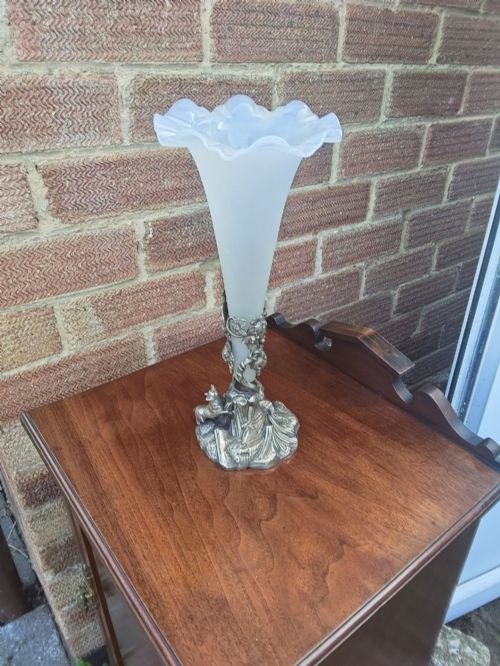
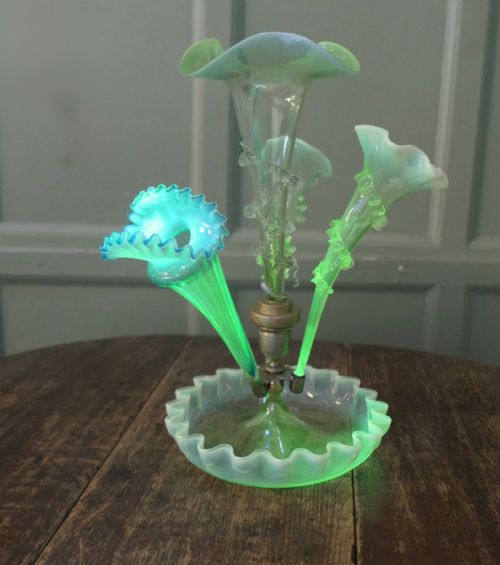
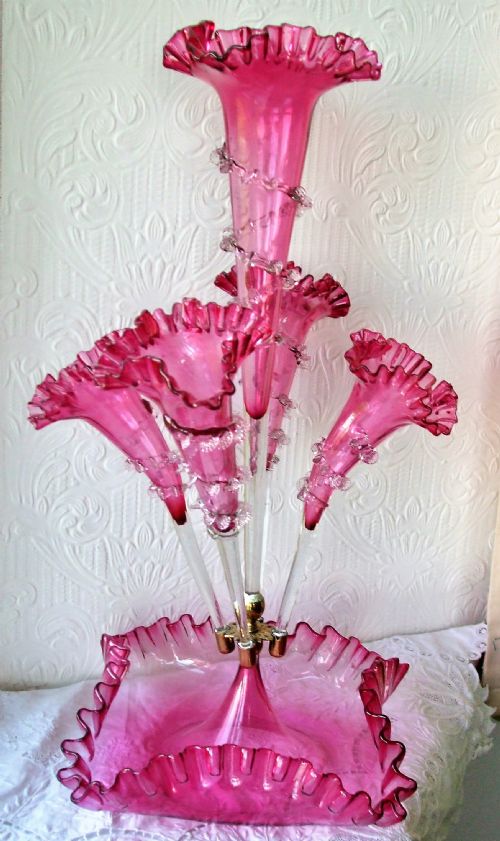
The form typically comprises a central glass bowl or dish supporting removable trumpets, flutes, and posy vases. Most examples encountered here utilise cranberry glass, vaseline glass, or uranium glass, often paired with silver plate, brass, or carved wood bases.
How they were made
Glassmakers utilised hand-blowing techniques to shape coloured, cased, and opalescent glass into elongated trumpets and ruffled bowls. Artisans incorporated minerals such as uranium and gold into the molten batches to achieve distinctive green, yellow, and ruby hues.
Metalworkers combined brass, bronze, and silver-plated mounts to support the fragile glass elements securely. Carved wood components, particularly from Black Forest workshops, provided elaborate naturalistic stands for crystal bowls.
Listings feature 19th-century Victorian epergnes alongside 20th-century Art Deco and Art Nouveau examples.
What varies in quality
Quality rests upon the proportion and ambition of the glassblowing, from simple single trumpets to complex multi-tier arrangements with matched matching bowls. The depth of colour in cased and cranberry glass, alongside the crispness of applied trailing and etching, sets finer examples apart.
The integration of the supporting structure dictates the overall standard, whether cast gilt bronze, marked silver plate, or detailed carved wood. Original matching components preserved together hold greater distinction than assembled or replacement parts.
Walker & Hall·Julien Glass·Baccarat
The Antique Glass Epergne Vase Glossary
- Epergne
- A large table centrepiece designed with multiple branches or receptacles for fruit, sweetmeats, or flowers. These vessels dominate formal dining arrangements from the Victorian era onwards.
- Cranberry Glass
- A transparent red glass produced by adding gold chloride to the molten batch. It is commonly associated with Victorian tablewares and epergnes.
- Vaseline Glass
- A transparent or translucent yellow-green glass that owes its colour and uranium content to a distinct yellowish tint. This material reacts under ultraviolet light.
- Trumpet
- A flared, elongated vase form resembling a musical horn. These elements fit into sockets on the base of an epergne.
- Jack-in-the-Pulpit
- A descriptive term for a glass vase rim stretched outward and upward into a shape resembling the woodland flower. It appears frequently on Victorian art glass vessels.
Antique Glass Epergne Vase: Frequently Asked Questions
How do I clean an epergne safely?
Wash each glass component separately in warm soapy water using a soft cloth, avoiding harsh scrubbing on gilt or enameled surfaces.
Allow every piece to dry thoroughly before reassembling the trumpets into their respective metal or wooden mounts.
Can I use real water in them?
Water can be used in the glass trumpets and bowls to support fresh flowers during display. Care should be taken when filling and moving tall or multi-stemmed arrangements.
Empty and dry the vessels promptly after use to prevent mineral deposits from forming inside narrow flutes.
How do I spot a replacement trumpet?
Examine the colour match, glass thickness, and rim finish against the other trumpets on the piece. Hand-blown items often display subtle variations, but distinct differences in hue suggest a later substitution.
Check the base diameter of the stem to ensure it fits securely into the original socket.