


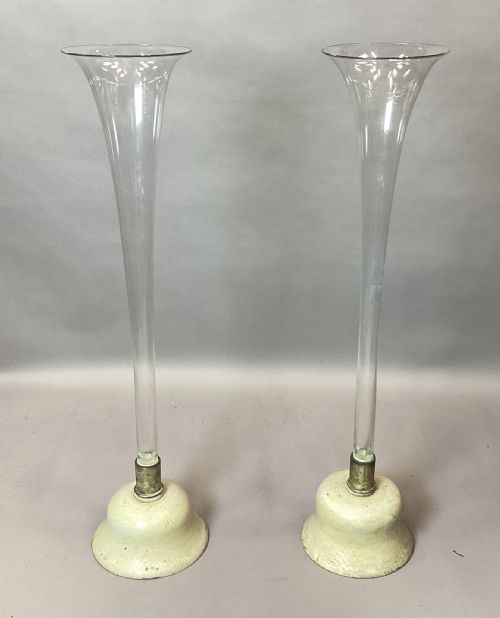

Victorian Blown Glass Vase
A victorian blown glass vase is a piece of coloured glass shaped by breath and heat, offering rich colour and delicate form for any room.
Victorian Blown Glass Vase
A buyer seeking a victorian blown glass vase encounters items originating from the nineteenth century, including pieces dated to the eighteen-eighties and eighteen-sixties, along with related forms such as epergnes and table centrepieces.
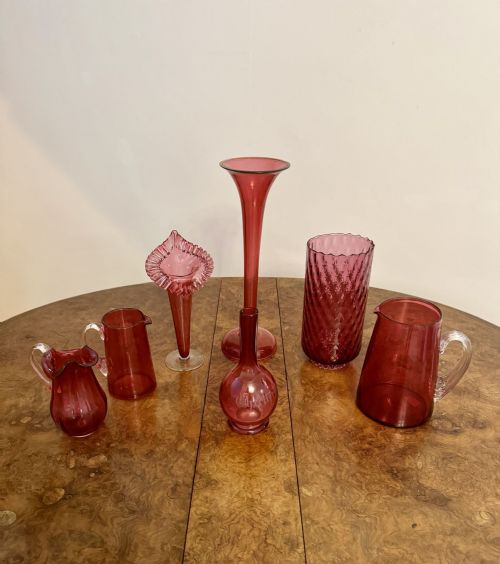
The most common examples on this page are cranberry glass vessels, often shaped as trumpets, jack in the pulpit forms, or lily vases, alongside green glass and soda glass cylinders.
Makers and designers appearing in the evidence include Stuart for Liberty, placing certain pieces within the arts and crafts and art nouveau styles, while others reflect bohemian design.
Standards of craftsmanship
Quality rests in the skill of the blower, visible in the evenness of the walls and the grace of the stretched trumpets or lily shapes.
The richness and depth of the cranberry or uranium coloration distinguish finer vessels, as does the crispness of any hand painted enamel decoration.
Scale and complexity also define the work, separating simple posy vases from large trumpet vases and multi-trumpet epergnes.
Listings feature items spanning the nineteenth century, with specific dates including eighteen-fifty, eighteen-sixty, eighteen-eighty, and nineteen-hundred.
Stuart for Liberty
The Victorian Blown Glass Vase Glossary
- Cranberry glass
- A transparent red-pink glass coloured with gold chloride. It is characteristic of nineteenth-century tableware and decorative items.
- Epergne
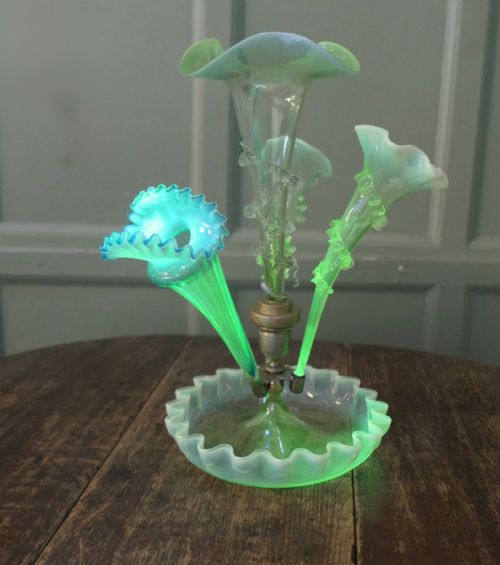
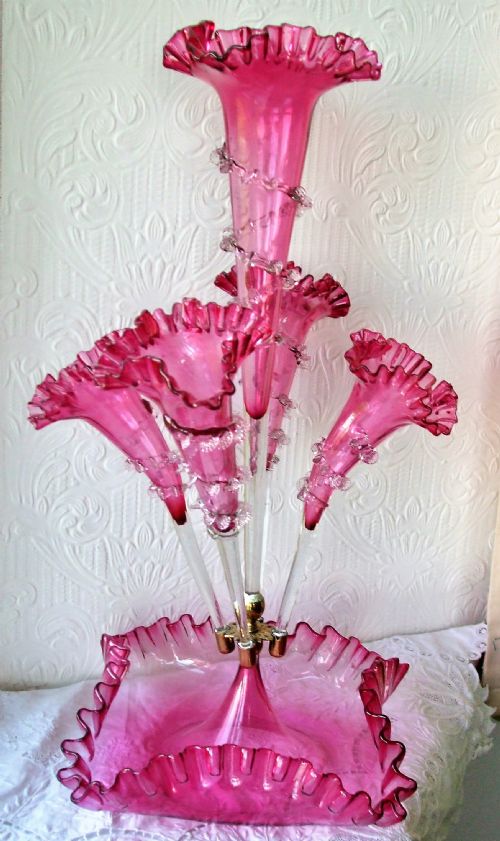
- A large table centrepiece featuring a central bowl with multiple Trumpet or lily vases branching out. They were used for fruit or flowers during Victorian dinners.
- Jack in the pulpit vase
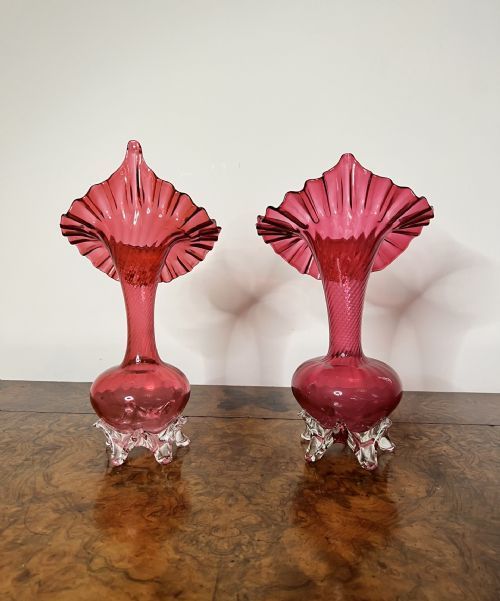
- A vessel featuring a wide, ruffled rim pulled upwards to resemble a flower bloom. This form is frequently seen in cranberry glass.
- Uranium glass
- Glass containing uranium dioxide, which glows bright green under ultraviolet light. It appears in nineteenth-century pieces.
- Soda glass
- Glass made with sodium carbonate as a flux, producing a lighter and more workable material. Mid-nineteenth-century cylinder vases often employ this composition.
Victorian Blown Glass Vase: Frequently Asked Questions
What is a victorian blown glass vase?
A victorian blown glass vase is a decorative vessel shaped by hand during the nineteenth century. These items typically feature rich cranberry, green, or crystal tones.
Craftsmen used blowing techniques to create varied silhouettes, including trumpet shapes and ruffled jack in the pulpit forms.
How do I identify cranberry glass?
Cranberry glass displays a distinctive pinkish-red hue created by adding gold to the molten batch. It ranges from pale pink to deep ruby.
This coloration appears frequently in Victorian table pieces and posy vessels.
What is an epergne?
An epergne is a multi-piece table centrepiece featuring a central bowl and detachable trumpets or lily vases. Victorians placed them on dining tables for display.
They often combine cranberry glass trumpets with matching bowls and clear glass details.
How should I clean my glass vase?
Clean antique glass gently with lukewarm water and mild soap. Avoid harsh scrubbers and sudden temperature changes.
Dry the piece carefully with a soft cloth to preserve the surface.