



Footed Glass Vase
These footed glass vase examples elevate floral displays while standing on their own merits, spanning periods from the Victorian era to Art Deco.
Footed Glass Vase
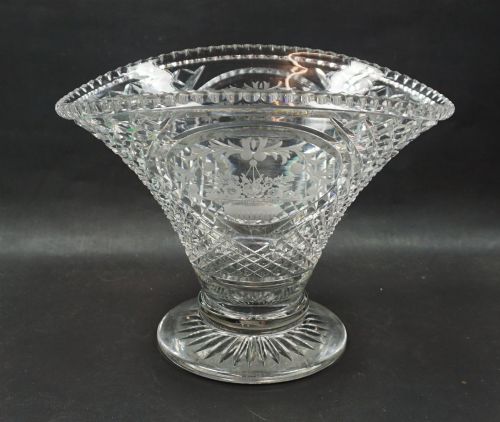
When searching for a footed glass vase, collectors encounter vessels raised on distinct bases, ranging from decorative bowls and ewers to classic tall silhouettes. The pieces appearing here cross multiple eras, including the nineteenth century, the Art Nouveau movement, and the Art Deco period.
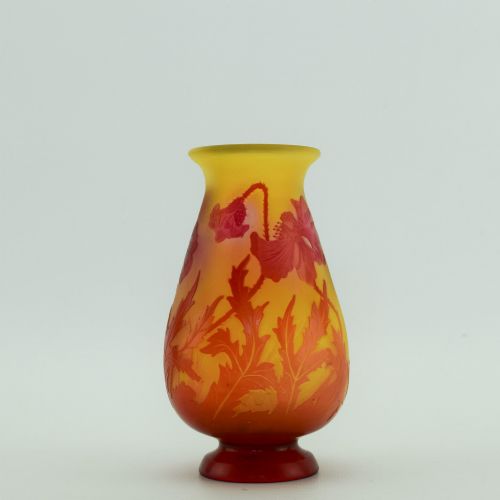
Most examples hail from the late nineteenth and early twentieth centuries, showcasing the distinct aesthetic shifts of those decades. Makers utilised techniques such as cameo carving, acid-etching, and enamelling to create depth and texture on the glass body.
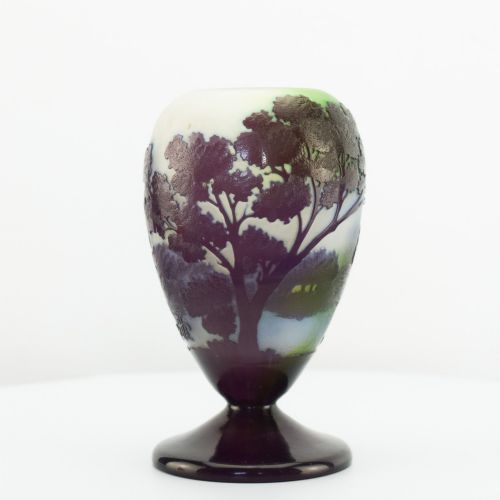
Forms vary from large crystal bowls to slender opalescent vessels and landscape scenes rendered in glass. These decorative objects display the technical ambitions of European glasshouses operating across France, Britain, and Germany.
How they were made
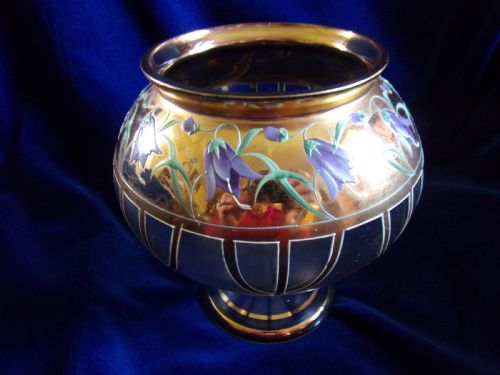
Glassmakers shaped these pieces using traditional blowing techniques before applying surface ornamentation such as gold leaf and enamel decoration. Acid-etching allowed artisans to cut back the glass layers to reveal contrasting colours beneath, particularly evident in cameo pieces.
Opalescent glass required precise temperature control during the cooling process to achieve the characteristic milky sheen and play of light across the surface. Artisans often finished pieces with hand-gilded details or intricate enamel work depicting botanicals and landscapes.
Footed Glass Vase Retail Price Guide 2026
Typical asking prices for footed glass vase among the pieces listed under this phrase on Sellingantiques today, from the lower quarter to the upper quarter. They describe what is for sale here now, not the wider market.
Materials represented include cameo glass, acid-etched glass, gold leaf, and opalescent glass across Victorian, Art Nouveau, and Art Deco styles.
What varies in quality
Quality rests in the crispness of the glassblowing, the precision of the acid-etching or cameo work, and the delicacy of any applied enamel and gilding. Pieces featuring complex multi-layered cameo carving demand a higher level of artisan skill than simpler moulded or blown vessels.
The integration of the foot to the main body dictates the structural harmony of the piece, with superior examples showing seamless transitions and balanced weight. Signature marks from renowned makers and glassworks further distinguish the finest specimens from anonymous production.
Galle·R Lalique·St Louis glassworks·Stuart for Liberty·Daum
The Footed Glass Vase Glossary
- Cameo Glass
- Glass vessels created by fusing two or more layers of differing colours together, then carving away the exterior layer to form a raised design. This technique requires exceptional precision from the artisan.
- Opalescent Glass
- Glass that has a milky, semi-translucent appearance with a soft glow, often shifting in colour depending on the light. It gained immense popularity during the Art Deco period.
- Acid-Etched Glass
- Glass treated with acid to eat away the surface, creating frosted designs or textured patterns. This method allowed makers to achieve intricate motifs without hand-carving every detail.
- Enamel
- A decorative fused glass paste applied to the surface of the vessel and fired to fix the colours in place. It adds rich hues and tactile relief to the glass body.
- Historismus
- A nineteenth-century German style movement that drew inspiration from historical epochs and classical forms. Pieces in this style often incorporate traditional craftsmanship with revivalist aesthetics.
Footed Glass Vase: Frequently Asked Questions
What periods do footed glass vases represent?
The pieces span the nineteenth century through to the early decades of the twentieth century. This encompasses Victorian production, Arts and Crafts, Art Nouveau, and Art Deco movements.
Each period brought distinct stylistic preferences, moving from ornate floral enamelling to stylised opalescent forms and layered cameo landscapes.
How were these glass vases used originally?
Many served as centrepieces or decorative vessels for displaying blooms, while others functioned purely as ornamental objects in domestic interiors. Ewers and large bowls were often placed on sideboards or mantelpieces.
The raised foot elevated the vessel, giving greater presence to the room and highlighting the craftsmanship of the glasshouse.
How do I distinguish Art Nouveau from Art Deco styles?
Art Nouveau designs feature fluid, organic lines inspired by nature, such as poppy flowers, trailing leaves, and natural landscapes. These pieces often utilise cameo glass and rich enamelling.
Art Deco leans towards geometric precision, stylised motifs, and opalescent finishes, reflecting a modern industrial aesthetic.