


Ruffled Rim Glass Vase
A ruffled rim glass vase is a wonderful piece of coloured blown glass that brings Victorian or Art Nouveau elegance directly to your shelf.
Ruffled Rim Glass Vase
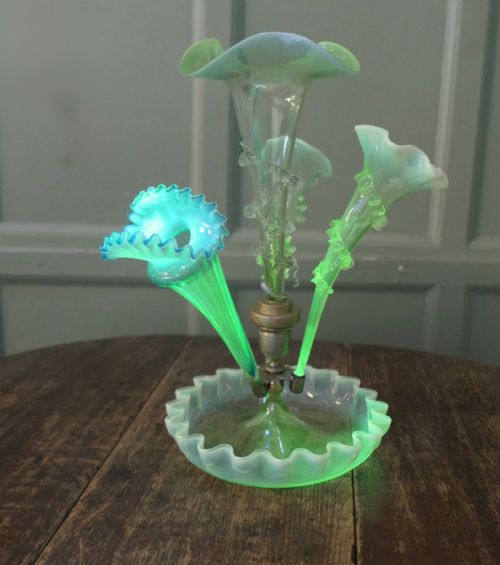
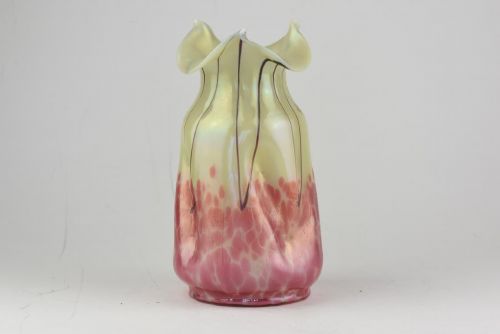
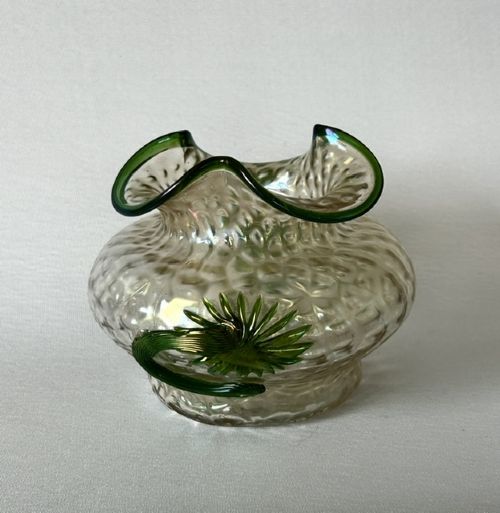
A ruffled rim glass vase brings together the fluid forms and vibrant colours of the Victorian and Art Nouveau periods. When searching for a ruffled rim glass vase, buyers encounter items ranging from single mantel lustres and epergne trumpets to large oviform vessels.
The most common examples on this page date from the mid-nineteenth century up to nineteen twenty, reflecting English, French, and Bohemian origins. These pieces often feature manipulated rims shaped while hot to create the characteristic fluted or ruffled edge.
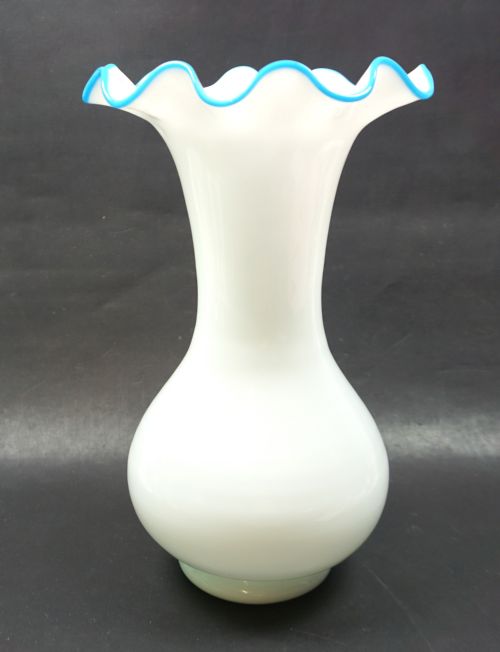
Makers utilised various forms such as tall cranberry vessels and white glass bodies paired with contrasting pale blue rims. Each ruffled rim glass vase displays the distinct shaping methods of its period.
How they were made
Glassmakers created these vessels using hand-blown techniques, shaping molten metal into cased glass, satin glass, or iridescent glass. Workers achieved the signature ruffled rim by manipulating the hot glass edge with tongs or wooden tools.
Makers incorporated specialist materials like uranium glass and opalescent glass, sometimes finishing surfaces with delicate enamel decoration. Pieces by firms such as Baccarat, Legras, and Kralik demonstrate high-level glass-blowing mastery across different European workshops.
Victorian glassmakers occasionally added uranium to make vases glow fiercely under parlour lamps.
What varies in quality
Quality rests upon the crispness of the rim manipulation and the depth of colour within the glass body. Finer examples show expert control in cased or layered glass techniques rather than simple surface painting.
The presence of distinct optical effects in iridescent or satin glass distinguishes standard production from superior workshop output. Maker attribution, particularly pieces associated with recognised glasshouses, elevates the standing of individual items.
Pallme Konig·Kralik·Baccarat·Webb·Legras·Mary Gregory
The Ruffled Rim Glass Vase Glossary
- Cased glass
- Glass made with two or more distinct layers of different colours, often blown together to create rich visual depth. This technique allowed makers to cut through outer layers to reveal contrasting colours beneath.
- Uranium glass
- Glass coloured with uranium oxide that glows bright green under ultraviolet light. Victorian and Art Nouveau makers utilised this compound widely for striking decorative pieces.
- Satin glass
- Glass given a distinctive velvety texture by acid-etching or hydrofluoric acid vapour treatment. This matte finish appeared frequently on nineteenth-century luxury ornamental vessels.
- Iridescent glass
- Glass treated with metallic salts while hot to produce a shimmering, rainbow-like surface sheen. This finish became a defining characteristic of Art Nouveau glass production.
- Epergne
- A central table centrepiece featuring multiple trumpets or baskets branching from a single base. These display stands frequently incorporated ruffled rims on each trumpet.
- Opalescent glass
- Glass containing agents that cause parts of the body to appear milky or translucent with a bluish cast. The effect shifts depending on the angle of the surrounding light.
Ruffled Rim Glass Vase: Frequently Asked Questions
What is a ruffled rim glass vase?
A ruffled rim glass vase is a decorative vessel featuring an edge shaped into waves or flutes while the glass was hot. These pieces date primarily from the Victorian and Art Nouveau eras.
Craftsmen produced them in various colours and finishes, including satin, iridescent, and cased glass.
How do I identify uranium glass?
Uranium glass typically exhibits a transparent yellow or green hue in normal daylight. When exposed to ultraviolet light, it emits a vivid green glow.
Many nineteenth-century vases utilised this material for its striking optical properties.
Where were these glass pieces made?
The listings show origins spanning England, France, and Bohemia. Major glasshouses and independent makers across these regions produced distinctive vessels during the nineteenth and early twentieth centuries.
French and English workshops contributed heavily to the variety of styles available.
How should I display my vase?
Place your vase in a position where natural light can pass through the coloured or iridescent glass. Avoid spots with direct, intense heat or unstable surfaces.
Single vessels look striking on mantelpieces, while multi-trumpet epergnes suit larger display tables.