


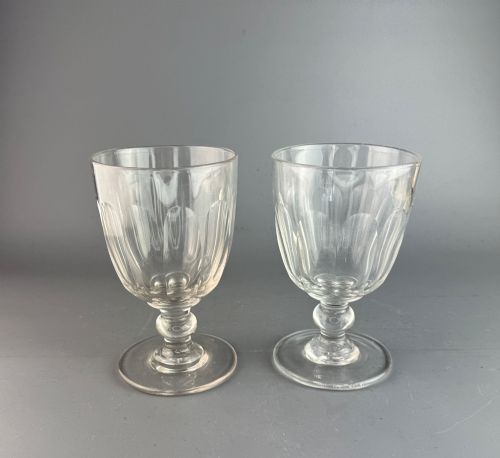
Clear Glass Flutes
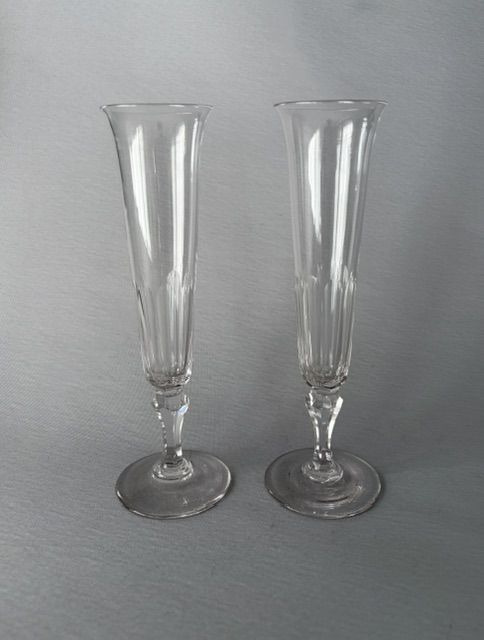
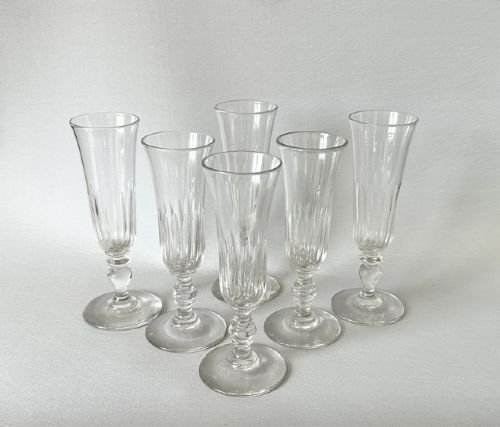
Clear glass flutes bring slender elegance to the table, offering a tall profile designed for sparkling wine and celebratory toasts.
Clear Glass Flutes
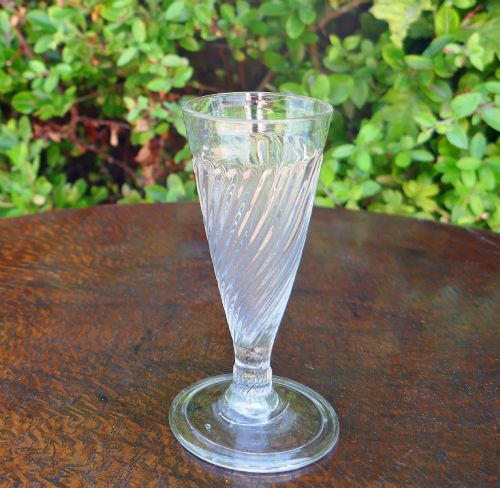
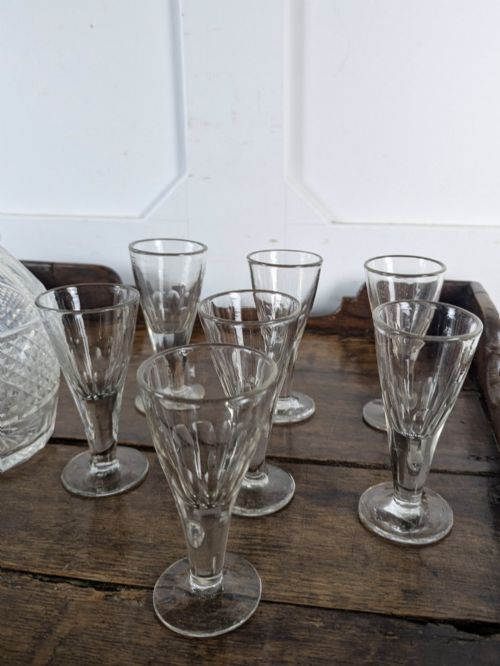
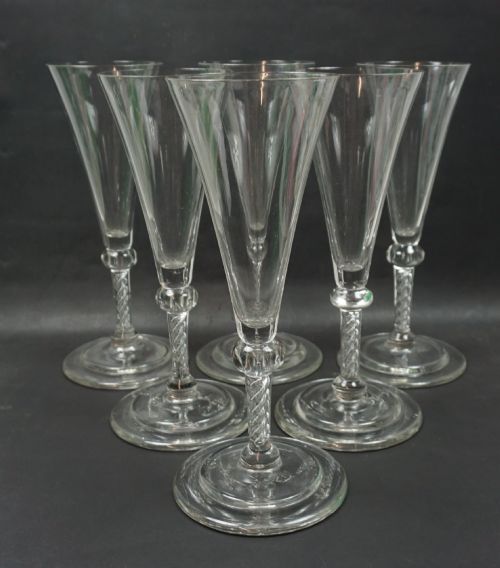
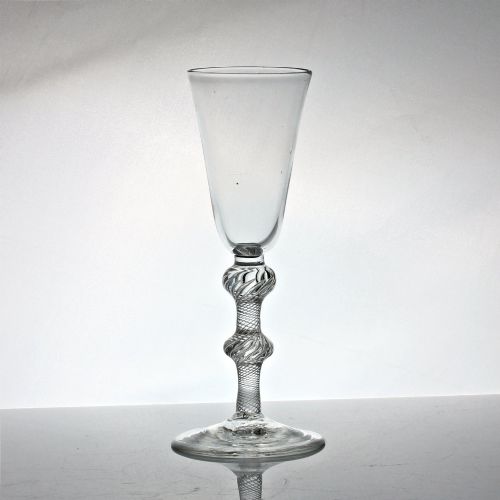
Clear glass flutes encompass tall vessels designed for celebratory drinks alongside slender ale glasses and flute-moulded bowls from the eighteenth century onwards. Buyers searching for clear glass flutes encounter delicate Georgian stems featuring air twists or opaque twists, alongside later Victorian thumb-cut sherry flutes and tall Edwardian examples.
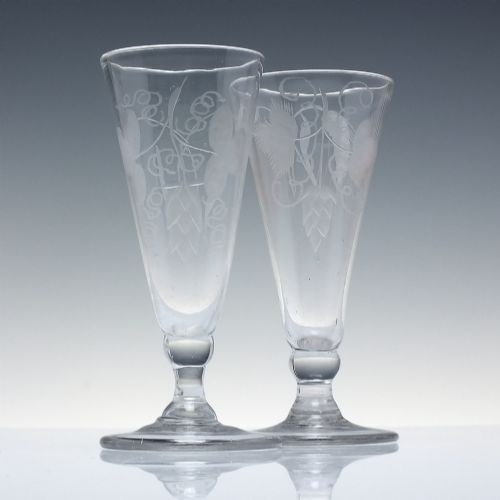
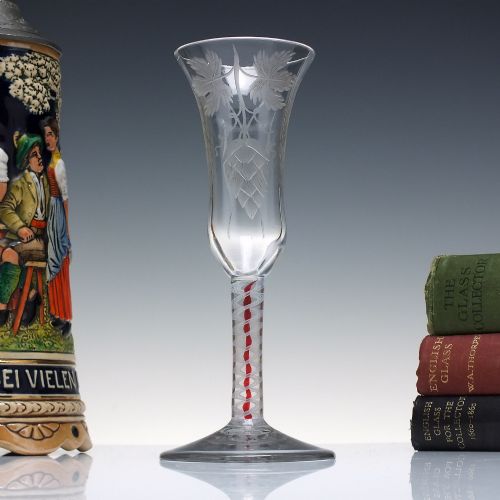
The selection ranges from mid-eighteenth-century drinking glasses with folded feet to late Victorian champagne flutes and matched sets from the nineteen-thirties. Forms vary from simple straight-sided profiles to facet-cut stems and engraved bowls depicting hops and barley.
Materials and technique
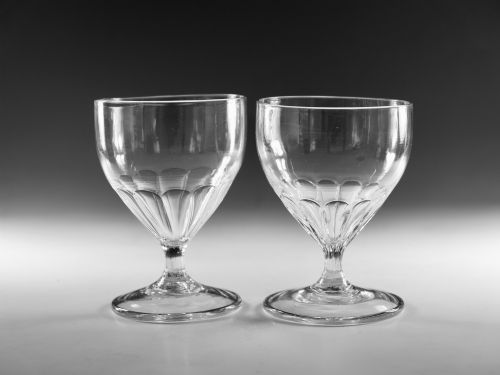
These pieces utilise lead glass, flint glass and lead crystal, which provide the clarity and weight necessary for delicate vessel walls. Makers employed techniques such as thumb-cutting, facet-cutting and flute-moulding to shape the bowls and stems.
Intricate internal patterns were achieved by trapping air bubbles within the molten metal to form single or double series air twists, while white enamel threads created opaque twists inside the stems.
Judging the standard
Quality rests in the crispness of the cutting, the balance of the stem and the resonance of the metal. Fine examples exhibit precise wheel-engraving on the bowl and sharp facets that catch the light cleanly.
Thicker, heavier casting in later Victorian pieces contrasts with the lightness and hand-drawn delicacy characteristic of Georgian stems.
The Clear Glass Flutes Glossary
- Flint glass
- A heavy, brilliant glass developed in England that contains lead oxide to increase refractive index. It provides the clarity seen in eighteenth-century drinking vessels.
- Air twist
- A stem formation created by drawing out elongated air bubbles within the molten glass before twisting the stem. This technique produces spiral threads inside the glass.
- Opaque twist
- A stem decoration formed by incorporating white or coloured enamel glass rods into the clear metal. These rods are spun into spirals during the drawing process.
- Thumb-cut
- A decorative pattern of shallow, circular concavities ground into the exterior of the glass. It provides a tactile grip and reflects light across the surface.
Clear Glass Flutes: Frequently Asked Questions
What drinks belong in antique flutes?
These tall vessels were originally shaped for sparkling wines, champagne, or tall ales, designed to maintain carbonation and display the effervescence.
Modern buyers utilise them for celebratory toasts or display them on dining tables to highlight their slender silhouettes.
How do I date a glass stem?
Eighteenth-century examples often display air twists, opaque twists, or folded feet, reflecting hand-tooling methods of the period.
Victorian and Edwardian versions tend to feature heavier thumb-cutting, press-moulding, or simpler tall profiles without internal stem threads.
Are these glasses safe to use?
Historic lead glass requires careful hand washing in warm water without abrasive sponges to protect the surface finish.
Many collectors use eighteenth and nineteenth-century glassware gently for special occasions rather than everyday dining.
Why do stem heights differ?
Handmade drinking vessels from the Georgian and Victorian eras vary because individual blowers shaped each stem and bowl by eye.
Matched sets remain uncommon in early periods, as most historical tableware was produced in small batches or pairs.