


Crystal Champagne Glasses
Crystal champagne glasses turn a simple toast into a formal ritual, bringing weight and brilliance to the table.
Crystal Champagne Glasses
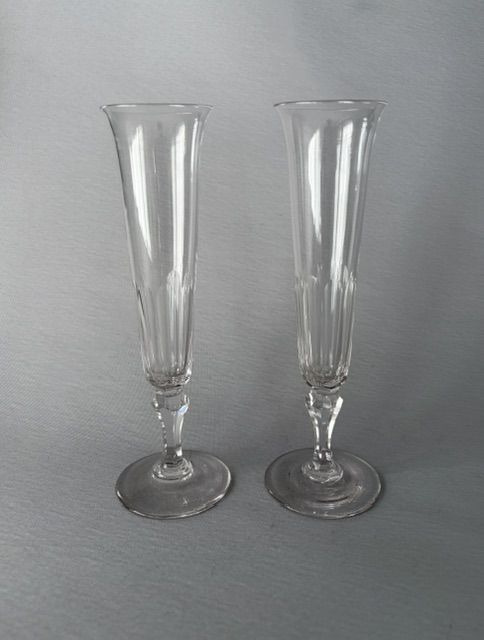
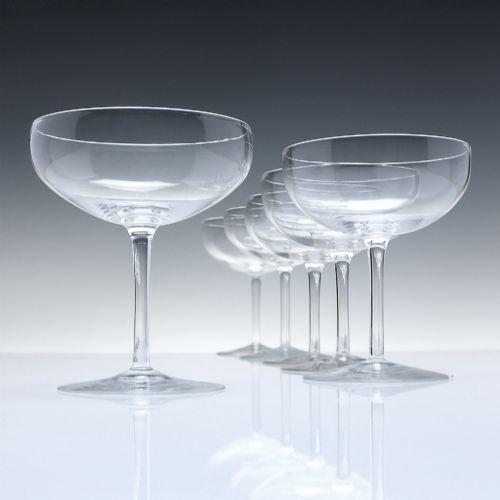
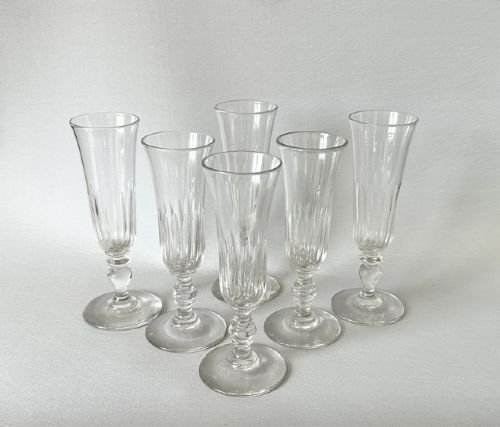
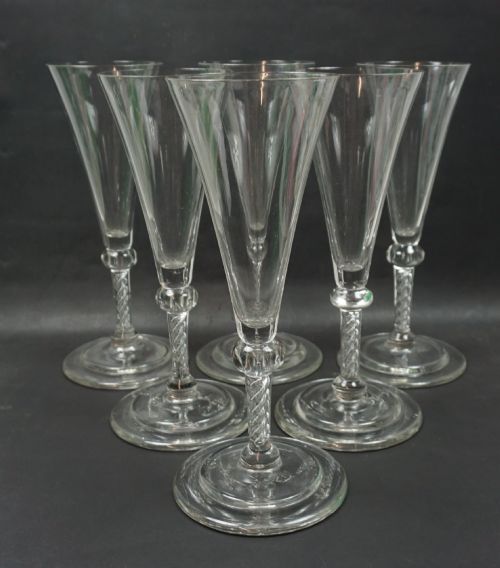
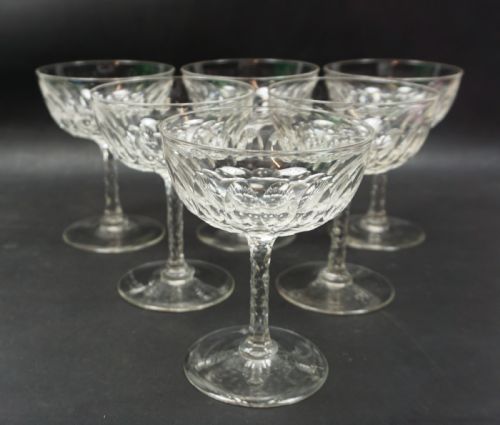
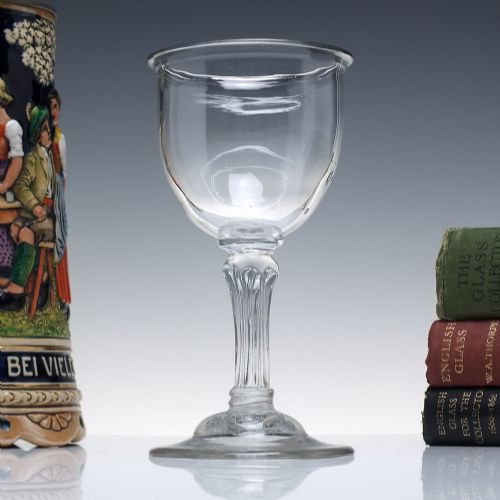
When you search for crystal champagne glasses, you encounter a range of serving vessels spanning from Georgian pedestal stems to robust Art Deco ice coolers. The selection includes tall flutes, shallow coupes, and wide bowls designed specifically for sparkling wine.
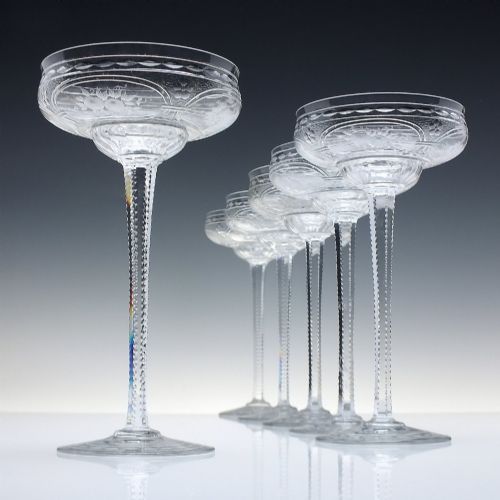
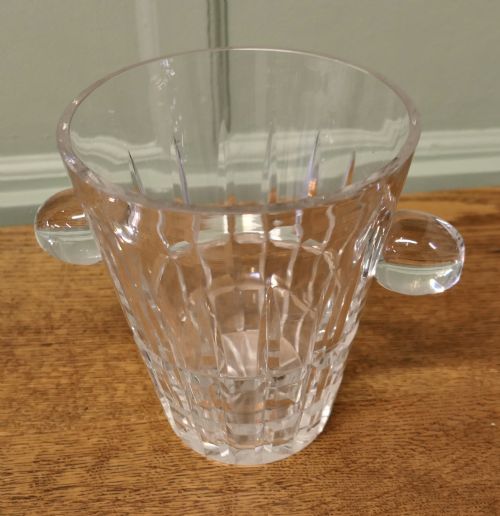
Victorian and Edwardian matched sets appear frequently alongside French and English coolers. These pieces reflect shifts in entertaining habits across the nineteenth and twentieth centuries, moving from tall air twist stems toward broad bowls and heavy lead crystal buckets.
Materials and Technique
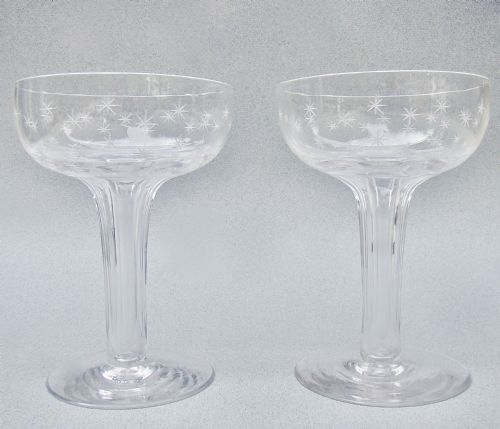
The objects combine lead crystal, clear glass, and coloured glass overlays in ruby, green, or cranberry tones. Makers utilised hand-blowing techniques alongside wheel-cut facets and intricate star-etching to catch the light.
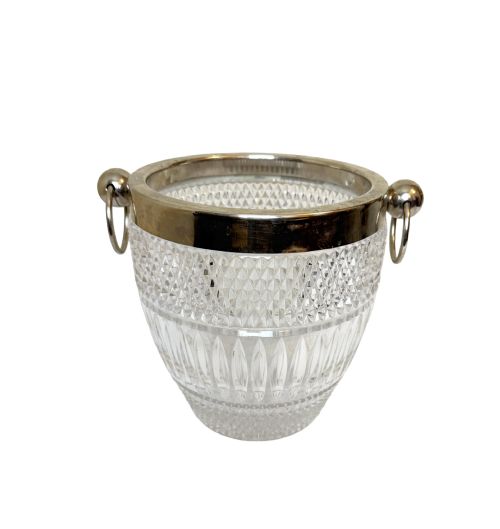
Silver-plate mounts, gilt bronze, and brass hardware frequently accompany the glass vessels, particularly on ice buckets and wine coolers. Latticinio threads and engraved motifs such as dolphins and fruiting vines add decorative depth to the surface.
Dolphins swim across nineteenth-century English jugs, proving that even fine dining required a touch of aquatic whimsy.
Judging Quality
The refinement of the cutting and the clarity of the metal define the upper tier of production. Deep, crisp wheel-cut facets and thin, resonant walls distinguish superior pieces from heavier, simpler press-moulded wares.
The harmony of a matched set and the presence of specialist signatures or known workshop attributions elevate certain glasses above standard domestic output. Weight, balance, and precision in stem formation indicate skilled craftsmanship.
Richardsons Birmingham·Moser·Otto Prutscher·Edinburgh Crystal·St Louis
The Crystal Champagne Glasses Glossary
- Champagne coupe
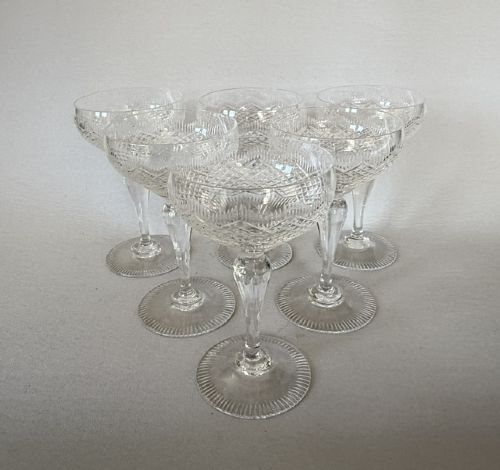
- A broad, shallow bowl on a short stem intended for sparkling wine. This form was especially popular during the Victorian and Edwardian periods.
- Air twist
- A decorative stem formation containing an elongated spiral of tiny air bubbles trapped within the glass. This technique requires exceptional skill during the pulling and twisting process.
- Latticinio
- A method of embedding opaque white or coloured glass threads into clear glass in a net or lace pattern. It appears on mid-nineteenth-century jugs and pitchers.
- Overlay
- A technique where a layer of coloured glass covers a clear crystal base before being partially cut away. This exposes the clear crystal beneath in contrasting patterns.
- Lead crystal
- Glass containing a high proportion of lead oxide, which increases brilliance, weight, and resonance. It allows for deeper, sharper cutting than standard glass.
Crystal Champagne Glasses: Frequently Asked Questions
How do I date antique crystal glassware?
Dating relies on stylistic clues, pontil marks, and the weight of the metal. Georgian and Regency pieces often show pontil scars and simpler, heavier forms, whereas Victorian items frequently feature elaborate wheel-cut decoration.
Later Edwardian and Art Deco examples adopt geometric precision and lighter walls. Comparing stem formations and decorative motifs helps narrow the period of manufacture.
What is the difference between flutes and coupes?
Flutes possess narrow, elongated bowls designed to preserve the carbonation and direct the bubbles upward. They favour the visual appreciation of the wine.
Coupes offer a wide, shallow basin that releases aromas quickly and encourages a different style of drinking. Both shapes appear across various periods of manufacture.
How should I care for antique glass?
Hand washing in lukewarm water with mild detergent protects the surface from thermal shock and abrasive dishwasher cycles. Soft cloths prevent scratching on delicate lead crystal.
Avoiding sudden temperature changes preserves engraved and overlaid details. Storing pieces upright on stable surfaces prevents rim damage.
Are coloured overlay glasses authentic?
Coloured overlays involve fusing a thin layer of tinted glass over a clear crystal core before cutting through the top layer. Genuine examples reveal the clear base metal beneath the cut facets.
Mid-nineteenth-century English and continental makers utilised this technique extensively for distinctive tableware. Close inspection of the cut edges confirms the dual-layer construction.