





Clear Glass Ale Glass
These clear glass ale glass examples are traditional drinking vessels designed for historic brews, bringing tangible Georgian and Edwardian craftsmanship directly to your table.
Clear Glass Ale Glass
A clear glass ale glass is a drinking vessel designed specifically for historic ales and beers, taking several distinct forms across different eras. The pieces on this page span the eighteenth century, the Georgian period, the Regency era, the Edwardian period, and the nineteen twenties.
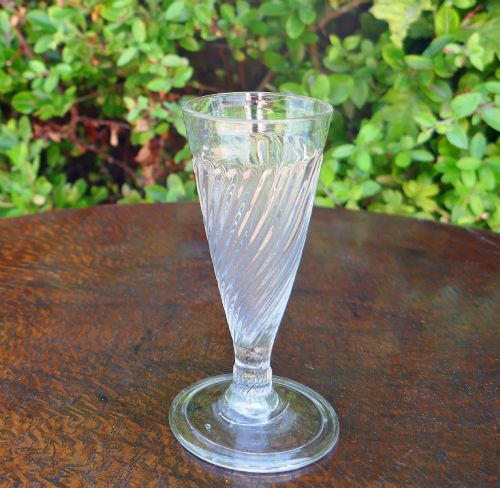
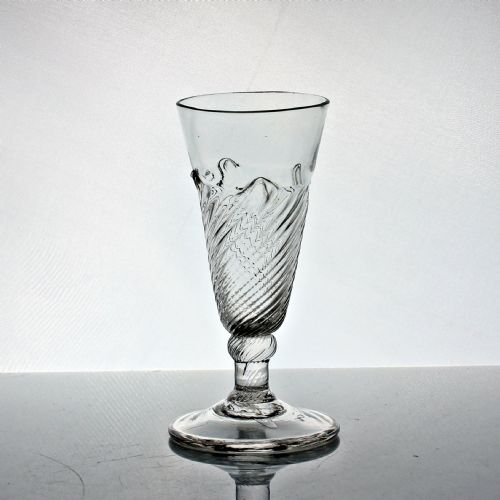
Most examples appear as tall flutes, dwarf glasses, or rummers intended for serving beer. Collectors frequently encounter plain stems, air twists, opaque twists, and facet cut stems alongside tumblers and decanters.
The origins of these drinking glasses are predominantly English, reflecting traditional domestic manufacturing methods. Surviving examples range from early eighteenth century folded foot vessels to later nineteenth and twentieth century service glasses.
How they were made
Makers utilised lead glass, lead crystal, flint glass, and clear glass shaped through hand-blowing techniques. Artisans formed the stems and bowls separately before joining them while hot.
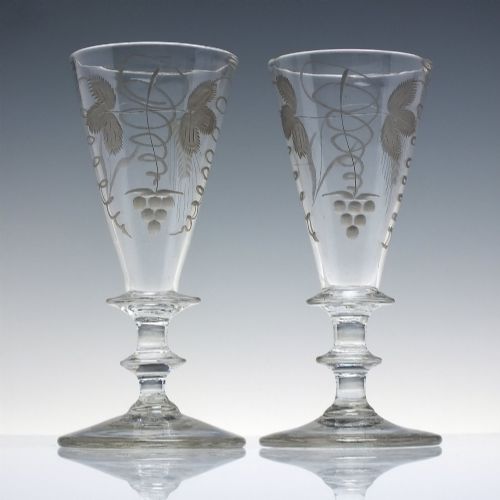
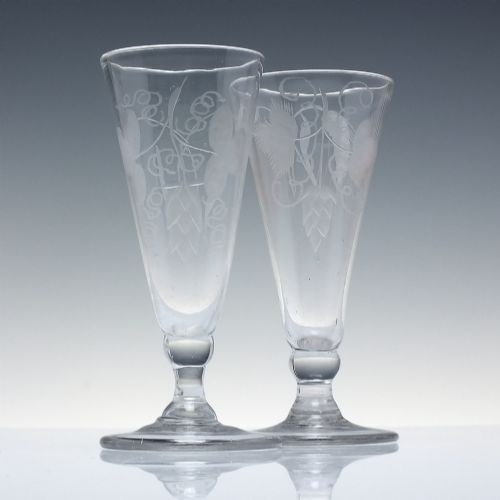
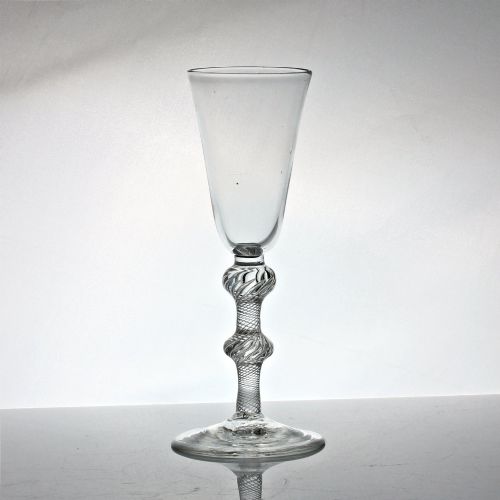
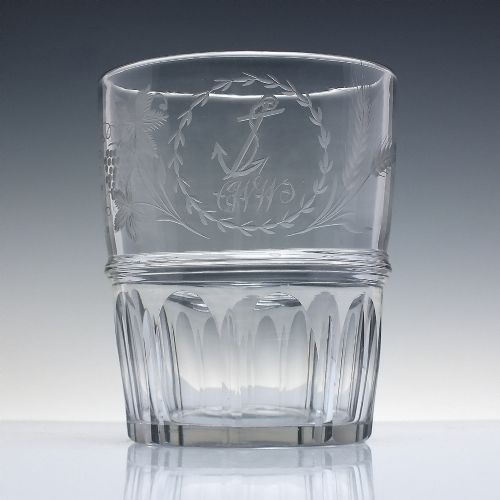
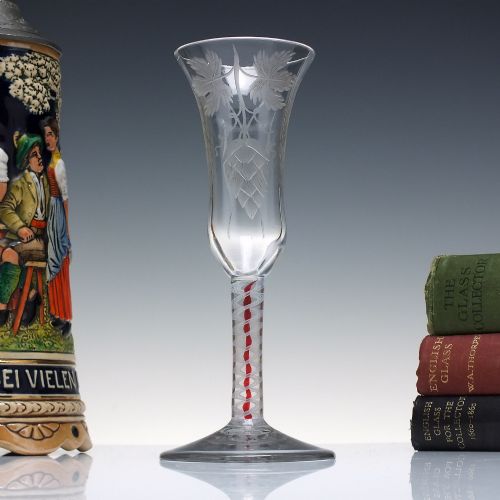
Engraving was frequently applied to the exterior surfaces, often depicting hops and barley motifs. Twist stems required exceptional skill, incorporating air bubbles or white enamel threads drawn through the molten metal.
Some dwarf ale glasses were kept remarkably short so they could not tip over easily on crowded tavern tables.
What varies in quality
Quality rests in the clarity of the metal and the precision of the stem formation. Air twists and opaque twists demonstrate differing levels of control during the drawing process.
The crispness and depth of the wheel engraving determine the refinement of the piece. Superior examples exhibit well proportioned bowls balanced correctly against the foot and stem.
The Clear Glass Ale Glass Glossary
- Air twist
- A stem containing elongated internal air bubbles twisted into a spiral pattern during formation. This technique is characteristic of eighteenth century drinking vessels.
- Opaque twist
- A stem decorated with internal threads of white enamel glass drawn into spirals. These threads are encased within clear metal.
- Folded foot
- A base edge turned underneath during manufacture to create a thicker rim for added strength. This feature appears on early pieces.
- Facet cut
- Geometric planes cut and polished into the stem or bowl of the glass to reflect light. This decorative method became prominent in the later eighteenth century.
- Flute
- A tall, narrow drinking glass designed to retain carbonation and concentrate aromas. These vessels are typical forms for serving ale.
Clear Glass Ale Glass: Frequently Asked Questions
What is a clear glass ale glass?
A clear glass ale glass is a historical drinking vessel shaped specifically for consuming beer and ale. These glasses typically feature narrow bowls and various stem formations designed for tabletop use.
Surviving examples date mainly from the Georgian era through to the early twentieth century. They reflect traditional English drinking customs and glassmaking methods.
How were twist stems made?
Twist stems were produced by manipulating air bubbles or enamel rods inside molten glass. The artisan drew and twisted the metal while hot to create internal spirals.
This technique required precise temperature control and steady hands. The resulting patterns appear as air twists or opaque white threads.
Why do many glasses show hops and barley?
Hops and barley are the primary agricultural ingredients used in brewing ale. Engraving these motifs celebrated the contents intended for the vessel.
Engravers applied these designs using small wheels on a lathe. The imagery connects the functional purpose of the glass directly to the beverage.