



Clear Crystal Footed Bowl
These clear crystal footed bowl examples combine tactile weight with brilliant refractive depth, elevating any table setting.
Clear Crystal Footed Bowl
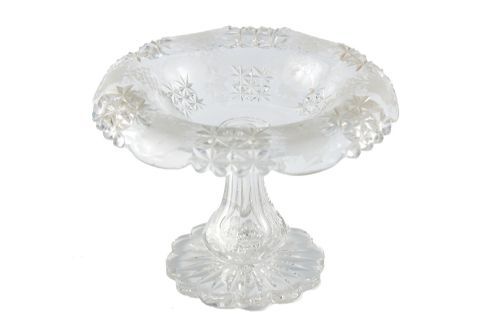
A clear crystal footed bowl serves as a striking centrepiece or decorative vessel, elevating its contents above the surface on a distinct pedestal base. These items span various eras, encompassing robust Georgian pedestal forms, intricate Victorian footed fruit bowls, and elegant Edwardian comports.
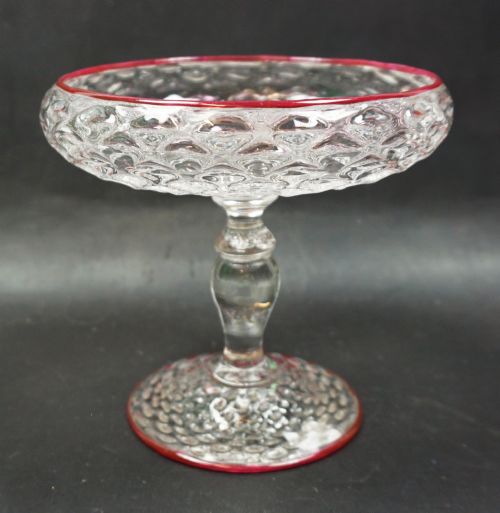
Buyers seeking a clear crystal footed bowl will encounter diverse stylistic interpretations, from honeycombed moulded tazzas to hobnail patterned glass and gold enamelled Art Nouveau creations. The elevated form provides a formal display for fruit, flowers, or sweet dishes within a dining room or parlour.
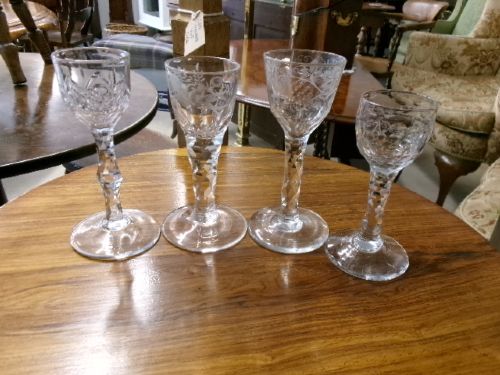
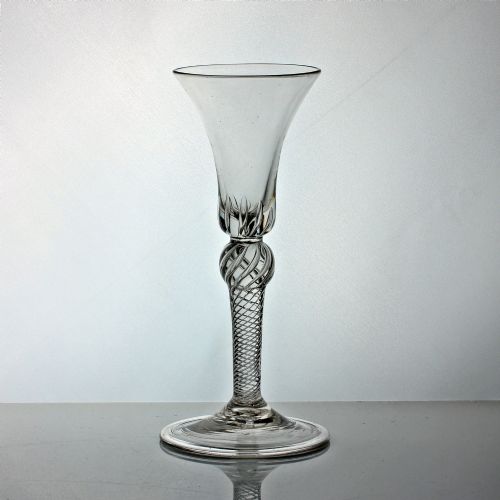
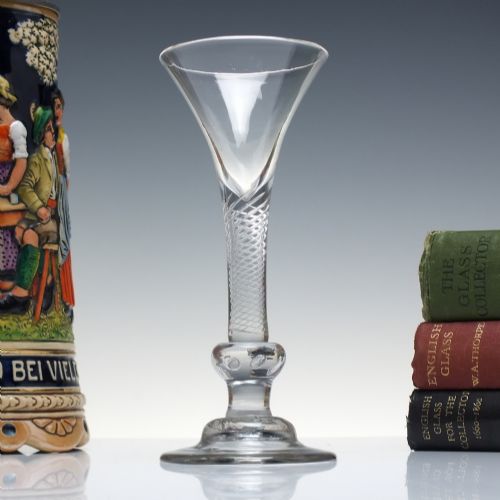
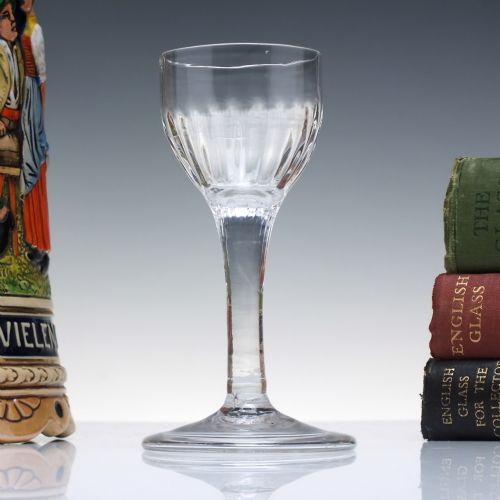
The assortment extends from eighteenth century air twist wine glasses with folded feet to large nineteenth century hand blown comports. Each iteration utilises a raised base to command attention and catch ambient light across the cut or etched surfaces.
How they were made
Glassmakers produced these vessels using lead glass or flint glass, which allowed for deep, sharp wheel cutting and brilliant clarity. Artisans utilised hand blowing techniques to shape the molten material into heavy pedestals, ribbed bowls, and folded feet.
Decoration involved wheel engraving, etching, and moulding, occasionally complemented by red cane additions or gold enamel highlights. The inclusion of lead oxide increased the density and refractive index of the crystal, creating the characteristic weight and sparkle.
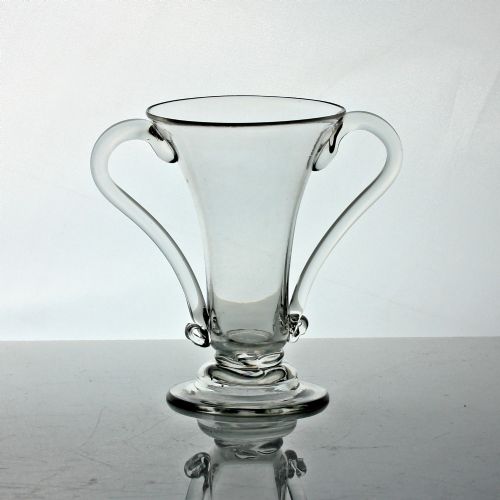
Object types range from Georgian jelly glasses and air twist wine stems to large Victorian pedestals, comports, and fruit bowls.
What varies in quality
Quality rests upon the crispness of the wheel cutting, the purity and weight of the lead crystal, and the stability of the pedestal foot. Superior pieces display deep, clean facets and well proportioned stems that support the weight of the bowl without distortion.
Artisanal execution dictates the finesse of details like air twists within stems or hand applied enamel decoration. Finer examples maintain symmetry in the hand blown body and clarity in the glass without excessive clouding or trapped impurities.
St Louis glassworks·Stuart for Liberty·Waterford
The Clear Crystal Footed Bowl Glossary
- Tazza
- A shallow bowl or plate mounted on a stem and foot, used historically for serving fruit or small dishes. These elevated vessels draw the eye upward on a dining table.
- Flint glass
- An early British term for heavy, brilliant lead glass developed to enhance light refraction in tableware. This dense material forms the heavy base of many antique bowls.
- Hobnail pattern
- A raised, faceted surface decoration resembling the hobnails on sturdy boots, creating intense texture and sparkle. This geometric cutting was favoured in nineteenth century glassware.
- Folded foot
- A glass foot formed by doubling the hot edge back underneath itself to create a heavier, reinforced rim. This technique adds stability to eighteenth century drinking vessels and bowls.
- Air twist
- A decorative spiral of elongated air bubbles trapped within the transparent stem of a glass. Makers achieved this effect by drawing out air drawn from the hot metal during blowing.
Clear Crystal Footed Bowl: Frequently Asked Questions
How do I date a footed bowl?
Examine the base for a pontil mark, manufacturing style, and wear patterns that indicate age. Eighteenth century pieces often feature folded feet and pontil scars, while Victorian items show heavier moulding and deep hobnail cutting.
Stylistic cues such as Edwardian proportions or Art Nouveau enamel work help narrow the decade of manufacture. Comparing the weight and clarity of the lead crystal also guides proper attribution.
What was a tazza used for?
A tazza served as an elevated display dish for fruit, sweetmeats, or jellies during formal dining. Its raised pedestal placed special delicacies at eye level for guests.
Over time, these stemmed vessels transitioned into purely decorative centrepieces or comport bowls. They remain practical for presenting seasonal displays on a sideboard.
Are these bowls safe for food?
Most antique crystal vessels can hold dry foods, fruit, or wrapped sweets for display purposes. Historic lead crystal may leach minute amounts of lead over extended contact with acidic contents.
Use them primarily for decorative display or dry presentation rather than storing wet foods long term. Gentle handling ensures the antique glass remains undamaged during use.