


Victorian Glass Pedestal Bowl
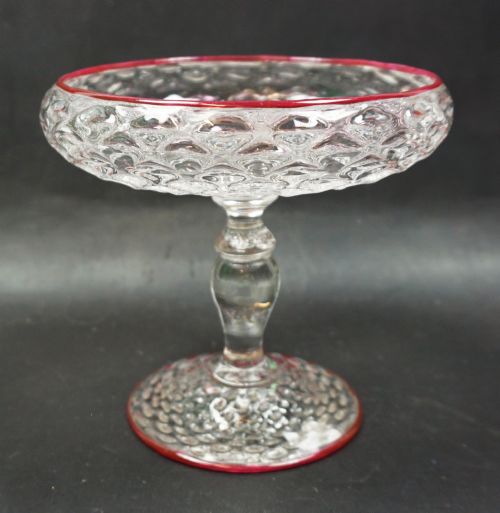
A victorian glass pedestal bowl brings weight and high-relief sparkle to a dining table, combining pressed or cut crystal with elevated stature.
Victorian Glass Pedestal Bowl
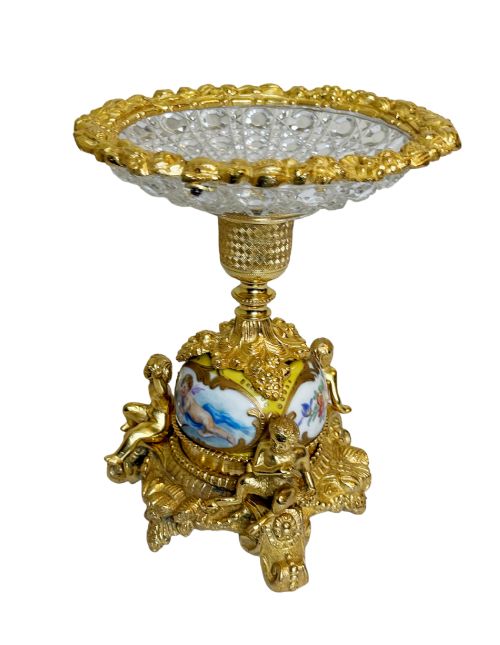
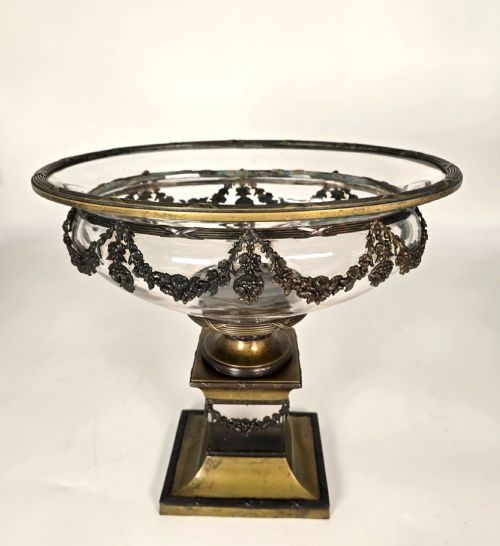
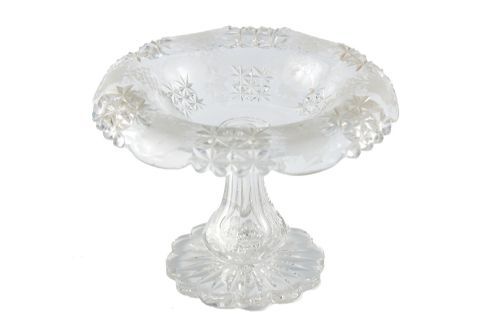
A victorian glass pedestal bowl stands above the table surface on a raised foot or column, serving as a decorative centrepiece or fruit dish. Buyers seeking this form will encounter pieces ranging from simple pressed glass comports to grand table centrepieces mounted in silver plate, gilt bronze, or brass.
The selections span the nineteenth century, with particular concentration around the 1860s to 1890s, alongside related forms such as tazzas and garniture sets. English, French, and Bohemian origins appear frequently, showing influences from French Rococo Revival, Art Nouveau, and Biedermeier styles.
Vessels take various configurations, including round bowls, oval comports, and handled baskets enriched with cut crystal, ruby or green coloration, and engraved details. These objects fulfilled roles in nineteenth-century dining and display, functioning as centrepieces for fruit, sweets, or floral arrangements.
Materials and construction
Glass production relied on lead crystal, hand-blown glass, and pressed methods, shaped into honeycombed, etched, or heavily cut patterns. Coloured glass variants incorporate red cane decoration, yellow overlays, and deep ruby or green tones.
Metal mounts utilise silver plate, gilt bronze, brass, and gold leaf, frequently taking the form of cherubs, animal decoration, or structural swing handles. Workshops combined these metal components with the glass bodies using secure fittings and collars.
Some nineteenth-century tables managed to squeeze in cherubs, sailors, and animal decorations all at once.
Distinctions in execution
Quality rests in the crispness of the wheel-cut facets and the depth of the hand engraving, where sharper lines reflect greater control by the glass cutter. Heavy lead crystal provides a more substantial weight and resonance compared to lighter blown or pressed alternatives.
The integration of metal mounts also defines the tier of the piece, with cast bronze cherubs or detailed silver plate indicating a higher grade of production than standard brass or unmounted glass.
W M F·Davidson
The Victorian Glass Pedestal Bowl Glossary
- Tazza
- A shallow bowl or plate mounted upon a stem and foot, commonly utilised for serving fruit or sweets on the Victorian dining table.
- Comport
- An alternative term for a pedestal bowl or standing dish used in nineteenth-century table service.
- Lead crystal
- Glass containing lead oxide, which increases brilliance, weight, and clarity, allowing for deep and sharp cutting.
- Gilt bronze
- Bronze coated with a thin layer of gold, often employed for mounts and decorative figures on mid-nineteenth-century centrepieces.
- Overlaid glass
- A technique involving a layer of coloured glass applied over a clear or contrasting body before being cut away to reveal the underlayer.
Victorian Glass Pedestal Bowl: Frequently Asked Questions
What were pedestal bowls used for?
These elevated vessels held fruit, sweetmeats, or decorative floral arrangements in the centre of the nineteenth-century dining table.
Their height allowed dishes to remain visible above other table service items while adding dramatic sparkle to the room.
How do I date a Victorian glass bowl?
Dating relies on the style of the cutting, the presence of metal mounts, and stylistic indicators such as Art Nouveau curves or Rococo Revival details.
English and Bohemian examples from the mid-to-late nineteenth century often display specific motifs like ruby staining or etched fern patterns characteristic of the period.
Are these bowls suitable for daily use?
While structurally sound, antique lead crystal and mounted pieces demand careful handling and hand washing to protect fragile rims and metal plating.
Many owners choose to display them on sideboards or dining tables as decorative objects rather than active serveware.
What is the difference between a tazza and a bowl?
A tazza is characterised by a very shallow, flat dish mounted on a central foot, designed specifically for display or serving small portions.
Pedestal bowls generally feature deeper, more capacious wells suited for holding fruit or larger decorative arrangements.