





Vintage French Glass Coupe
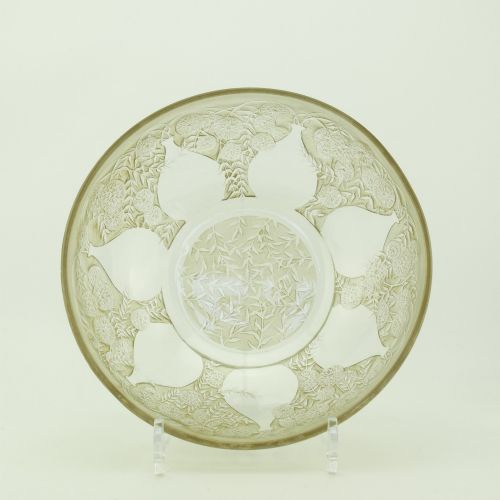
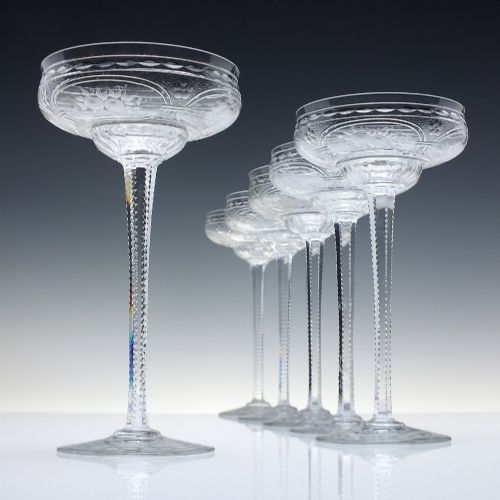
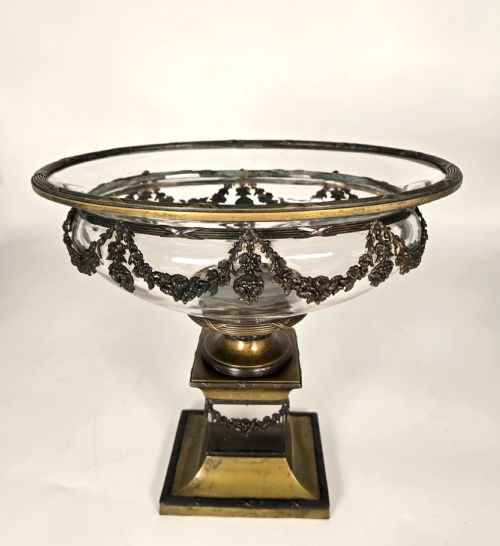
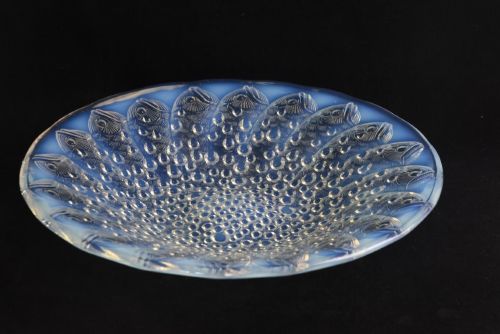
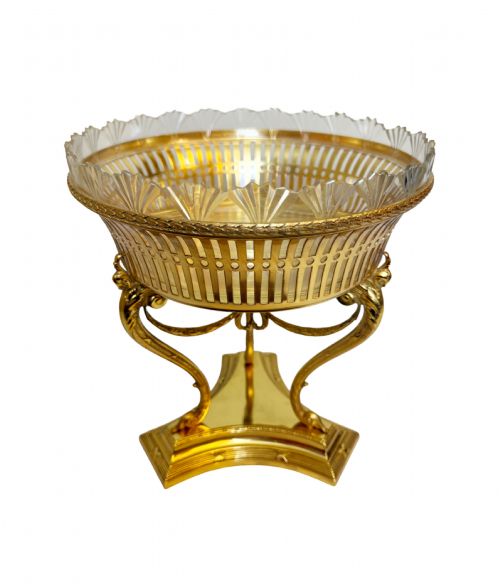
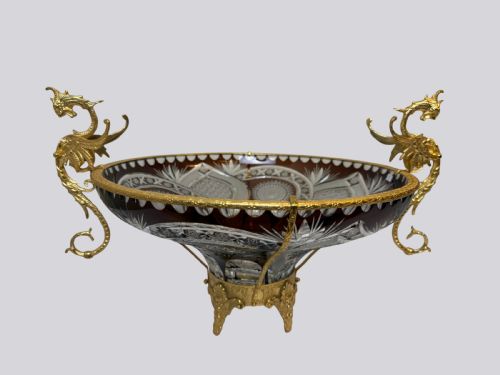
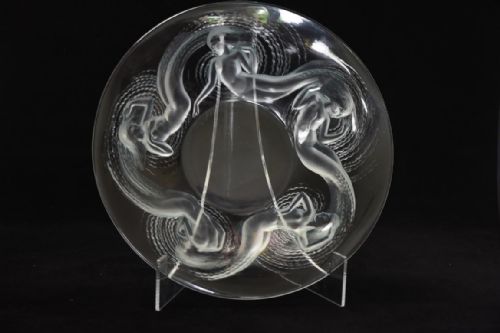
These vintage french glass coupe selections offer striking bowls formed in clear, frosted, opalescent, and coloured glass, often mounted in gilt bronze.
Vintage French Glass Coupe
A vintage french glass coupe brings together decorative bowls, centrepieces, and glass plates designed to sit prominently within a room. When someone searches for a vintage french glass coupe, they encounter low bowls, footed vessels, and pedestal forms suited for display or service.
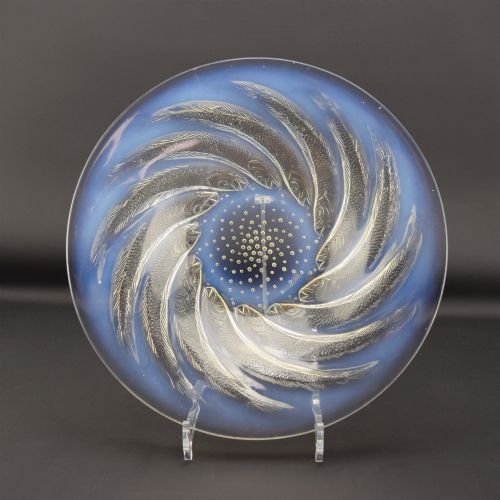
The pieces appearing on this page span several distinct periods, reaching from the French Second Empire and Belle Epoque through to the Art Deco era. The 1930s is particularly well represented through moulded opalescent creations, alongside earlier glass and gilt bronze mounted centrepieces dating back to the mid-nineteenth century.
How they were made
Makers utilised glassblowing, moulding, and cutting techniques to shape clear, frosted, and coloured glass into deep bowls and shallow plates. Opalescent glass creates shifting milky blue and amber tones as light strikes the curved surfaces of the moulded relief designs.
Metalwork mounts cast in gilt bronze and brass frequently support or encircle the glass inserts. These metal elements involve detailed casting and gilding, securing the heavy glass bowls within Neoclassical, Art Deco, or ornate nineteenth-century frameworks.
Vintage French Glass Coupe Retail Price Guide 2026
Typical asking prices for vintage french glass coupe among the pieces listed under this phrase on Sellingantiques today, from the lower quarter to the upper quarter. They describe what is for sale here now, not the wider market.
Materials recorded across the selection include opalescent glass, frosted glass, cut glass, brass, and gilt bronze.
What varies in quality
Quality rests in the crispness of the moulded glass relief and the depth of the opalescence within the material. Pieces bearing clear maker signatures or exhibiting sharp contrast in their frosted and polished surfaces demonstrate higher execution.
The integration between the glass insert and the gilt bronze mount dictates the success of the combined form. Heavier metal castings with refined chasing and secure fittings elevate the overall presence of the centrepiece.
Rene Lalique
The Vintage French Glass Coupe Glossary
- Coupe ouverte
- An open bowl shape with shallow or wide sides designed for display or serving. This form provides an expansive surface to showcase moulded glass decoration and opalescent effects.
- Opalescent glass
- Glass containing agents that cause light to diffuse, producing milky blue or pearlescent highlights against a translucent body. This effect shifts depending on the angle of illumination.
- Gilt bronze
- Bronze metal treated with a layer of gold to produce a rich metallic surface finish. It appears frequently as structural mounts and decorative feet on nineteenth-century pieces.
- Centrepiece
- A large decorative vessel placed at the middle of a table or surface. These items combine heavy glass bowls with bronze stands to anchor a room scheme.
Vintage French Glass Coupe: Frequently Asked Questions
What is a coupe bowl used for?
A coupe bowl functions primarily as a decorative centrepiece or a decorative display vessel on a table, sideboard, or cabinet.
Its shallow or open form allows the worked glass patterns and any coloured opalescent qualities to catch the light effectively.
How do I identify Art Deco glass?
Art Deco glass typically displays stylised floral motifs, geometric symmetry, and moulded relief decoration rather than ornate nineteenth-century scrollwork.
Items from this movement often utilise opalescent or frosted finishes to accentuate the modern design lines.
What is opalescent glass?
Opalescent glass contains chemical additives that scatter light, creating a milky blue glow where the glass is thicker and amber tones where it is thin.
This optical quality shifts as the viewer changes position relative to the light source.
How are bronze mounts attached?
Bronze mounts are cast to follow the exact contours of the glass bowl, securing the vessel within a metal footing or rim.
These mounts provide structural support while adding contrasting metallic tones to the transparent glass.