

Centrepiece Fruit Bowl
A centrepiece fruit bowl anchors a dining table or sideboard with height, weight and substance.
Centrepiece Fruit Bowl
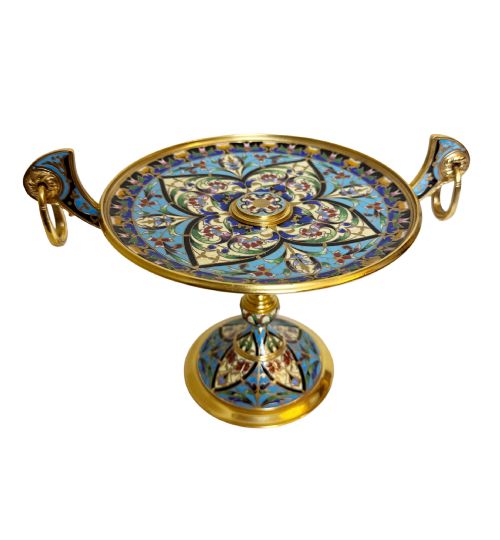
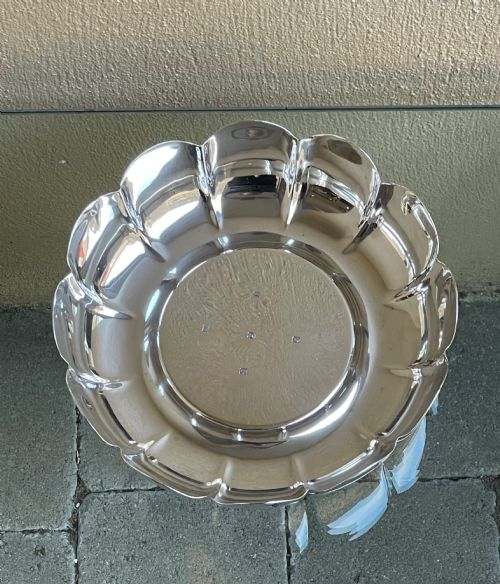
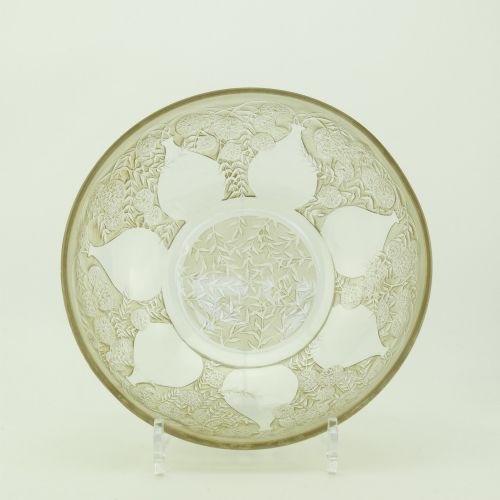
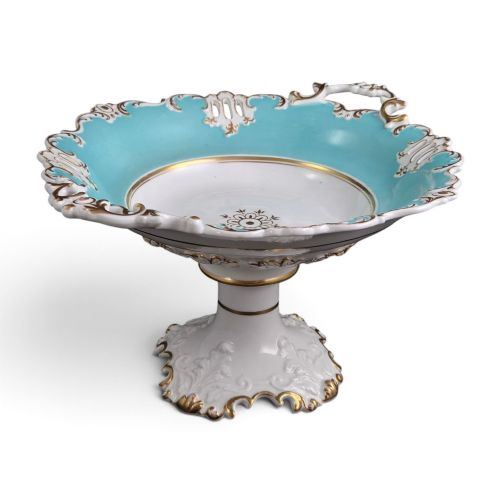
A centrepiece fruit bowl serves as a table focal point, drawing together decorative bowls, footed tazzas, baskets and pedestals from the nineteenth and twentieth centuries. These pieces emerge in styles ranging from Victorian neo-classical plating to Edwardian silver swing handles and Art Nouveau organic forms.
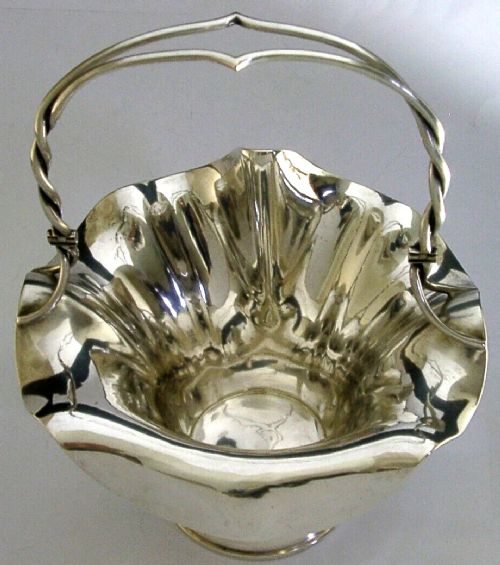
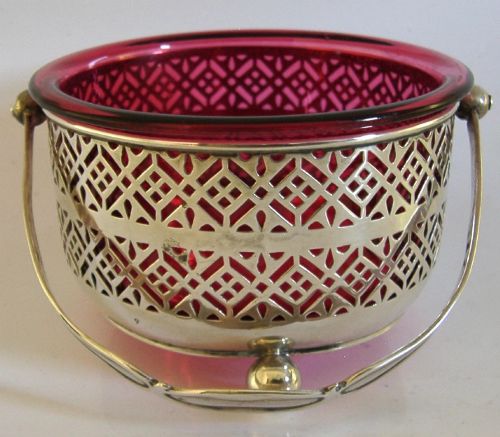
The version most commonly met on this page is the silver-plated or sterling silver basket, often featuring pierced work, repoussé rims or swing handles intended for display. Alongside metalwork, buyers encounter cut glass, crystal mounted in gilt bronze or ormolu, bone china and earthenware comports.
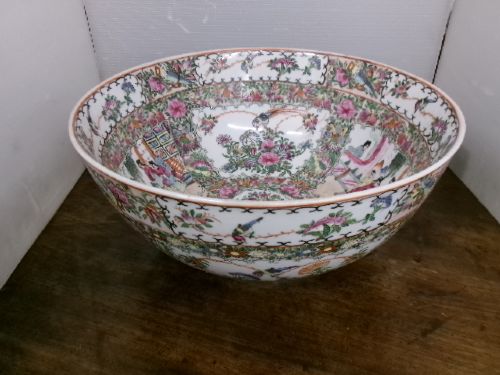
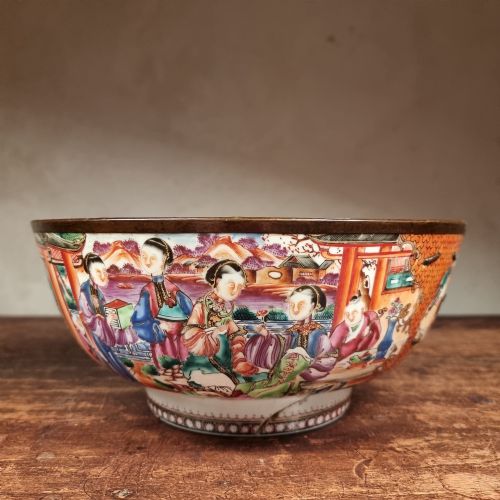
Origins stretch across English, French and Asian workshops, incorporating Georgian ironstone patterns, Chinese Canton hand-painted pieces and Anglo-Indian silver. Such variety reflects how dining traditions changed through the decades, shifting from formal ceramic comports to open metal fruit baskets.
Materials and Technique
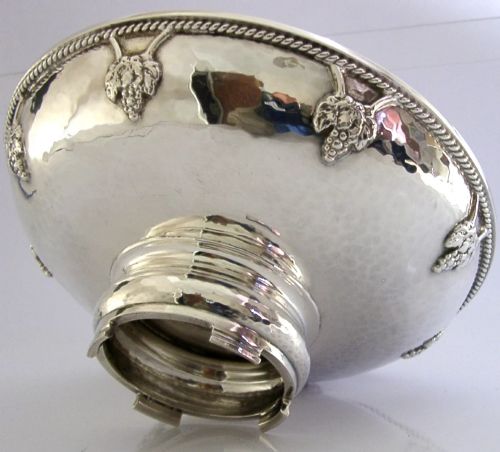
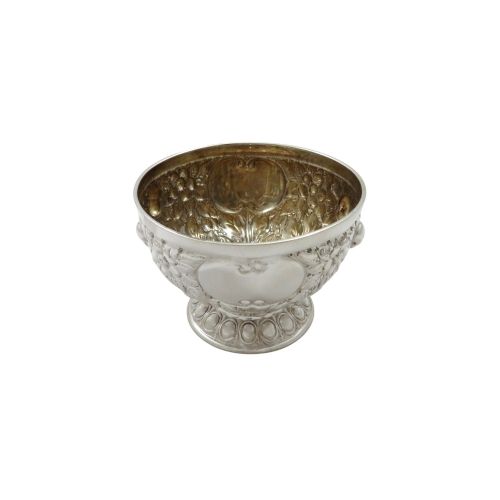
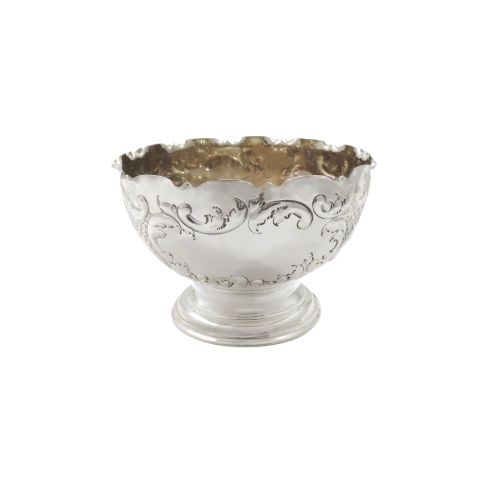
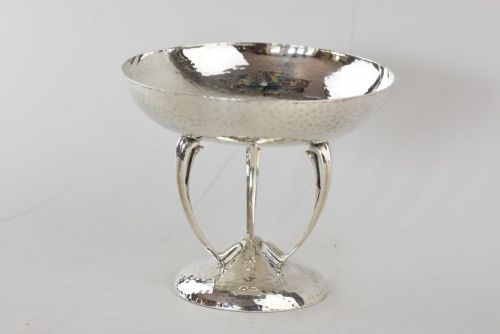
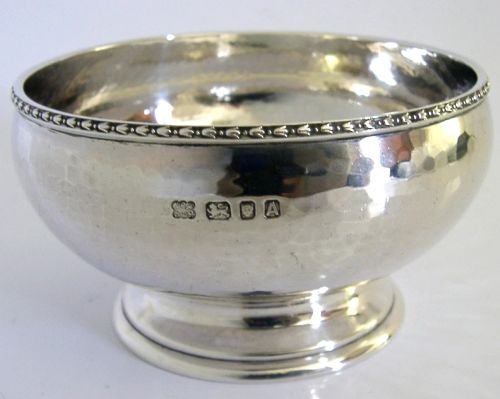
Silversmiths formed sterling silver and silver plate through spinning, piercing and hand-hammering, often applying planished textures seen in Arts and Crafts pieces. Makers also utilised repoussé work to raise floral and foliate motifs from the reverse of the metal.
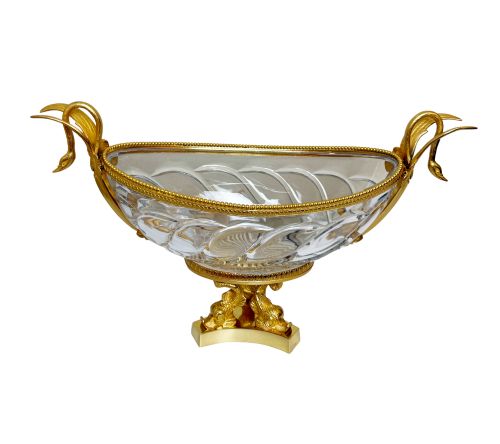
Glass vessels combine heavy cut crystal or pressed glass bodies with cast ormolu, gilt bronze and brass mounts. Ceramic examples employ bone china, ironstone and earthenware, shaped into footed forms and decorated with hand-painted enamels or transfer prints.
Object forms span decorative bowls, centrepieces, tazzas, fruit baskets and pedestals from the Victorian era to the mid-twentieth century.
Craftsmanship and Weight
Construction integrity distinguishes standard production from finer output, particularly in how securely pedestal feet, swing handles and bronze mounts attach to the main bowl. Pierced metalwork shows precision in the saw-work, with clean edges rather than ragged or rounded apertures.
A E Jones·Goldsmiths and Silversmiths Company·Liberty & Co·George W. Scott & Sons Ltd·Mappin & Webb·Walker & Hall·WMF
The Centrepiece Fruit Bowl Glossary
- Tazza
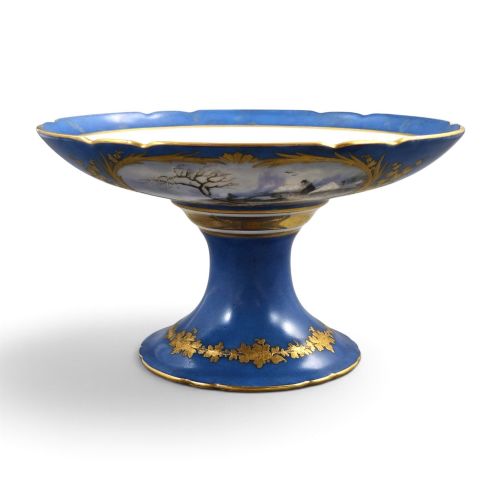
- A shallow bowl or plate mounted on a stem and foot, elevated above the table surface. These pieces often serve fruit or sweetmeats.
- Repoussé
- A metalworking technique where the artisan hammers the design from the reverse side to create raised relief decoration on the front. This process adds tactile depth to silver baskets and bowls.
- Comport
- A footed dish or bowl used for holding fruit or confectionery at the dining table. They frequently appear in ceramic or glass during the Georgian and Victorian periods.
- Ormolu
- Gilt bronze mounted upon decorative objects and furniture, popular in French nineteenth-century design. The finish provides a bright golden contrast to cut glass and porcelain.
- Planished
- A metal surface finish showing small, controlled hammer marks left by the silversmith. This texture is characteristic of Arts and Crafts metalwork.
Centrepiece Fruit Bowl: Frequently Asked Questions
What is a tazza?
A tazza is an elevated shallow vessel set on a central pedestal foot, designed originally to display fruit or sweetmeats upon a dining table.
In older dining arrangements, these pieces provided height variation among flat dishes, creating a structured display for desserts.
How were silver baskets used?
Silver baskets served primarily for holding fruit, bread or small cakes during formal meals, often positioned directly in the middle of the table.
Many examples feature movable swing handles, allowing servants to pass them easily or permitting them to sit flush against the table surface.
How do I clean silver plate?
Silver plate requires gentle cleaning with a specialist non-abrasive polish and a soft cloth to preserve the thin layer of silver over the base metal.
Harsh scrubbing should be avoided, particularly around engraved or repoussé recesses where the underlying metal might become exposed through wear.
Are glass liners original?
Fitted glass liners were often produced alongside metal frames to protect silver plate from the acidic juices of fresh fruit.
Matching the colour and thickness of the glass to the period of the metal mount helps determine if the liner belongs to the piece.