





Cut Glass Tazza
A cut glass tazza is an elevated pedestal dish designed for display, bringing sparkle and architectural height to any table.
Cut Glass Tazza
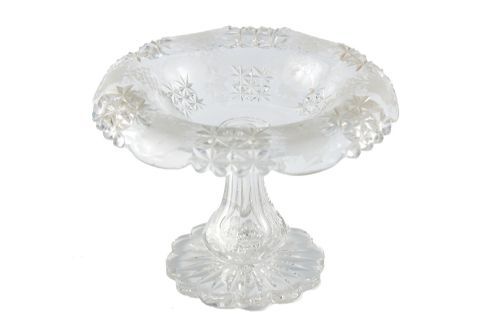
A cut glass tazza is a footed pedestal vessel designed to elevate sweetmeats, fruit, or floral arrangements on a table. The form combines a flat or shallow dish mounted upon a stem and foot, creating height and presence.
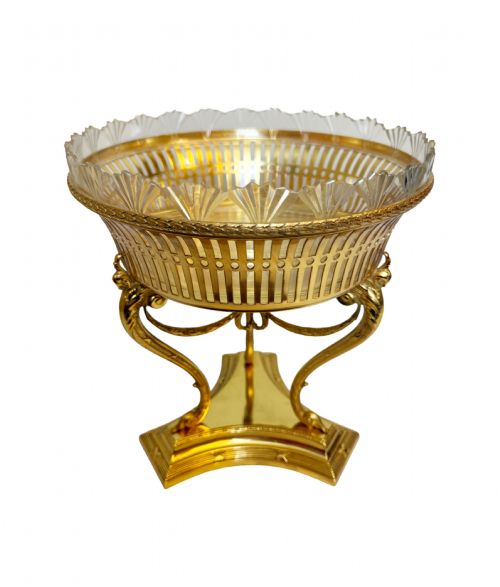
You will most frequently encounter Victorian examples alongside continental pieces from the late nineteenth century and the early twentieth century. The selections range from straightforward pedestal bowls to elaborate silver-plated and gilt bronze mounts.
Alongside dedicated tazzas, the evidence shows related forms such as centrepieces, sweet dishes, and decorative bowls. These share the characteristic use of faceted glass raised above the surface of the table.
Materials and construction
The primary material is heavy lead crystal or clear glass shaped by blowing or pressing before being deeply carved with geometric and floral patterns. Artisans cut facets and flutes into the surface to catch and refract light from every angle.
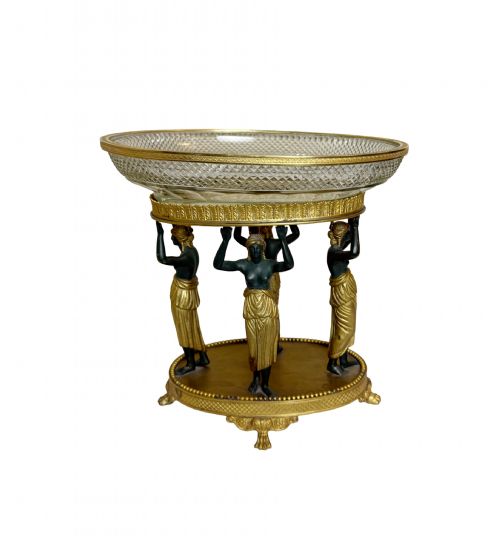
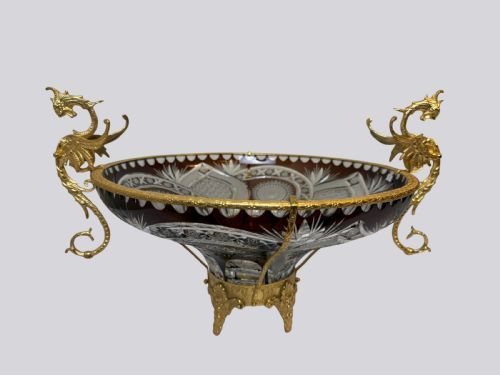
Many of the finest examples incorporate metal mounts, uniting the glass with gilt bronze, silver plate, patinated bronze, or brass. These metal additions form supportive collars, decorative handles, or figural bases that elevate the glass insert.
Cut Glass Tazza Retail Price Guide 2026
Typical asking prices for cut glass tazza among the pieces listed under this phrase on Sellingantiques today, from the lower quarter to the upper quarter. They describe what is for sale here now, not the wider market.
Listings feature pieces spanning the nineteenth century and the early twentieth century, incorporating materials like gilt bronze, porcelain, and patinated bronze alongside clear crystal.
Assessing quality and manufacture
Quality rests upon the crispness of the wheel-cutting and the clarity of the crystal. Sharp, deep facets and finely detailed engraving indicate superior craftsmanship by skilled lapidaries.
The integration of the metalwork defines the status of mounted pieces. Heavy, well-chased gilt bronze or solid silver mounts securely cradle the glass and demonstrate a higher level of workshop collaboration.
W M F·Christofle et Cie·Baccarat·C Kurz & Co
The Cut Glass Tazza Glossary
- Tazza
- A shallow bowl or dish mounted on a stem and foot, used historically for serving sweets or displaying fruit. The elevated form draws the eye upward.
- Centrepiece
- A large decorative vessel placed in the middle of a dining table. These often incorporate elaborate metal mounts and glass inserts.
- Cut Crystal
- Glass with a high lead content that allows for deeper cutting and greater brilliance. The lead content increases the weight and refractive index.
- Silver Plate
- A base metal coated with a thin layer of silver. This technique offered the luxury of silver mounts at a lower cost during the nineteenth century.
Cut Glass Tazza: Frequently Asked Questions
What is a cut glass tazza used for?
A cut glass tazza was traditionally used to serve sweetmeats, small cakes, or fruit at formal dinners. The elevated design allowed dishes to be tiered and saved valuable space on crowded tables.
Today, these pieces function primarily as decorative centrepieces or display objects. Their faceted bowls catch natural light effectively when placed near a window.
How do I date a cut glass tazza?
Dating relies on combining the style of the cutting with the characteristics of any metal mounts. Victorian pieces often feature heavy, naturalistic engraving or distinct silver-plated frames, while later twentieth-century examples shift towards cleaner geometric lines.
Makers' marks stamped onto metal bases or acid-etched signatures on the glass provide the most reliable chronological anchors. Structural clues, such as the pontil mark on the underside of the foot, also indicate older hand-blown production methods.
How do I clean and care for a cut glass tazza?
Wash the glass by hand in lukewarm water using mild detergent, taking care to line your sink with a towel to prevent chips. Avoid sudden temperature changes that can stress antique crystal.
Keep abrasive cloths away from any gilt bronze or silver-plated mounts. Use a soft, dry cloth to polish the metal components separately from the glass.
Are metal mounts original to the glass?
Most quality nineteenth-century pieces were designed as unified objects where the metal frame and glass insert were made for each other. Makers often engineered custom bronze or silver collars to secure specific bowl shapes.
Look for secure seating where the glass meets the metal without excessive movement. A snug, purposeful fit generally indicates original factory assembly.