

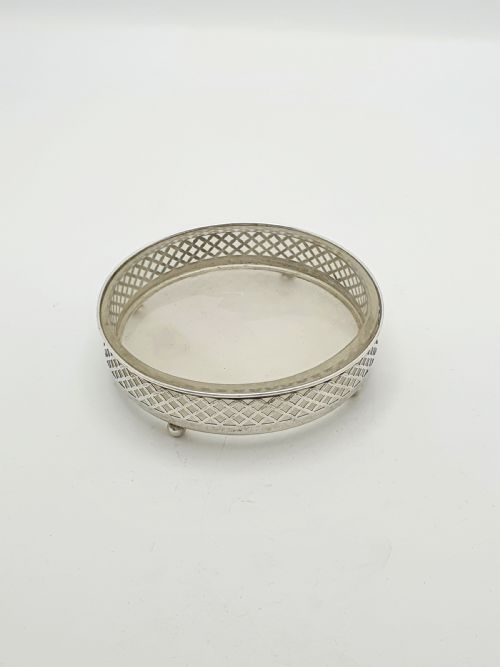


Clear Art Glass Dish
These clear art glass dish pieces bring tactile weight and translucent character to a room, spanning decades of imaginative glassmaking.
Clear Art Glass Dish
A clear art glass dish encompasses decorative bowls, serving trays, plates, and centrepieces shaped across distinct aesthetic movements from the late nineteenth century into the mid-twentieth century. Buyers searching for this phrase encounter items designed for display or functional serving, ranging from unadorned crystal forms to intricately decorated moulded pieces.
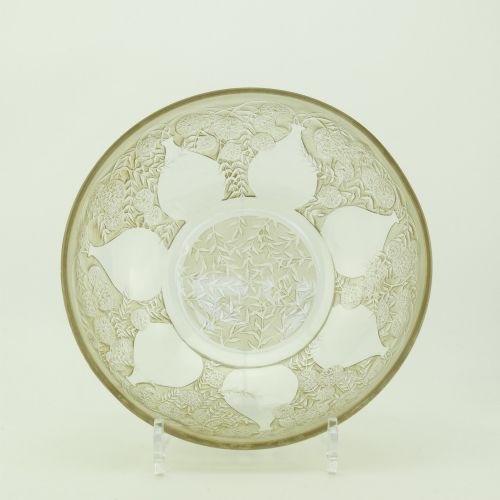
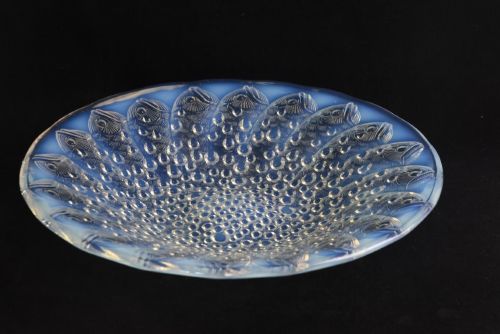
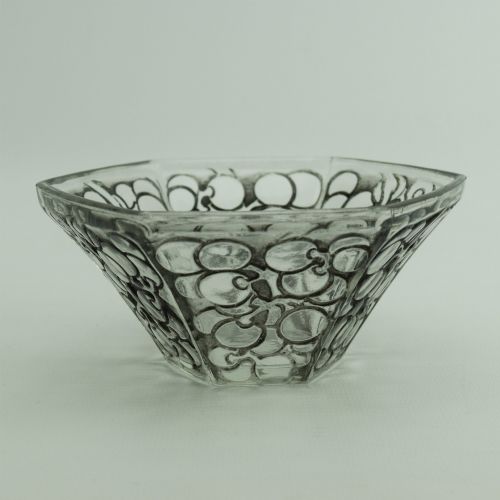
The selection on this page leans heavily into twentieth-century production, particularly French opalescent and moulded works alongside continental crystal vessels. Objects span forms such as footed coupes, flat plates, pin dishes, and multi-compartment hors d'oeuvres containers housed in metal frames.
Origins stretch across Britain, France, Germany, Belgium, and America, touching stylistic vocabularies from Victorian revivalism and Arts and Crafts to Art Nouveau, Jugendstil, and Art Deco. These vessels served dining tables, dressing tables, and reception rooms as functional ornaments.
Materials and methods
Makers utilised clear glass, crystal, opalescent glass, and frosted glass, often combining the vitreous body with silver plate, sterling silver, gilt bronze, or base metal mountings. Molten material was pressed into moulds, blown into vessels, or cut by hand to create facets and structural patterns.
Surface enhancement involved sepia staining, enamel decoration, acid-etching, and paste gilding to accentuate low reliefs and moulded motifs. Techniques such as latticinio cane work introduced internal coloured threads within the clear matrix.
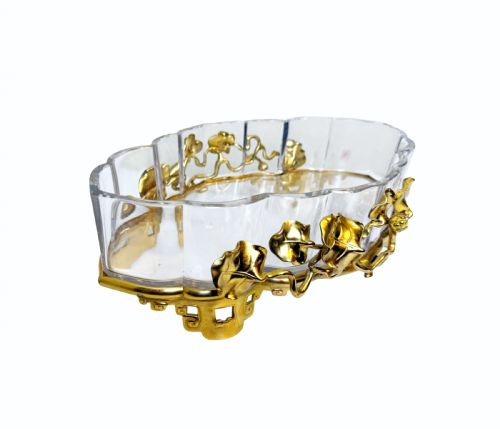
Metal components were cast, pierced, and plated to cradle glass liners, butter dishes, and serving trays securely within decorative armatures.
Listings feature items spanning the 19th century, 1900, 1910, 1920, and 1930 periods in various glass forms.
Distinctions in quality
Quality rests upon the crispness of the moulded relief, the depth and clarity of the glass matrix, and the precision of any secondary metal mount. Pieces bearing distinct signatures or attributable designs from notable makers exhibit sharper detailing in motifs like flora, fauna, and figurative elements.
The integration between glass liners and metal frames demonstrates superior craftsmanship when the fit is exact and the plating remains even. Finer examples display deliberate surface staining or enamel work that adheres cleanly to the contours of the pressed glass.
Rene Lalique·Salviati Venice·St Louis glassworks·Val St Lambert·Hannah Walton
The Clear Art Glass Dish Glossary
- Opalescent glass
- Glass containing agents that cause it to milky-blue in transmitted light and warm amber in reflected light. This optical property highlights moulded contours and sculptural reliefs.
- Coupe ouverte
- An open bowl or shallow vessel shape often utilised for decorative centrepieces and fruit displays. The open form showcases internal glass coloration and surface textures.
- Latticinio
- A Venetian glass technique embedding opaque white or coloured glass threads within clear glass. It creates linear, net-like patterns across the body of the vessel.
- Silver plate
- A base metal foundation coated with a thin layer of pure silver. It provided a bright metallic finish for frames, trays, and mounting hardware during the nineteenth and twentieth centuries.
- Paste gilding
- The application of powdered gold or metallic paint onto glass surfaces, usually fixed by low-firing. It adds metallic highlights to raised designs and rims.
Clear Art Glass Dish: Frequently Asked Questions
How do I clean an antique glass dish?
Wash the glass gently in warm, soapy water using a soft cloth, avoiding abrasive pads that can scratch the surface.
Keep silver-plated or gilt mounts dry, wiping them with a soft microfibre cloth to preserve the metallic finish.
Were these dishes meant for food use?
Many examples functioned as butter dishes, cheese dishes, hors d'oeuvres trays, and serving vessels for the dining table.
Others served purely decorative roles as centrepieces, pin dishes, or ash trays rather than tableware.
How do I identify Art Deco pieces?
Look for symmetrical geometric motifs, stylized flora and fauna, and heavy moulded glass forms produced during the interwar decades.
Signatures or moulded marks on the base often point directly to the designer or workshop responsible.
What is the difference between crystal and glass?
Crystal contains mineral additives like lead oxide, which increases weight, brilliance, and the refractive index of the material.
Standard glass lacks these additives, resulting in a lighter body with less dispersion of light.