
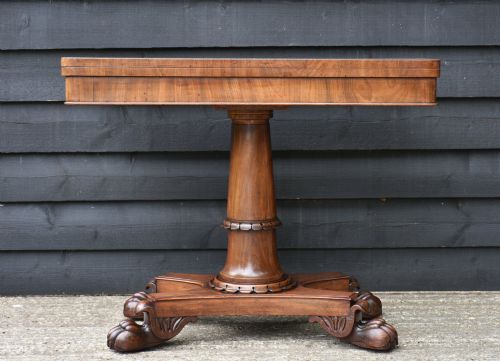

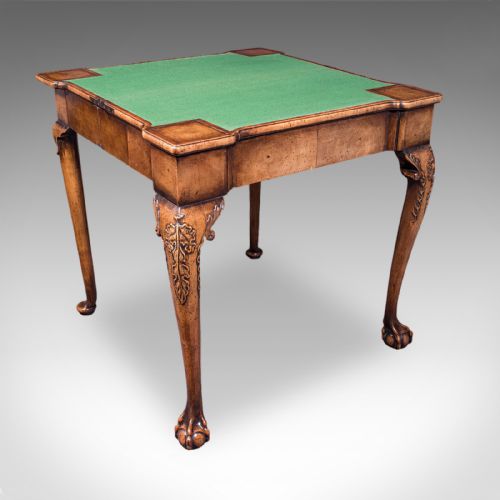
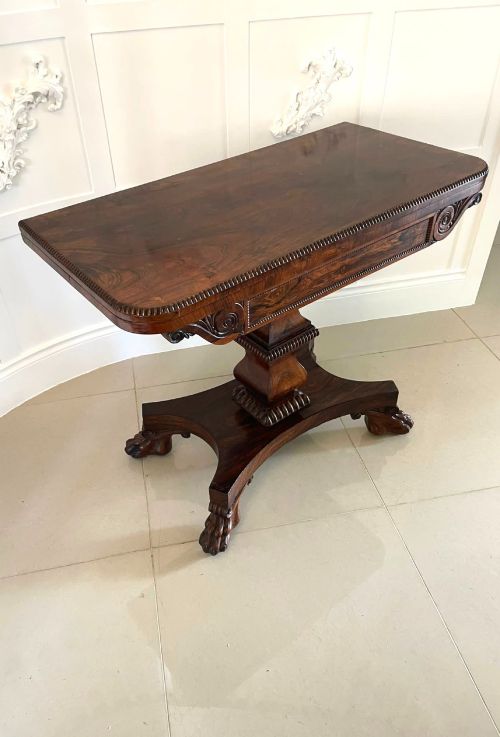
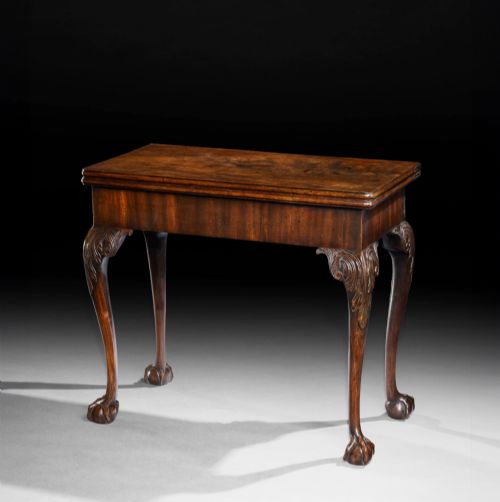


Claw Foot Games Table
A claw foot games table offers a dual surface for card play and display, uniting domestic entertainment with fine period carpentry.
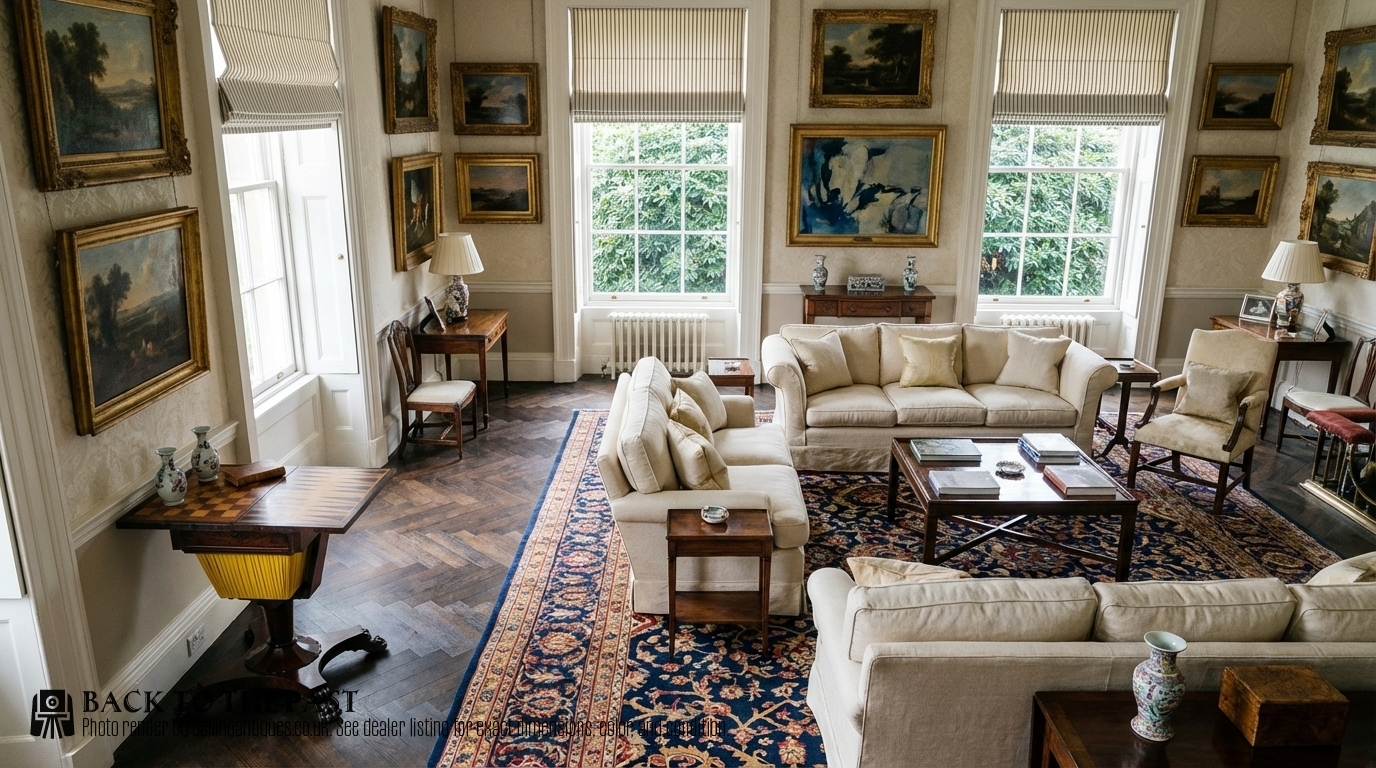
Claw Foot Games Table
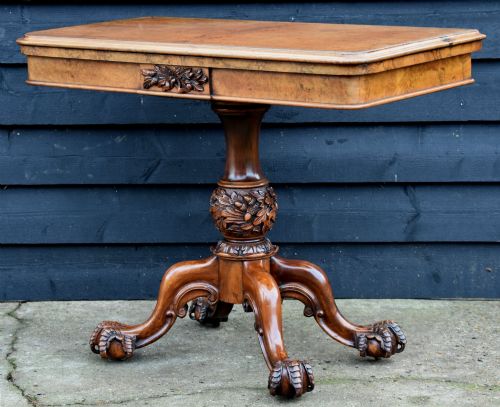
A claw foot games table combines a folding or pivoting top with robust carved supports, emerging across the eighteenth and nineteenth centuries in mahogany, rosewood, and walnut. These dual-purpose items served domestic interiors as console or tea tables before opening for card and board games.
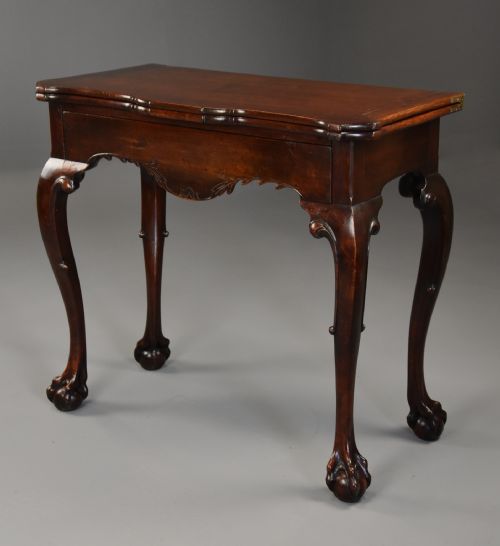
The selection ranges from George II concertina action designs to Regency brass-inlaid rosewood pieces and later Victorian iterations. Buyers frequently encounter nineteenth-century William IV examples alongside earlier Georgian and Chippendale-style furniture.
Forms span specific card tables, tea and card combinations, and occasional consoles. Many feature fold-over tops that reveal baize-lined playing surfaces supported by sturdy pillar and claw bases.
Materials and Construction
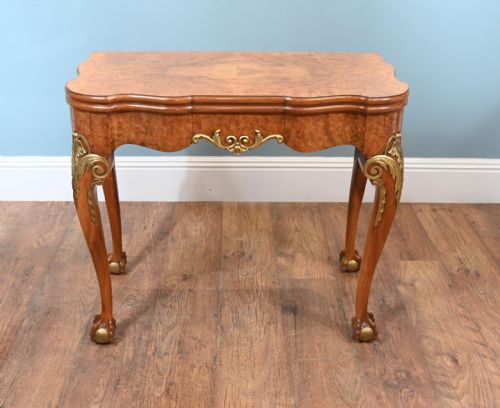
Cabinetmakers utilised dense hardwoods including mahogany, rosewood, and walnut, often selecting burr veneers for decorative lid surfaces. Solid timber frames provided the structural integrity required for pivoting leaves and concertina actions.
Brass inlay, ormolu mounts, and intricate carved foliage distinguished high-status examples from plain utilitarian pieces. The foundational joinery relied on traditional tenon and mortise framing to support heavy folding tops.
The characteristic claw feet were carved directly from the timber or cast in metal, anchoring the central pedestal or cabriole legs. Surface finishes included polished shellac polishes that accentuated the natural grain of the wood.
Listings feature mahogany, rosewood, walnut, and burr walnut across Georgian, Regency, William IV, and Victorian periods.
Cabinetmaking Standard
Quality rests upon the crispness of the timber carving and the precision of the concertina or pivoting mechanism. Superior pieces maintain alignment when closed and offer smooth, stable support when fully extended for play.
The selection of veneers creates a distinct visual hierarchy, where matched burr walnut or figured mahogany elevates the piece. Finely executed brass inlay and detailed claw-and-ball or paw feet indicate skilled workshop production.
George Bullock·Giles Grendey·Epstein and Co
The Claw Foot Games Table Glossary
- Concertina action
- An expanding frame mechanism that allows a card table to open on four legs rather than a swinging single leg. This engineering provides superior balance and weight distribution.
- Fold-over
- A hinged tabletop design that doubles the surface area when unfolded for play. It rests against a plain or veneered frieze when closed.
- Palisander
- A dense tropical timber often grouped with rosewood varieties. It provides a heavily figured, dark grain favoured for nineteenth-century cabinet work.
- Chinoiserie
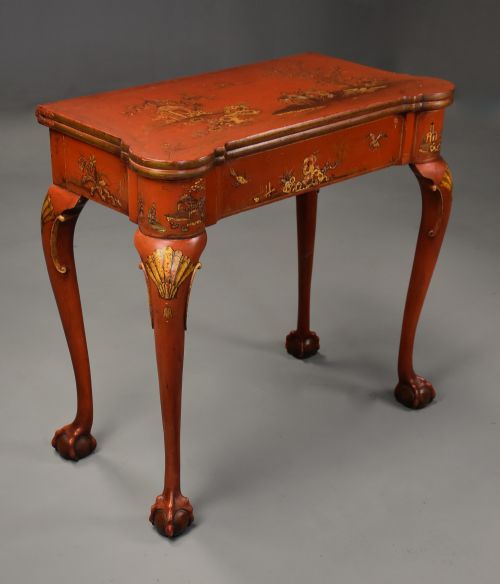
- A decorative style employing European interpretations of Chinese motifs and lacquerwork. It appears on select twentieth-century revival tables.
Claw Foot Games Table: Frequently Asked Questions
How do I use a games table daily?
A games table functions as a console or side table against a wall when the top remains folded shut. It transforms into a playing surface simply by pivoting and unfolding the hinged leaf.
Interior placement works well in a sitting room or drawing room where extra surface space is occasionally required for card games or tea.
What woods were used for these tables?
Cabinetmakers primarily employed mahogany, rosewood, and walnut, frequently enhancing the exteriors with burr veneers. Brass inlay and ormolu details occasionally decorate the frieze and legs.
These dense timbers provided the weight and structural stability necessary to support folding leaves without warping.
How do I distinguish Regency from Victorian examples?
Regency tables often feature architectural brass inlay, rosewood veneers, and classical pedestal bases. They reflect earlier neoclassical design influences from the early nineteenth century.
Victorian pieces tend to use heavier proportions, Burr Walnut, and elaborate scroll or carved claw feet dating from the mid-nineteenth century onward.
What is a concertina action?
A concertina action is an expanding wooden frame that extends outwards as the tabletop opens. This mechanism allows all four legs to support the expanded playing surface evenly.
It represents a more complex and desirable engineering method compared to tables supported by a single swinging rear leg.